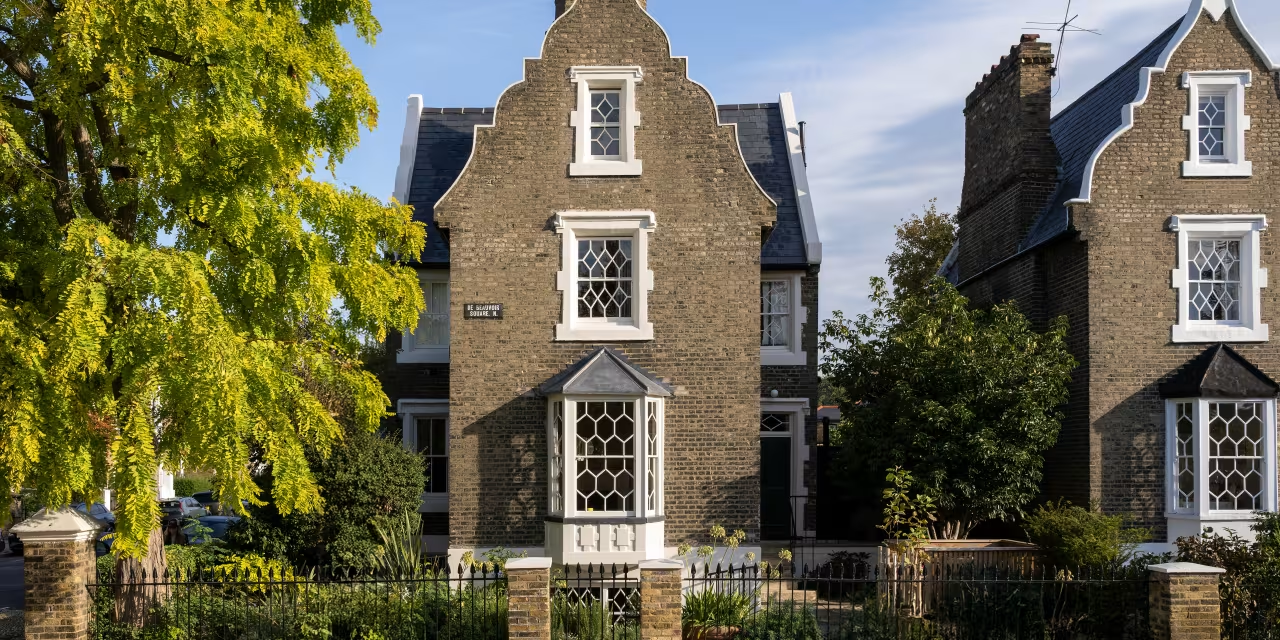
A year elapsed between the first time Irenie Cossey viewed a beautiful but derelict Neo-Jacobean townhouse on the corner of London’s De Beauvoir Square and chose to walk away, and the second time she viewed it, when she bought it.
“It was completely wrecked,” Cossey said, but “I fell in love with the shadows.”
With over 20 years of experience working in architecture and interior design, the founder of interiors firm Irenie Studio perhaps had more capacity to see the potential in the rundown house than an average home buyer, but renovating the four-story, Grade II-listed property was still a daunting task.
MORE: Nebraska’s Most Expensive Listing, With a Speakeasy and Putting Green, Hits the Market for $8.125M
Cossey purchased it in July 2023, when it had been standing empty for at least three and a half years.
“The roof was in complete decay, so much so that the neighbor’s was also leaking,” she said. “There was no running water, and there was one socket, but it was deemed dangerous to use.”
After installing a temporary water supply and a single working electrical outlet, she began the process of getting to know the house, trying to determine which elements of its character to preserve and enhance.
“It had really good bones,” she said. “It was in the same ownership since the ’70s [so] the curtains were still there, the marble floor, the mirror, bits and bobs. I could see there were some period features that had remained in a good state, but the house was basically dead. It needed to be revived.”
Her first major reference point for the redesign of the three-bedroom, three-bathroom house, which is currently on sale with Knight Frank for £3 million (US$3.9 million), was the original oriel windows, dating from the house’s construction in 1840.
“There were 10 windows at the time, and every single window had some form of triangle or diamond shape within it, and they’re all different heights, widths, etcetera,” she says. “So the whole magic was through the looking glass.”
MORE: Longtime Country House of TV Star Bob Monkhouse on Sale in Bedfordshire, England
The beauty of these mismatched windows gave Cossey the theme of her restoration, which she based on British author Lewis Carroll’s 200-year-old novels “Alice’s Adventures in Wonderland” and “Through the Looking Glass and What Alice Found There.”
In keeping with the aesthetic and atmosphere of these surreal stories, Cossey set out to play with pattern and scale, creating a sense of wonder, whimsy and surprise. Original tiles from around the house were carefully removed, repurposed and remixed with modern additions, allowing the designer to create patterns that play with “scale, threshold and illusion.”
“I thought of the project in two chapters,” she said. “So from the ground up was about enhancing what we had and revealing what was there, and from the lower ground you were going down the rabbit hole, and that’s where you’ve got all the different tile patterns, and it’s a little bit of a different feel to the period features of the three floors above.”
The most dramatic changes centered on finding ways to bring the house’s 1840s character into the 2020s.
MORE: Condo Teetering 121 Floors Above Billionaires’ Row in Manhattan Sells for $47.5 Million
“The big thing to unlock it spatially, to move it forward into modern living, was where the kitchen originally was,” she said.
Cossey dug out almost 300 tons of earth at the rear of the property to create space for a new kitchen extension, its lantern skylight tying it to the sky above and to the patio and garden beyond, created by award-winning designer Peter Beardsley.
Inside, she took advantage of the fact that the whole roof had to be taken off to raise the ceilings of the top two bedrooms, exposing the original beams and creating more space and light. She also introduced soft curves to the interior architecture that mimic the distinctive setback curves that shape the house’s exterior.
Preserving and reusing original materials was another important aspect of the redesign. Taking up the subfloors revealed the original pine floorboards, which Cossey was able to restore. She also preserved the appealingly crooked mahogany and pine balustrades of the elegant central staircase.
The original flagstones were saved and relocated to the garden, where an emerald green door from a shed at the front of the property was repurposed to conceal an outdoor drinks cupboard nicknamed “The Cabinet of Curiosities.”
“I was very mindful of no waste,” the designer said.
Wood was a crucial material, tying the old and new parts of the house together. In keeping with the original pine floors, Cosset sourced old single-use pine shipping and freight containers that usually end up in landfills, repurposing the wood for the interior joinery throughout the original house and also using it in the new kitchen.
“That was a really good way to pay homage to the past materials, but also be sustainable,” she said.
From Mansion Global Boutique: Wreaths, Trees and Garlands: Essential Picks for the Holiday Season
To further tie the kitchen into the aesthetic of the Victorian property, she wanted “something that was patinated so it felt like other parts of the house,” she said.
To this end, she sourced Iroko wood from old chemistry labs to create the counter and backsplash. “It had been used by children or students, so it already had a life, so the kitchen didn’t feel like this swanky new [addition],” she said. “It felt like it had been there for a while. Like the rest of the house, it had a history.”
Further tying the extension into the Wonderland narrative, she created a subtle keyhole in the door, designed to be peeked through while crouching down.
Throughout the process of renovating the house, which took around 18 months, Cossey periodically offered up the space as an arts venue. It became an inspiration to several artists and designers.
Designer Rio Kobayashi, who staged a nine-week exhibition in the space when it was still derelict, created a distinctive glass-topped dining table from an old fireplace and discarded doors found onsite, naming it “The Ghost on the Square.”
A perfect centerpiece for a home steeped in whimsy, the table speaks of “perseverance, storytelling and working with what you have,” she said.