
The new payment will be introduced in the coming months and will be backdated to January 2026 A host of social welfare recipients are in line for the payment
Thousands of people across Ireland are set to receive a double Christmas bonus, a €10 weekly social welfare increase and a 65 cent minimum wage hike as part of the measures introduced in Budget 2026 – including an increase to €360 for one crucial payment.
However, families, many of whom are not eligible for these cash measures, will benefit from other financial boosts as part of October’s cash plan.
Working Family Payment
It has been confirmed that the income thresholds for the Working Family Payment will rise by €60 a week for all family sizes from January 2.
This weekly tax-free payment, designed for workers with children, provides additional financial support to families, reports Galway Beo.
The rates, which are dependent on income and family size, will be 60 per cent of the difference between the WFP income limit for your family size and your assessable income.
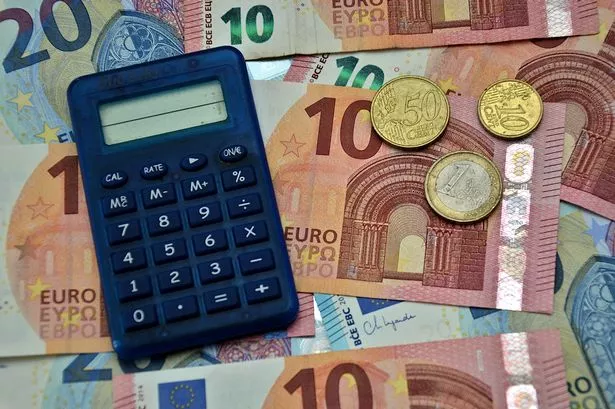 Thousands more are now eligible(Image: SOPA Images)
The minimum rate of the payment is €20 each week.
The WFP income test does not consider capital and certain payments – such as Child Benefit and Fuel Allowance – do not count towards the family’s income.
In January, the income limits will change to €705 weekly for a family with one child, €806 for two children, €907 for three children, €998 for four children and €1,124 for those with five children in their family.
Those with eight or more children who earn €1,472 or less each week will also qualify for the WFP.
Families who reckon they might be eligible for the payment can apply on MyWelfare.ie or complete a WFP1 form.
For all the latest breaking news headlines today, pop over to our website home page.
Fuel Allowance with Working Family Payment
For the first time ever, those who qualify for the Working Family Payment will receive Fuel Allowance to assist with the cost of heating their homes during the winter months.
The payment, currently standing at €33 weekly, saw an increase of €5 to €38 in the budget.
The 28-week payment now totals €1,064 during the Fuel Allowance season.
However, the estimated 50,000 families expecting Fuel Allowance cash should brace themselves for a wait.
Parents have been warned that they won’t qualify until January 1, with the funds not expected to hit their accounts until March or April 2026 – the funds will be backdated to January. The total sum is anticipated to exceed €304.
Back to School Clothing and Footwear Allowance
More children than ever will now be eligible for the one-off Back to School Clothing and Footwear Allowance following its extension in the budget. Children aged two and three are now included in the scheme, which caters for those up to the age of 22.
This means-tested payment is designed to help families with the extra costs of clothing and footwear when children start school each autumn, and it opens from June 1 to September 30 each year.
Whilst these payments bring welcome news to those newly qualified or already enrolled in the schemes, the Economic and Social Research Institute has cautioned that families will face hardship next year following the budget, noting that the removal of one-off boosts will have minimal effect on child poverty and lead to reduced average household income next year. This comes despite €320 million being earmarked to tackle child poverty.
Speaking in the Dáil last week, Sinn Féin Finance spokesman Pearse Doherty slammed the budget for benefiting those at the top with tax breaks but “royally screwed” ordinary workers.
He said: “We have constant price hikes and ever increasing bills, and it means that working households, even those with two incomes, are really struggling to keep up now. They’re squeezed from all angles. It’s price hike after price hike. It’s bill after bill, and people can’t catch their breath.”
Tánaiste Simon Harris defended the budget during the heated Dáil exchange, claiming he was being “shouted down by a bully” and asserting that the majority of the budget was directed towards improving services.
The ESRI has forecast that the withdrawal of one-off supports introduced in previous budgets will cost lower-income households 4.1 per cent of their disposable income.
Nevertheless, families entitled to supports introduced last month have been encouraged not to miss out on available payments.
Around 50,000 families will receive a lump sum exceeding €300, and more will benefit from the “largest ever increase” to the Child Support Payment, while a triple €420 Child Benefit payment will be deposited into the accounts of new parents.
Others will see a €20 rise in their social welfare.
Subscribe to our newsletter for the latest news from the Irish Mirror direct to your inbox: Sign up here.