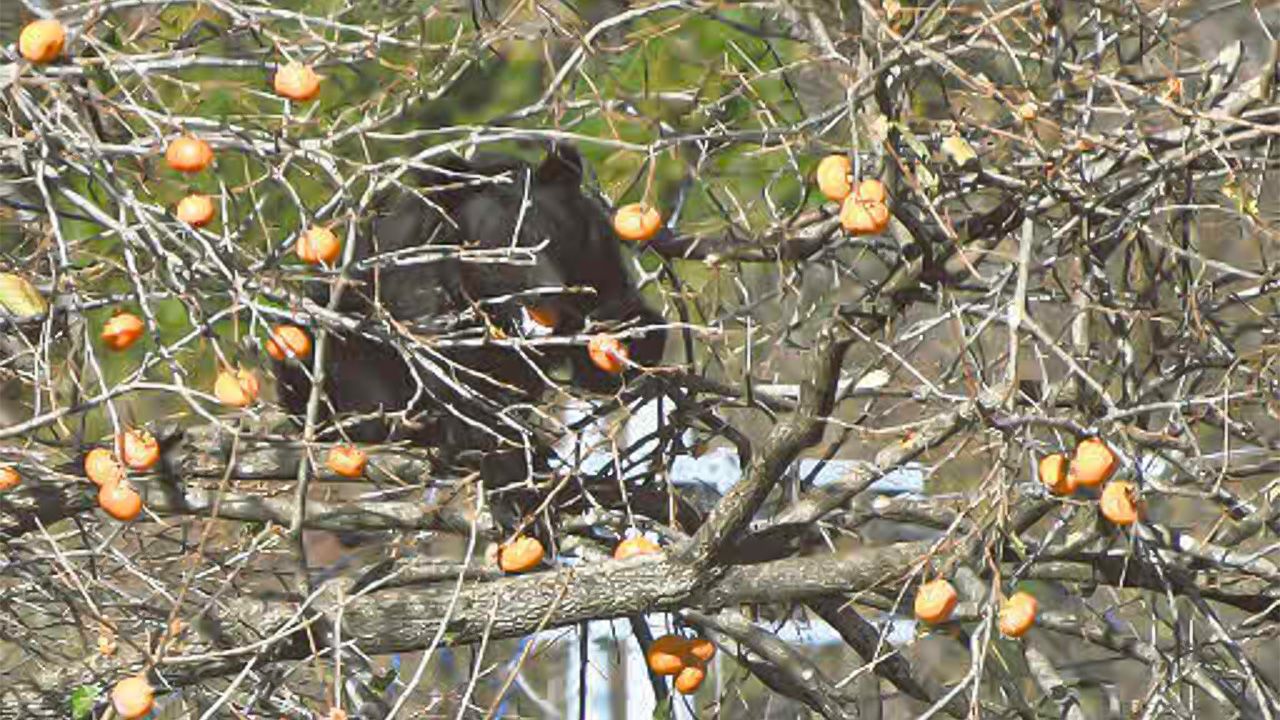
This fall, communities around Japan have reported an unprecedented number of close encounters with bears, including deadly attacks. Drawing on her scientific research, the author explains the multiple factors that have driven the bears into villages, towns, and even cities and stresses the need for more comprehensive, research-based wildlife control.
Japanese communities around the country have had numerous close encounters with bears this fall, some of them deadly. In Niigata Prefecture, where I live, a dozen or more sightings of Asian black bears have been reported on a typical day, and 17 people had been injured by the creatures as of this writing. Since September, the Japanese government has permitted the use of rifles for “emergency hunting” of bears; firearms may even be used near urban areas under certain conditions. The situation has given rise to much talk of “a new breed of bears” and a “new phase” in our relationship with wild animals. But to deal effectively and appropriately with the current bear crisis, we must take a good hard look at the history leading up to it.
Niigata’s Recurring Bear Problem
This is not the first time bear sightings and attacks have spiked in recent years. The first major surge in Niigata Prefecture, where I began my research, occurred in 2006. In response to a rash of sightings and encounters in populated areas, 520 bears were captured and euthanized out of a population then estimated at somewhere between 1,000 and 1,200. Nonetheless, another major surge in bear sightings and encounters occurred four years later, in 2010. In the period spanning those two episodes, more than 1,000 bears were culled.
The Asian black bear had been (and still is) identified as “vulnerable” on the Red List of Threatened Species compiled by the International Union for the Conservation of Nature. Concerned about the species’ status in Niigata, I launched a camera trap study in 2013 with the support of a local nonprofit to which I belong. In 2017, the survey yielded a prefecture-wide estimate of 1,500 bears. This suggested that Niigata’s bear population was actually higher than the pre-culling estimate.
An Asian black bear visiting the author’s camera trap in Itoigawa, Niigata Prefecture, October 2014. (© Wildlife Research Organization in Niigata)
Bear encounters rose sharply again in 2019 and 2020, when the harvest of beechnuts failed for two consecutive years. In 2020, bear attacks in Niigata resulted in 20 casualties, including one fatality. A total of 1,236 bears were captured and euthanized in the prefecture from 2019 to 2020. Yet a 2021 survey by the prefecture yielded a population estimate of 1,300. With a relatively high natural rate of increase (15%–16%), Japan’s black bear population holds up well even under pressure from reactive cullings.
Oak Wilt and the New Breed
The biggest factor that propels bears into human living spaces is a shortage of the tree nuts that provide them with vital nutrients prior to hibernation. Japan’s black bears are especially partial to beechnuts, but beech trees’ mast years (seasons of high production) occur only about once every five years (a strategy thought to enhance the trees’ chances of survival by keeping down the populations of animals that consume them). Other staples of the bears’ autumn diet are two species of Japanese oak: konara (Quercus serrata) and mizunara (Quercus crispula). Unfortunately, oak wilt disease has taken a terrible toll on those trees in Niigata Prefecture.
Oak wilt, a fungal infection transmitted by the oak ambrosia beetle (Platypus quercivorus), has decimated the mature oak trees in the satoyama areas (spaces where people and nature coexist) around many of Japan’s rural communities. In Niigata, oak wilt is estimated to have killed 70% of the konara and 20%–30% of the mizunara. The hardier beech trees are resistant to the blight, but the loss of acorns hits the bears hard during years of poor beechnut yield. As a result, the creatures descend on human settlements in search of the persimmons, chestnuts, walnuts, and other “human” food sources available there.
These circumstances are giving rise to a new breed of “urban bears” that live in the immediate environs of residential areas.
Female bears typically give birth in the winter, during hibernation, and then hibernate with their cubs the following winter. For more than a year, the cubs stay close to their mother, learning how and where to forage for food. Young bears who learned to forage in and around human settlements will often make their homes there instead of returning to their original habitat in the mountains.
Decline of the Satoyama
This situation is by no means unique to Niigata Prefecture. Virtually all of the regions that have reported major problems with bears this year share the following conditions.
(1) The bear population was underestimated in the past owing to a lack of scientific data.
(2) Culling of bears under the prefectural wildlife control plan was inadequate to control the rising population, in part because the plan was based on incorrect estimates.
(3) Depopulation and demographic aging of mountain communities, together with a decline in the harvesting of timber, have left the surrounding satoyama undermanaged and overgrown, and oak wilt and other factors have reduced the bears’ food sources in the wild.
(4) In response to the changes in their foraging environment, the bears have ventured into human settlements for food, and a growing number have been making their homes in the immediate area.
Some 66% of the Japanese archipelago is forested land. Of that portion, 40% is artificially planted (mostly with Japanese cedar), while the remaining 60% is broadleaf forest. Traditionally, the wooded areas bordering rural mountain communities were sustainably managed to provide firewood and other resources. This style of management created bright, airy, satoyama woodland spaces.
After World War II, large swaths of broadleaf forest (the bears’ natural habitat) were cut down and replanted with fast-growing Japanese cedar to augment the lumber supply. In addition, dark, dense vegetation began to take over the neglected satoyama, creating channels between the mountains and the villages below and making it all too easy for wild creatures to wander into human living spaces.
During the Edo period (1603–1868), wildlife management was a public service provided by the villages, which put up fences around fields and assigned personnel to guard the community from wild animals that threatened people, property, or crops. Moreover, the range of those animals was largely confined to the mountain forests, since the open, airy satoyama created a kind of buffer zone between the villages and the wild animals’ natural habitat. In recent times, the neglect of the satoyama and the spread of dense, wild forests have created the conditions for escalating conflict between people and wildlife.
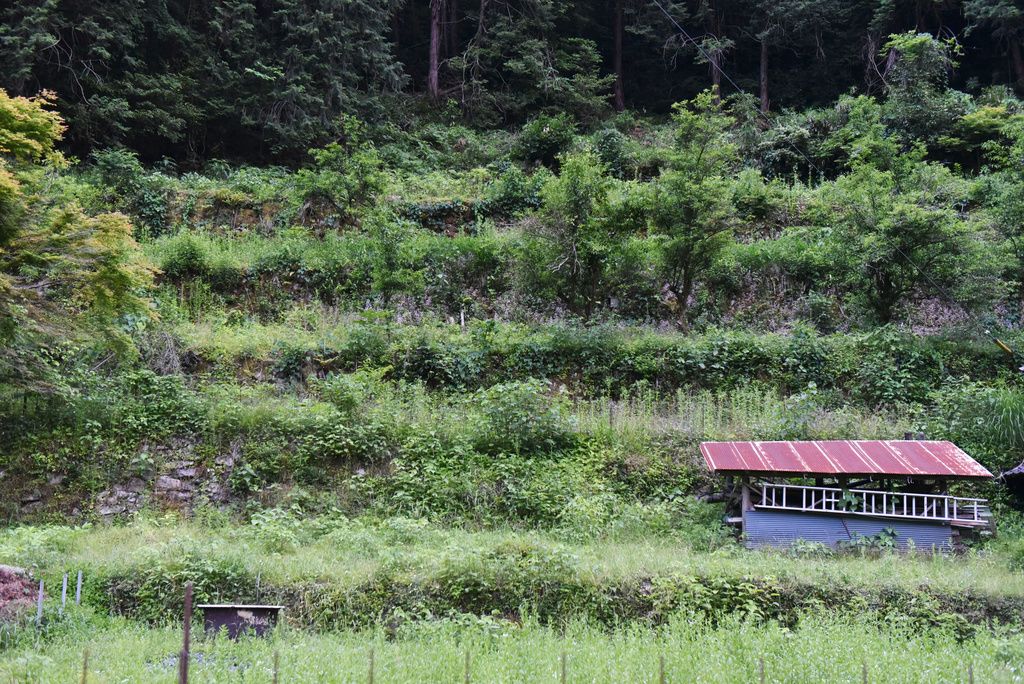
Abandoned farmland in Kitahiroshima, Hiroshima Prefecture, June 2022. (© The Japan Agricultural News/Kyōdō)
Wanted: A National Program for Wildlife Management
As we have seen, a number of circumstances have conspired to create the current bear crisis. A multi-pronged, scientific approach will be needed to limit the damage and injury caused by bears without decimating the bear population. Chief among the measures required are the following:
(1) scientific studies to more accurately determine the local bear population and its rate of growth
(2) population control through systematic culling in areas where the population is growing
(3) removal of bears that have made their home close to human settlements through such means as trapping and behavioral manipulation
(4) creation of buffer zones around human settlements
(5) restoration of oaks to provide a more reliable food source
The restoration of oak forests is a particularly important task. To bring back the mizunara and konara that have been lost to oak wilt will require ongoing action, including programs for replanting and nurturing trees in deforested areas.
There are only about 200,000 licensed hunters in Japan, and most of them are aged 60 or older. This dwindling labor pool already has its hands full helping local governments control burgeoning populations of wild boar and deer to meet the Ministry of Environment’s target of culling some 680,000 animals annually. Now black bears have begun invading even Japan’s urban spaces. We must begin to approach wildlife management as a national policy issue rather than an isolated problem confined to remote mountain communities.
The challenge of protecting human life and property while supporting natural ecosystems is directly tied to the goal of sustaining and revitalizing Japan’s precious regional communities. Like regional revitalization, wildlife management demands a concerted and systematic effort at the national level. All of us, individually and collectively, must own the problem and lend our support to government programs for population control and forest restoration, along with the development of human resources to implement these policies.
(Originally published in Japanese on November 25, 2025. Banner photo: An Asian black bear feasts on persimmons outside a home in the town of Iwaizumi, Iwate Prefecture, on November 17, 2025. © Iwate Nippō/Kyōdō.)