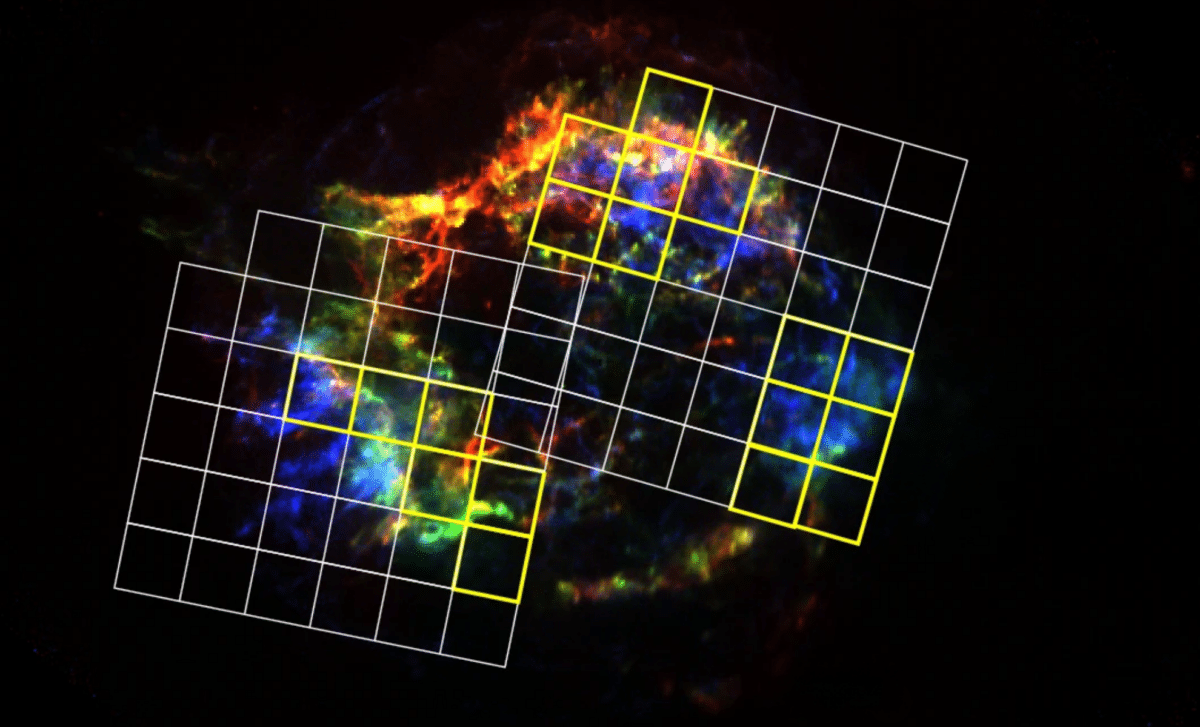
In an exciting new study published in Nature Astronomy, astronomers have unveiled unexpected findings from the XRISM satellite mission. The research team, led by experts from Japan and the U.S., detected unusually high levels of chlorine and potassium in the aftermath of a supernova explosion. This groundbreaking discovery offers fresh perspectives on the chemical processes occurring within dying stars and their remnants. The results challenge prior assumptions about the elemental makeup of supernova debris and could lead to new theories in astrophysics.
Unexpected Elements in the Heart of Supernovae
The detection of chlorine and potassium in supernova remnants is nothing short of groundbreaking. For years, scientists have understood that elements like iron, carbon, and oxygen are produced in stellar explosions. However, the presence of chlorine and potassium in such high concentrations was an unforeseen finding. Researchers working with the XRISM satellite, launched as part of an international effort by NASA, JAXA, and ESA, were initially taken aback when the data from the satellite’s spectrometer revealed these elements in the remnant of a massive star explosion.
The significance of this discovery lies not just in the elements themselves, but in how they were formed. While chlorine and potassium are known to exist in stars, their abundance in supernova remnants was unexpected. This finding challenges existing models of nucleosynthesis, the process by which stars create elements, and could suggest that supernovae contribute more to the universe’s chemical composition than previously thought.
“When we saw the Resolve data for the first time, we detected elements I never expected to see before the launch. Making such a discovery with a satellite we developed is a true joy as a researcher,” said Toshiki Sato, the corresponding author of the study published in Nature Astronomy.
The Role of XRISM in this Groundbreaking Discovery
The XRISM satellite, which stands for X-ray Imaging and Spectroscopy Mission, has played a pivotal role in this monumental discovery. XRISM’s advanced instrumentation was specifically designed to observe X-rays emitted by cosmic phenomena such as supernovae. By capturing these high-energy emissions, scientists can gain insights into the chemical composition and physical properties of supernova remnants, objects that are often challenging to study in detail.
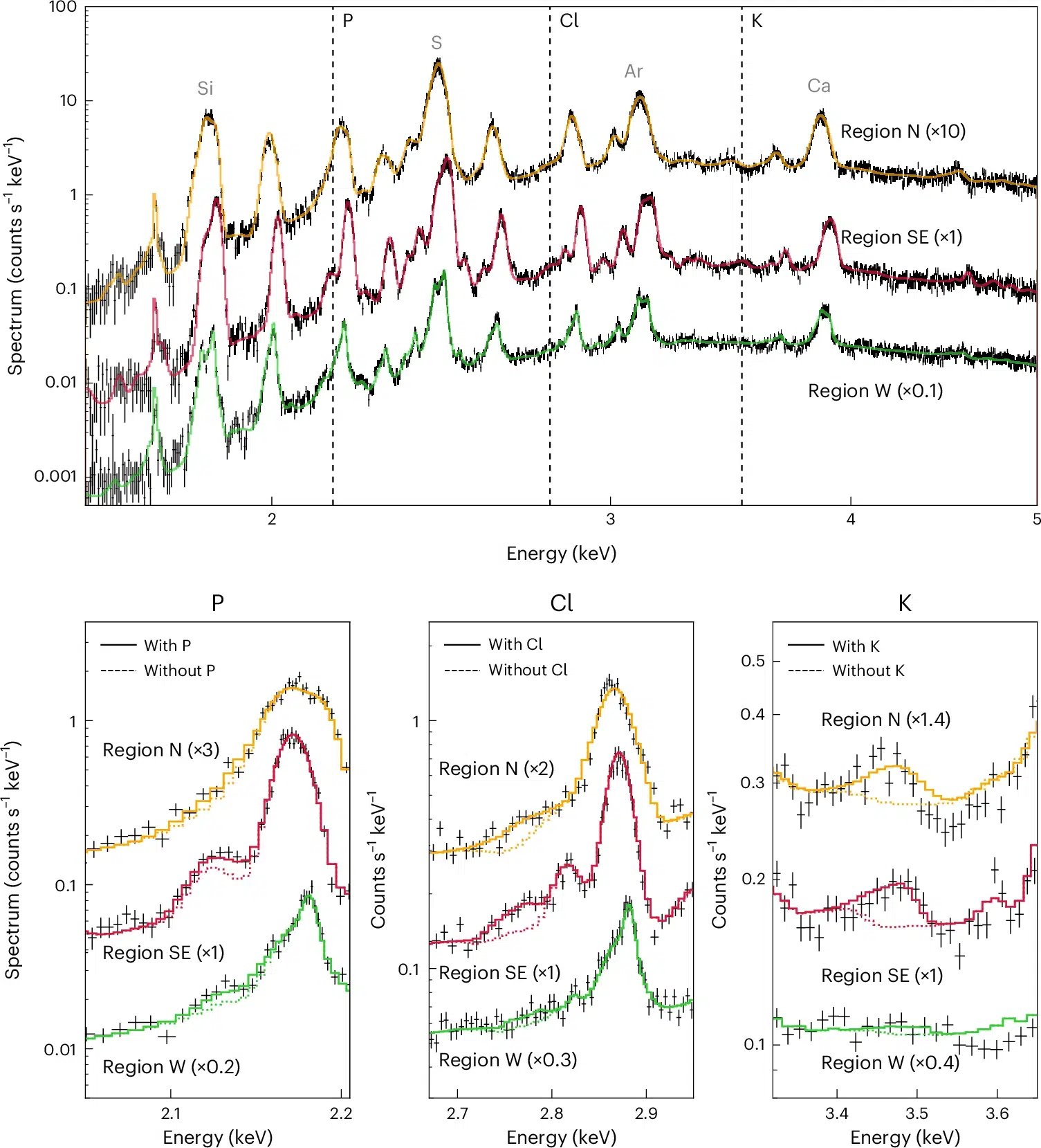 Resolve X-ray spectra of Cas A. (Nature Astronomy)
Through XRISM’s cutting-edge spectrometer, researchers were able to precisely measure the elemental composition of the supernova remnant in question. “I am delighted that we have been able, even if only slightly, to begin to understand what is happening inside exploding stars,” says Hiroyuki Uchida, another corresponding author on the study. The satellite’s high-resolution imaging allowed for unprecedented clarity in detecting the unusual chemical signatures of chlorine and potassium, a feat that would have been impossible with previous technology.
Exploring the Cosmic Role of Supernova Remnants
Supernova remnants are the leftovers of star explosions, the cosmic dust and gas scattered into space after a star’s fiery death. These remnants are often rich with a variety of elements, which are spread across the galaxy by the shockwaves of the explosion. The elements in these remnants become part of the interstellar medium, contributing to the formation of new stars, planets, and potentially life itself. The discovery of chlorine and potassium in these remnants therefore holds broader implications for understanding the origins of life in the universe.
“What we’re finding here is not just a random assortment of elements,” said Kai Matsunaga, another corresponding author on the paper. “How Earth and life came into existence is an eternal question that everyone has pondered at least once. Our study reveals only a small part of that vast story, but I feel truly honored to have contributed to it.”
This sentiment underscores the significance of their work, as the presence of these elements in supernova remnants may help explain the chemical building blocks necessary for life as we know it.