An earthquake swarm is a sequence of many small to moderate earthquakes occurring in a localized area without a dominant mainshock. Instead of a single large rupture followed by decaying aftershocks, swarms distribute their energy across numerous similar magnitude events.
Most swarm earthquakes fall between M1.0 and M4.5 and often occur at shallow depths of about 5–15 km (3–9 miles). The shallow nature allows even small earthquakes to be felt by nearby communities, which increases public concern during extended sequences.
Swarms often number in the hundreds or thousands and may last from hours to several months. Their irregular timing and lack of a clear mainshock make them difficult to categorize using traditional aftershock laws such as Omori decay.
These unusual characteristics signal that a persistent driver is influencing the crust rather than a single stress release. This is why swarms capture scientific interest. They are direct expressions of evolving pressure, fluid movement, or tectonic adjustments happening in real time.
Earthquake swarms also tend to migrate through the crust much more clearly than aftershock sequences. This migration provides valuable clues about how pressure pathways evolve and how the surrounding rock responds.
Why swarms happen and what physically drives them
Earthquake swarms occur when something continuously alters stress or pressure in the crust. The most common driver is the movement of magma or fluids. As fluids enter cracks and pores in the surrounding rock, they increase pore pressure and allow faults to slip repeatedly.
In volcanic regions, magma intrusion plays a central role. As magma pushes its way through fractures, it reorganizes stress fields and forces the surrounding rock to adjust. These adjustments generate clusters of earthquakes that may migrate upward or horizontally, depending on intrusion pathways.
Fluid-driven swarms also occur in hydrothermal systems where heated water or gases circulate vigorously. These fluids fill and pressurize fault zones, sometimes initiating abrupt sequences of small quakes when new pathways open or old ones become blocked.
Tectonic swarms happen in areas where faults slide slowly rather than rupture suddenly. This motion is called fault creep. Each small failure represents a patch of rock that finally slips, producing a repetitive swarm like those observed in the West Bohemia Vogtland region or southern California.
Human-related factors can also generate swarms. Processes such as wastewater injection, geothermal extraction, and mine activity alter subsurface pressure and may trigger persistent clustered seismicity. These sequences often require close investigation to determine whether the cause is industrial or natural.
How scientists track swarms and interpret changing underground conditions
Monitoring an earthquake swarm requires dense instrumentation and continuous data analysis. Seismic arrays provide detailed earthquake locations, allowing scientists to follow how activity migrates. If earthquakes begin moving upward, the pattern may indicate rising magma.
High precision GPS and GNSS stations detect ground movement at scales of millimeters. Uplift, subsidence, or lateral motion near a swarm helps determine whether magma is accumulating, whether hydrothermal pressure is increasing, or whether tectonic strain is changing.
Satellite-based InSAR imaging offers broad coverage that complements ground sensors. InSAR captures deformation across entire regions, revealing patterns that may not be visible with individual instruments. Uplift over a caldera or along a rift zone often pairs with active swarm sequences.
Volcanic systems also rely on gas measurements. Changes in carbon dioxide or sulfur dioxide levels can indicate deeper processes that accompany swarms. Elevated gas output may reflect increased magma degassing, which in turn shifts pressure conditions.
Machine learning based tools now assist in classifying earthquake sequences. Algorithms identify spatial and temporal patterns that may be too subtle for manual interpretation. These tools help distinguish between aftershock sequences and true swarms and can provide early insight into developing unrest.
Why earthquake swarms create confusion and concern for communities
Swarms generate anxiety because they defy the common expectation that earthquakes follow a simple mainshock then aftershock pattern. Without a large event to mark the start, people experience repeated shaking with no sense of resolution.
Communities often worry that a larger earthquake may follow. In most settings, this does not happen, yet the uncertainty remains difficult to communicate. Agencies must explain that swarms usually reflect fluid or pressure migration rather than imminent large fault rupture.
Extended swarms strain community resilience. Dozens of felt earthquakes in a single day can disrupt sleep, elevate stress and create persistent fear. The unpredictable timing of each event worsens this psychological impact.
For scientists, explaining the probability of escalation is challenging. Magmatic systems can change quickly, and tectonic faults behave differently depending on regional conditions. Clear communication is necessary, especially in populated volcanic areas.
Because swarms do not follow standard aftershock patterns, agencies must use probabilistic statements that reflect uncertainty. This approach requires careful wording to avoid either false reassurance or unnecessary alarm.
Key examples that show how swarms behave in different geological settings
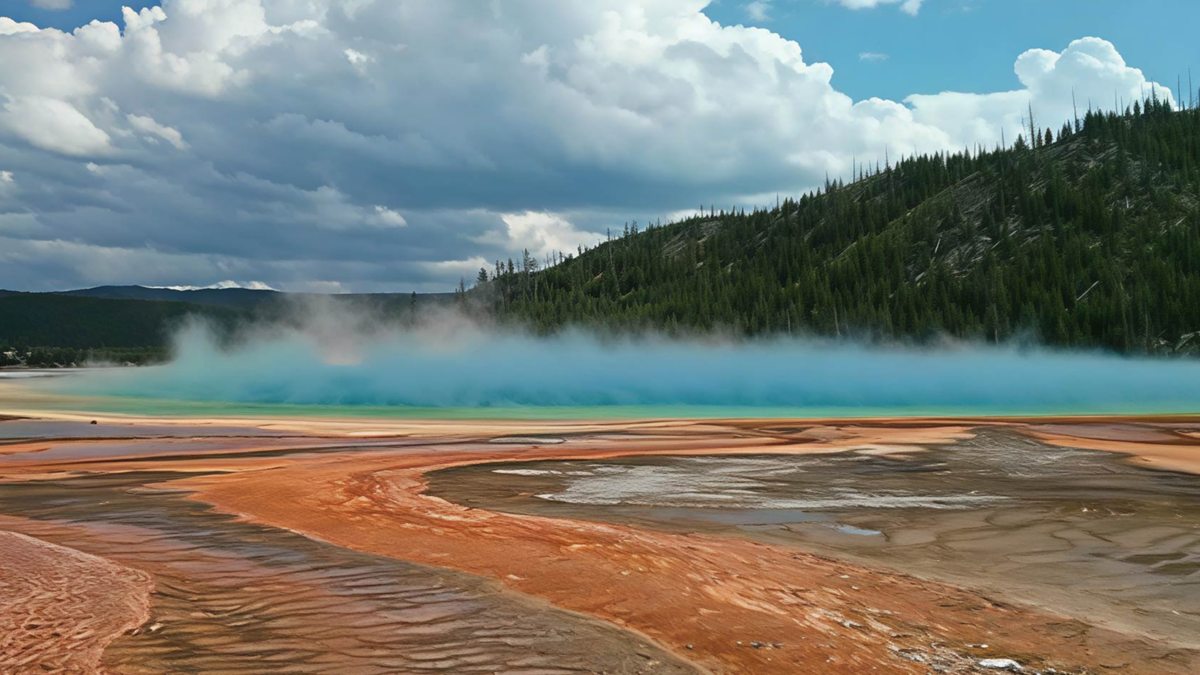
Yellowstone National Park in the United States experiences regular earthquake swarms driven mostly by hydrothermal fluid movement. One of the largest recent sequences occurred in 2017, when more than 2 400 earthquakes happened over three months. The lack of significant ground uplift suggested the source was fluid pressure rather than magma ascent.
Italy’s Campi Flegrei caldera has seen accelerating swarm activity between 2023 and 2024. These swarms occurred alongside several centimeters (1 to 2 inches) of uplift attributed to increased gas pressure within the crust. Scientists continuously monitor the area because millions of people live within range of potential hazards.
The Reykjanes Peninsula in Iceland entered a new magmatic cycle beginning in 2020. Persistent swarms marked the reopening of the rift system after centuries of relative quiet. Swarm migration patterns eventually corresponded with magma ascent that fed multiple fissure eruptions.
California’s Salton Sea and Brawley Seismic Zone frequently produce swarms that reflect both tectonic complexity and fluid movement. Some sequences are linked to geothermal operations, while others relate to stress transferred between the San Andreas and Imperial faults.
The West Bohemia Vogtland region on the Czech-German border experiences deep swarms linked to mantle-derived fluids. These sequences help scientists study how fluids influence intraplate fault behavior in non-volcanic settings.
Why earthquake swarms matter for Earth science and hazard assessment
Earthquake swarms offer rare and direct insight into dynamic underground processes. They reveal how the crust redistributes stress, how fluids and magma migrate and how faults respond over time.
For volcanic systems, swarms are often one of the earliest indicators of changing pressure or magma intrusion. Combining swarm behavior with deformation and gas data allows scientists to assess levels of unrest and improve eruption forecasting models.
In tectonic settings, swarms identify regions of creeping faults, evolving stress concentrations, or small-scale adjustments that may not be detectable through other instruments. These signals contribute to long-term seismic hazard evaluation.
Swarms also help distinguish between natural and human-induced seismicity. Understanding these differences supports safer industrial practices and informs regulatory decisions.
For science as a whole, swarms provide high-resolution snapshots of crustal behavior that would otherwise remain hidden. They form one of the most detailed natural laboratories for understanding how the Earth continually reshapes itself.
References:
1 What is an earthquake swarm? – U.S. Geological Survey – Accessed December 2, 2025