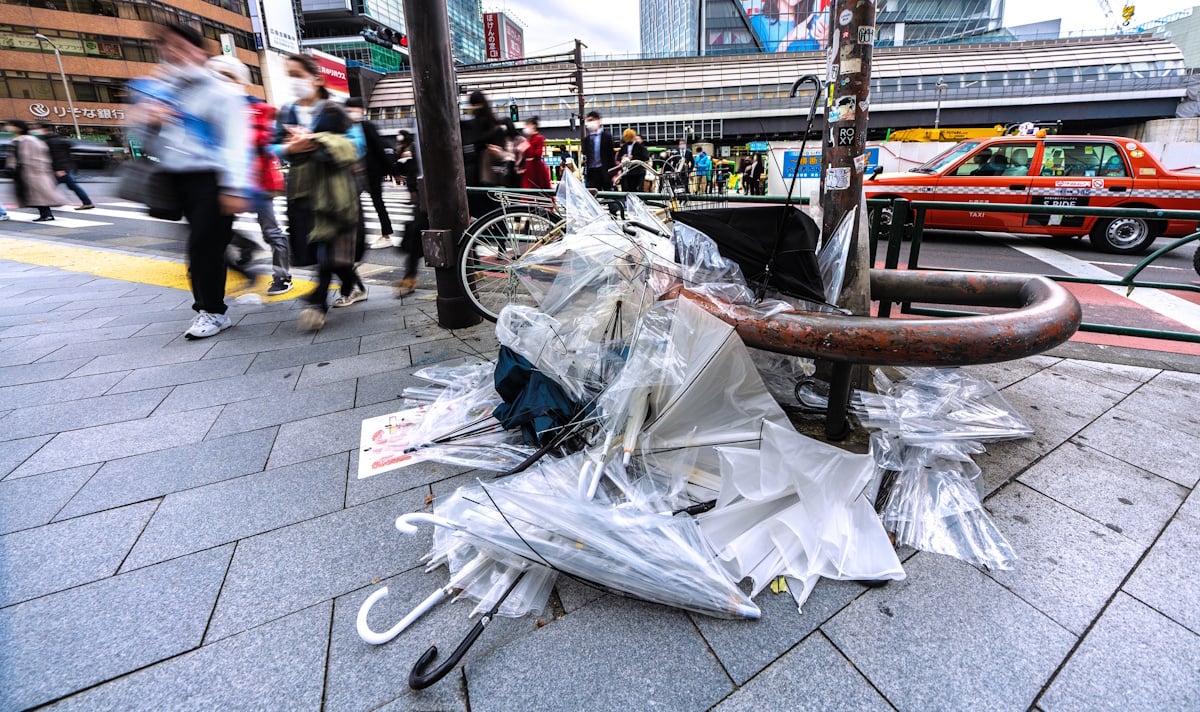
Shibuya City in Tokyo plans to fine businesses and individuals to curb rising litter as tourism rebounds. The move is prompting renewed discussion around a perennial topic: should tourist-heavy locations in Japan do more to help tourists dispose of their garbage? Or should more be done to compel travelers to take their trash back to their hotels?
Responsibility for businesses and challenges to enforcement
 Picture: Ryuji / PIXTA(ピクスタ)
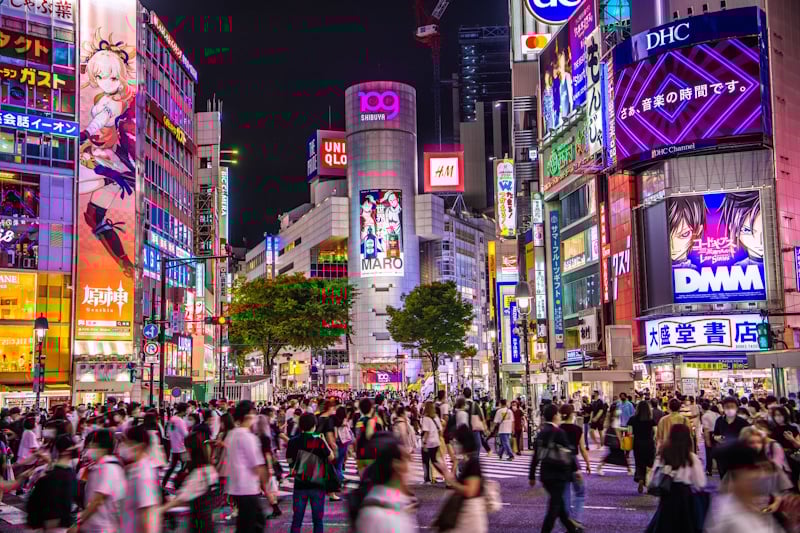
Streets near Shibuya, Harajuku, and Ebisu stations now accumulate large amounts of trash, especially late at night. Takeout containers make up about 75% of all litter, with convenience stores accounting for 63% and cafes about 12%. Volunteers, cleaners, and shop staff remove waste each morning, but the cycle repeats daily.
If approved on December 10, the rules take effect in April 2026, with fines starting in June. Shibuya hopes the policy will shift habits during peak tourist seasons and ease pressure on its limited cleaning workforce. The city says it will not increase public trash cans, arguing that businesses generating takeout waste should handle disposal.
The revised “Clean Town Shibuya” ordinance requires takeout-focused shops to install trash cans in visible, accessible areas. Targeted businesses include convenience stores, fast-food chains, drink shops, cafes, and crepe stands. Vending machine operators must also maintain cans, continuing an existing obligation. The goal is to ensure that sellers of disposable items take responsibility for managing the waste they help create.
Compliance rates vary widely. Fast-food outlets have a 97% installation rate, convenience stores 78%, but small takeout shops only 50%. Many shops previously removed bins due to misuse, dumping of household garbage, or staffing shortages that made maintenance difficult. Some stores in Center-gai, the heavily-trafficked area directly across from Shibuya Station, even display “No Trash Can” signs to prevent overflow and contamination.
Enforcement will escalate gradually through warnings, improvement orders, public disclosure, and then a 50,000 yen ($320) fine. Individuals caught littering will pay a 2,000 yen ($12) fine. Shibuya plans to expand enforcement by assigning smoking-control officers to litter checks and hiring additional staff.
While some business owners support the intent, others fear improper disposal will overwhelm their bins. Critics note that convenience stores already provide many trash cans, and that foreign visitors remain confused by Japan’s sorting rules.
Foreign tourists face hesitation when coming to Japan over trash
Visitors across Japan face a shortage of public trash cans, a challenge that intensifies in crowded sightseeing districts. A national Japan Tourism Agency survey found that the lack of trash cans was the top problem foreign tourists experienced in 2024, chosen by 21.9% of respondents. About 70% said they had to carry their trash until returning to their accommodation. Smaller percentages admitted to placing items into overflowing bins or leaving them elsewhere.
Tourists in Asakusa’s Kaminarimon describe issues that also affect Shibuya. An Australian visitor said Japan’s lack of English and Chinese labels on bins made sorting confusing. She worried she might dispose of items incorrectly. A U.S. visitor carried empty bottles in his backpack because he did not want to litter but could not find a bin.
Planning a trip to Japan? Get an authentic, interpreted experience from Unseen Japan Tours and see a side of the country others miss!

“Noah [at Unseen Japan] put together an itinerary that didn’t lock us in and we could travel at our own pace. In Tokyo, he guided us personally on a walking tour. Overall, he made our Japan trip an experience not to forget.” – Kate and Simon S., Australia

See a side of Tokyo that other tourists can’t. Book a tour with Unseen Japan Tours – we’ll tailor your trip to your interests and guide you through experiences usually closed off to non-Japanese speakers.


Want more news and views from Japan? Donate $5/month ($60 one-time donation) to the Unseen Japan Journalism Fund to join Unseen Japan Insider. You’ll get our Insider newsletter with more news and deep dives, a chance to get your burning Japan questions answered, and a voice in our future editorial direction.
These comments highlight cultural mismatches. In many countries, public bins are abundant and color-coded, while in Japan, people are expected to hold waste until they locate the proper disposal point.
This gap between expectations and reality contributes to accidental littering. In high-traffic areas, tourists often buy snacks, drinks, and souvenirs but cannot easily discard packaging. To Japanese people, bringing home their trash is normal. But for people coming from outside the country, without clear multilingual instructions, confusion around sorting rules compounds the problem.
Why are there so few trash cans on the streets of Japan?
 Picture: チャベキ / PIXTA(ピクスタ)
Japan once had more public trash cans, but security incidents, especially the 1995 sarin terrorist attack, led to widespread removals. Later, household waste dumping, hygiene concerns during COVID-19, staffing shortages, and high maintenance costs reinforced the decline. Outdoor bins cost around 200,000 yen each, and cities must fund daily collection. As public bins disappeared, convenience stores became informal disposal hubs, causing overflow and prompting some shops to remove bins altogether.
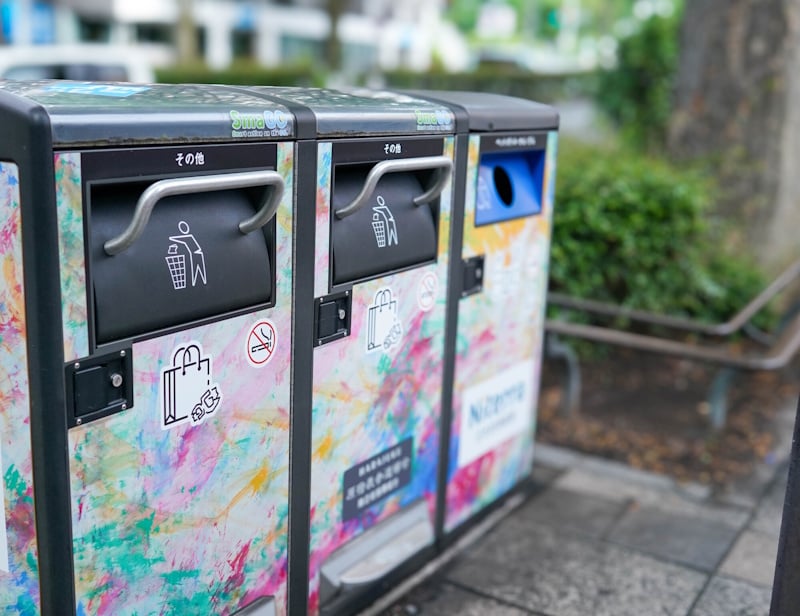
To balance cleanliness and cost, many municipalities now invest in “smart trash cans.” Forcetech’s SmaGO is among the most widely deployed. These bins compress waste, allowing them to hold about five times more than regular cans. Remote monitoring alerts staff when bins are full, reducing labor and eliminating unnecessary patrols. As of November, about 600 SmaGO units operate across 60 locations in 25 prefectures, including some being implemented across Shibuya and Harajuku.
Results are notable. In Osaka’s Dotonbori, litter decreased by 70–90% after installation. Shibuya has also tested solar-powered compression bins with 500–600-liter capacity. These systems offer a potential middle ground for districts facing severe over-tourism, allowing cleaner streets without overwhelming municipal budgets.
A way forward: improving understanding and building a sustainable waste culture
Japan’s waste practices require more than infrastructure. They require cultural understanding. Visitors often expect simple, abundant trash cans, while Japan emphasizes personal responsibility and detailed sorting rules. Without guidance, these differences can lead to confusion and unintentional violations.
Local governments increasingly pair infrastructure improvements with outreach. Taitō City distributes take-home waste bags and multilingual etiquette leaflets. Staff in Edo-themed costumes explain trash rules in approachable ways. The city also hosts game-like cleanup events, which encourage visitors to participate in maintaining cleanliness. Residents report positive impressions, even though the impact is difficult to measure numerically.
Experts say long-term strategies are essential. Associate Professor Nishikawa Ryo of Rikkyo University argues that cities must explain not only what the rules are but why they matter. Clear, culturally sensitive communication can prevent misunderstandings and create smoother relationships between tourists and local communities.
Shibuya’s decision to impose fines reflects growing pressure to protect urban environments. Whether the policy succeeds remains to be seen, but it signals a broader national shift toward more structured, technology-supported, and culturally aware waste management.
To read a deeper analysis of this issue, see our post Does Japan Need More Garbage Cans – or Fewer Trashy Tourists?, available to our Unseen Japan Insider subscribers.
Planning a trip to Japan? Get an authentic, interpreted experience from Unseen Japan Tours and see a side of the country others miss!
“Noah [at Unseen Japan] put together an itinerary that didn’t lock us in and we could travel at our own pace. In Tokyo, he guided us personally on a walking tour. Overall, he made our Japan trip an experience not to forget.” – Kate and Simon S., Australia
See a side of Tokyo that other tourists can’t. Book a tour with Unseen Japan Tours – we’ll tailor your trip to your interests and guide you through experiences usually closed off to non-Japanese speakers.
Want more news and views from Japan? Donate $5/month ($60 one-time donation) to the Unseen Japan Journalism Fund to join Unseen Japan Insider. You’ll get our Insider newsletter with more news and deep dives, a chance to get your burning Japan questions answered, and a voice in our future editorial direction.
Sources
東京・渋谷区がごみ箱未設置のコンビニや自販機業者に過料5万円の方針 条例は都内初 「ポイ捨て」も過料2000円 議会で可決されれば来年6月から TBS NEWS DIG
ゴミ箱未設置5万円、ポイ捨て2000円 渋谷区が罰則付き条例案 毎日新聞
ゴミポイ捨ては“罰金”2000円!渋谷で新条例採決へ…飲食店・コンビニはゴミ箱設置義務化も FNNプライムオンライン
なぜ日本のまちからごみ箱が消えた? IoTを活用したごみ箱「SmaGO」の広がりに期待 日本財団