
In the radioactive soils of Chernobyl, microscopic worms are rewriting the rules of biology. A remarkable discovery has revealed that some of these creatures are extraordinarily resistant to radiation—challenging what scientists thought they knew about the limits of life. Even more fascinating, their resilience could unlock new insights into how DNA repairs itself, opening fresh possibilities for human medicine.
The Chernobyl exclusion zone—once the epicenter of the 1986 nuclear catastrophe—has become home to a surprising array of life. Researchers have now identified certain nematodes that appear completely unfazed by the lingering radiation. Published in early 2024, this study raises profound questions about biological adaptation and could reshape our understanding of cellular repair and survival.
The Chernobyl nematodes: nature’s ultimate survivors
Within the exclusion zone, an entire ecosystem has evolved against the odds. Among its toughest inhabitants are nematodes of the species Oschieus tipulae. Found in soil, leaf litter, and decomposing fruit, these microscopic worms seem to thrive in radiation levels that would be lethal to most other organisms.
Led by biologist Sophia Tintori of New York University, researchers conducted an in-depth investigation into these resilient worms. Their findings were astonishing: the nematodes’ genomes showed no signs of damage typically caused by ionizing radiation. This discovery defies long-standing assumptions about radiation’s destructive effects on living cells.
Key characteristics of the studied nematodes:
• Species: Oschieus tipulae
• Habitat: soil, leaves, and decomposing fruit
• Distinct trait: exceptional resistance to ionizing radiation
• Genome: no visible signs of damage
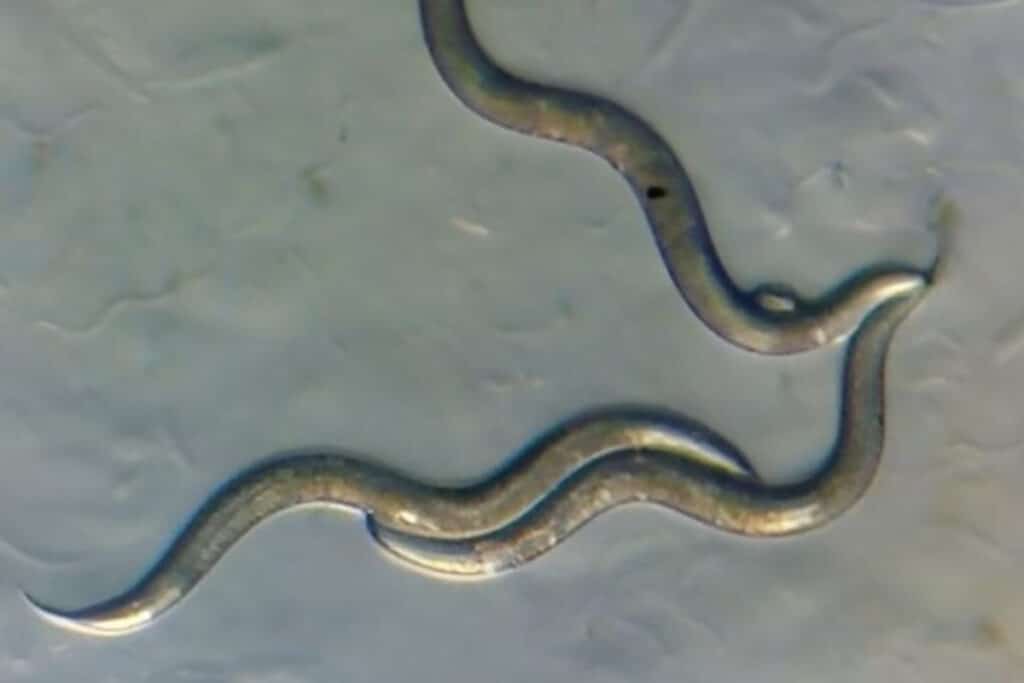
These Chernobyl worms have evolved to survive with a surprising ability. © Sophia Tintori, iStock
A rigorous study yielding surprising results
To ensure accuracy, the team adopted a meticulous research method. Outfitted with protective gear and Geiger counters, they collected hundreds of nematode samples across the exclusion zone. From this pool, 15 specimens underwent full genome sequencing.
When the researchers compared their data, the results were startling:
• No evidence of large-scale chromosomal rearrangements.
• No link between mutation rate and radiation intensity.
• Clear differences in DNA tolerance among worm lineages—unrelated to their exposure levels.
These findings suggest that Chernobyl’s nematodes have evolved highly efficient DNA repair systems. This extraordinary adaptation could inspire new breakthroughs in medicine, especially in the fight against cancer.
What this means for medicine and evolution
The nematodes’ exceptional resistance to radiation is opening exciting new research avenues. By studying these creatures, scientists hope to uncover the molecular mechanisms behind their DNA repair abilities. Such discoveries could one day explain why some people are more vulnerable to genetic mutations and certain diseases.
Potential applications of this breakthrough include:
Beyond its medical potential, the study highlights the importance of biodiversity in harsh ecosystems. The Chernobyl exclusion zone—though inhospitable to humans—has become a living laboratory for studying adaptation and survival in the face of adversity.
Ultimately, these resilient nematodes are proof of life’s unmatched ability to endure. Their story may one day help us repair our own genetic flaws and develop therapies to fight diseases rooted in mutation and damage.