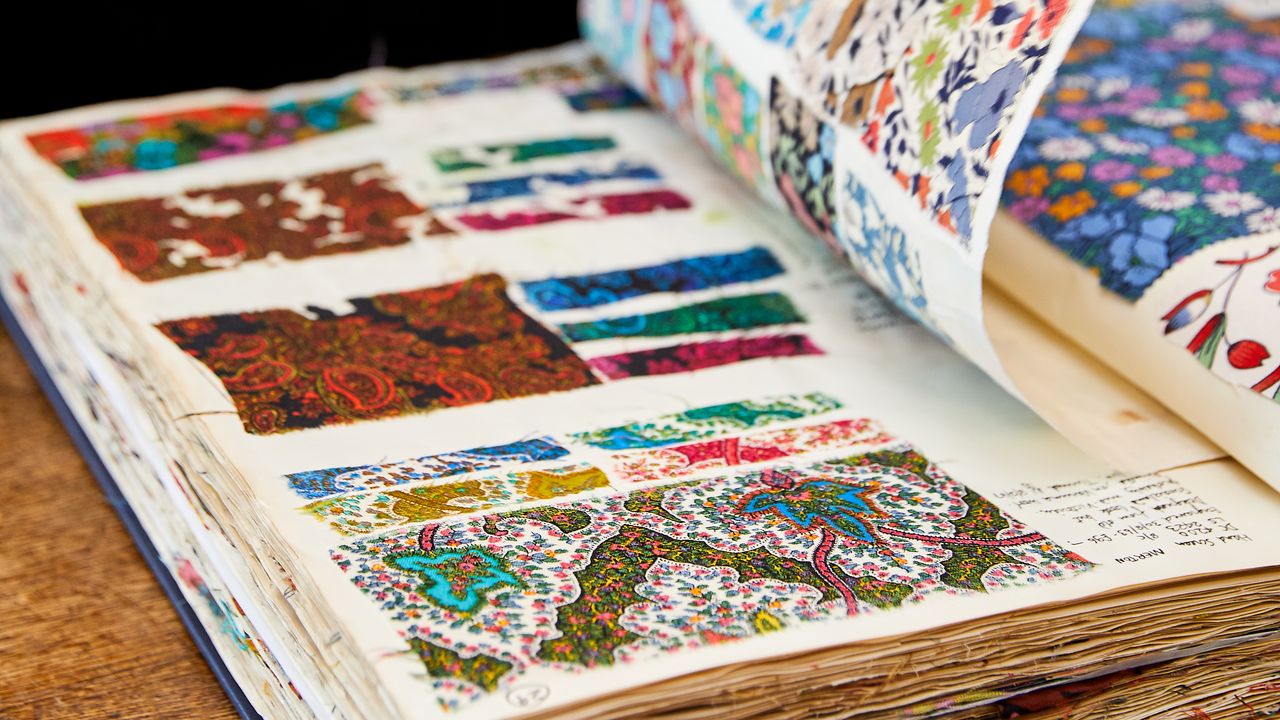
Preserving legacies is, of course, integral to how these archives are kept and used. ‘It feels like a responsibility to preserve these beautiful glimpses into the past,’ says Dominique Caplan, Head of Design at Gainsborough Silk Weaving Company. Their archives began as a collection of exquisite tissues that founder Reginald Warner had collected at the turn of the 20th century while on his Grand Tour. After also acquiring the archives of the defunct English Weaving Company, he set up Gainsborough in 1903. ‘Anyone who is passionate about design finds the archive captivating and our designers and creative director take every opportunity to spend time in the archive,’ says Dominique. ‘If it is an in-house project then our team will already have a backlog of designs they have been itching to reintroduce.’
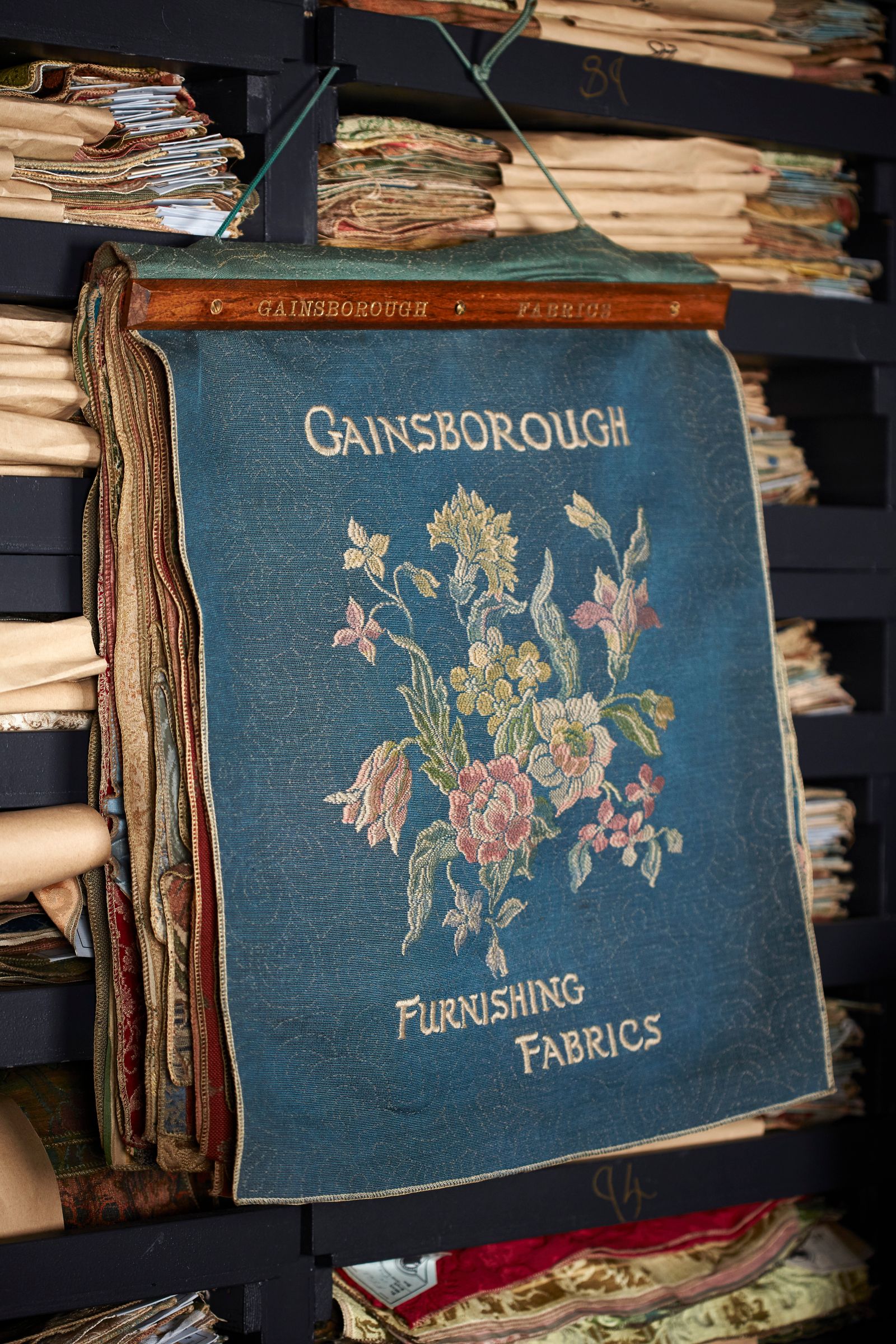
Karen Beauchamp, designer of a new collection from Gainsborough, along with her fabrics, the Gainsborough archives at the Gainsborough Silk Mill.Alun Callender
The Sudbury Edits, named for the location of the mill, are collections featuring historical designs specifically selected for their timeless appeal and re-imagined in different colourways for the modern audience. ‘The collections are tailored to what our international clients are seeking for a more modern interior, and it is surprising how often this can be achieved whilst retaining historical palettes,’ says Dominique.
That balance is part of what makes design archives so fascinating. They sit at the intersection of cultural memory and innovation. ‘Designs from another time that have lost none of their appeal can indeed build a tangible bridge to the past’ says Marianne. ‘They help us to connect with the experiences and dreams of former generations. Reviving such pieces also keeps cultural knowledge in active circulation: techniques, materials, and ways of thinking that might otherwise be forgotten, continue to live through contemporary use.’

Alvar Aalton Foundation
Whether it is a faithful reproduction, or an entirely new design, interior design archives offer a depth of reference that speaks to our innermost thoughts about subjects like taste. In an age of rapid production and short-lived trends, they ensure that new work remains connected to a lineage, and that historical designs continue to evolve through use rather than stultifying reverence. They remind us that good design, enduring design, is not created in isolation but is instead revised, adapted, continually inspired by what came before and always reflecting what is happening now.