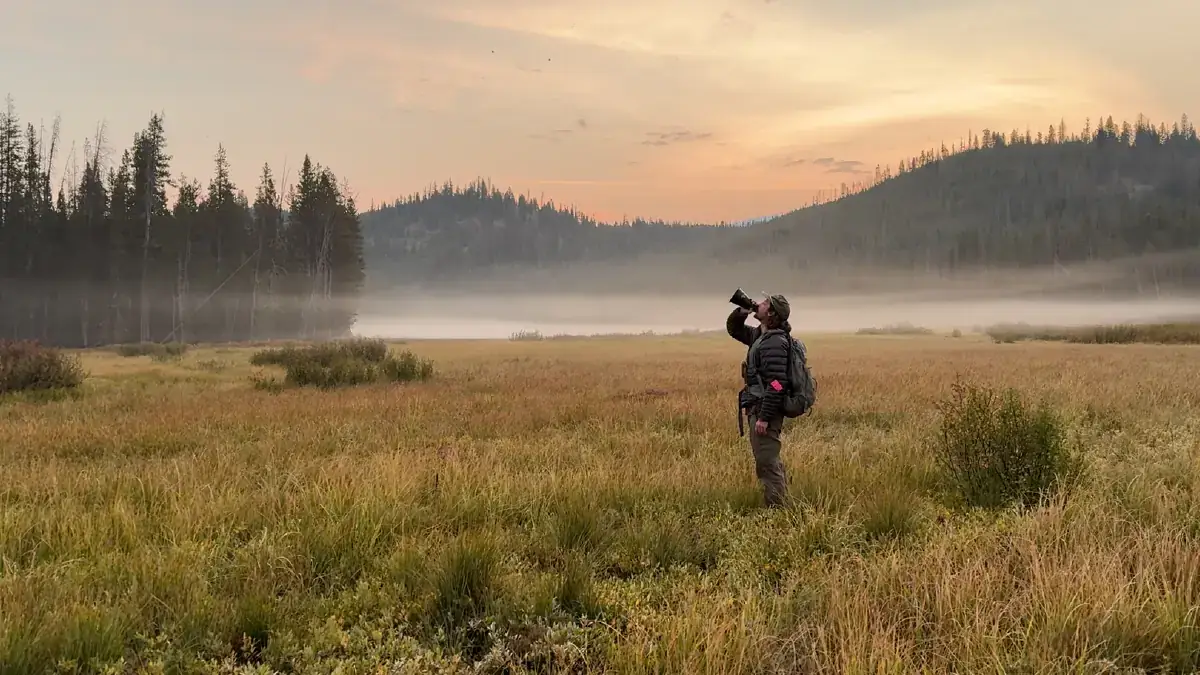
Rebholz, a former carpenter who came to the West to study big wild animals, and earn his master’s degree at University of Idaho studying Idaho wolves, has been leading U of I student researchers into Idaho’s backcountry for several years as he collects DNA from wolf scat to precisely document the family trees of 20 wolf groups in the state.
“We’re out here for nine days at a time hiking, camping, setting up trail cameras and looking for wolves and their rendezvous sites,” Rebholz said. “What we want from the rendezvous sites are genetic samples from scat.”
From the wolf feces, Rebholz and the students scrape a few flakes off the top layer that contains the animals’ epithelial cells. The flakes harbor the DNA from the individual that dropped the scat. The samples are bagged, marked and later used to identify the specific animals via its DNA.
“We can get a genetic sample from each individual in that pack,” Rebholz said. “From that sample we can create pedigrees — large family trees of these wolf packs, and we’ve been doing this for the same packs for the past 20 years.”