Extreme precipitation is expected to surge in frequency as global warming intensifies—but not all regions will be hit equally. Some countries need to brace for far heavier downpours than ever before.
Across the globe, the water cycle is being disrupted in two opposite ways: droughts on one side, floods on the other. As global temperatures climb, more ocean water evaporates into the atmosphere, fueling the clouds, storms, and weather systems that produce rain.
But the impact won’t be evenly shared. Some regions will face repeated bouts of torrential rain, others will see modest changes, while a few could even experience drier conditions overall. “Extreme precipitation events are driven by complex, multi-layered atmospheric interactions,” explains a new study published in Nature Geoscience.
Researchers from Texas and Colorado created high-resolution climate models (between 6 and 15 miles) to better predict how and where these powerful systems might evolve. Their findings are alarming:
“In a high carbon emissions scenario, daily extreme rainfall over land could increase by roughly 41% by 2100,” they report. In other words, the type of heavy rain capable of causing flooding could nearly double before the end of the century.

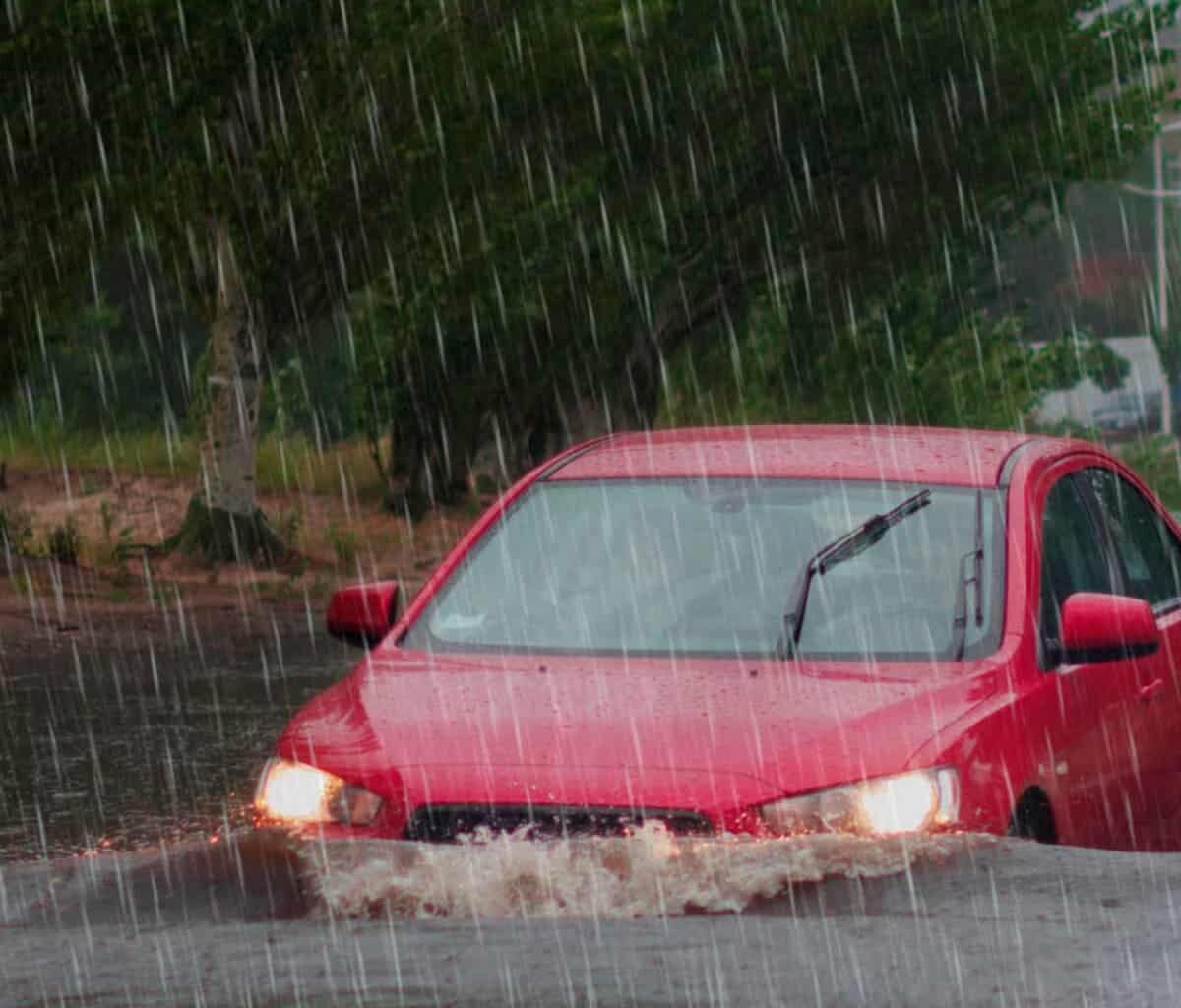
Extreme rainfall events will increase significantly across the planet, but not with the same intensity everywhere. © arhendrix, Adobe Stock
The Southern Hemisphere faces a surge in extreme rainfall
That 41% figure represents a global average—but regional impacts will vary widely. While climate models differ somewhat on the details, they all point to the same general trend:
• South America, India, Southeast Asia, Indonesia, Central Africa, and northern Australia are projected to see the sharpest rise in extreme rainfall. Despite differences in scale, every model agrees these mostly Southern Hemisphere regions face an escalating risk.
• In the United States, the southeast and east coast up through eastern Canada are expected to see substantial increases. Some models also predict higher risk for the southwest and along Canada’s west coast and Alaska.
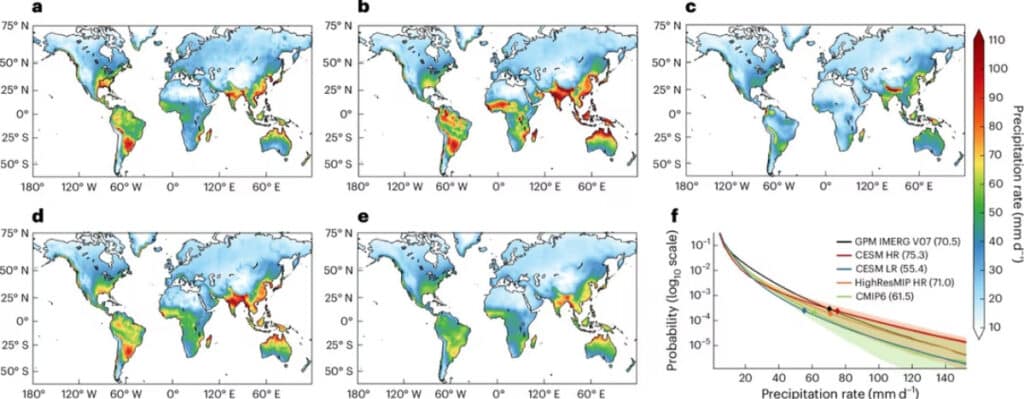
The results of five different models regarding the increase in heavy rainfall events: blue indicates areas with the smallest increase, and orange and red indicate areas with the greatest increase in risk. © Nature Geoscience
Europe unlikely to face dramatic rainfall shifts
According to the study, France belongs to the regions least affected by the global rise in heavy rainfall. However, some projections indicate slightly more intense precipitation in the country’s southeast, particularly near the Mediterranean coast.
Elsewhere, the Arctic, Canada, Russia, and the Scandinavian nations are expected to remain relatively stable, with only minor changes overall.
As the planet continues to warm, one thing is certain: the balance of the world’s water cycle is shifting—and countries in the path of this intensifying rain must start preparing now.

Karine Durand
Specialist for extreme weather and environment
A specialist in extreme weather phenomena and environmental issues, this journalist and TV host has been explaining climate topics since 2009. With over 15 years of experience in both French and American media, she is also an international speaker.
Trained in communication and environmental sciences, primarily in the United States, she shares her passion for vast natural landscapes and the impacts of climate change through her work on biodiversity and land management.