What human undertaking could make time itself slip by a hair? NASA points to a decision in China that, on paper, might tug at the planet’s spin.
When a reservoir the size of a small sea fills, physics keeps score. NASA scientists have calculated that impounding up to 40 cubic kilometers of water behind China’s Three Gorges Dam redistributes mass and nudges Earth’s moment of inertia. The result is microscopic but measurable, roughly a two centimeter pole shift and about 0.06 microseconds added to the length of a day. Set against the 2004 Indian Ocean earthquake and ongoing polar ice melt, the finding shows how human engineering now joins natural forces in subtly tuning the planet’s spin.
Engineering marvel or planetary impact?
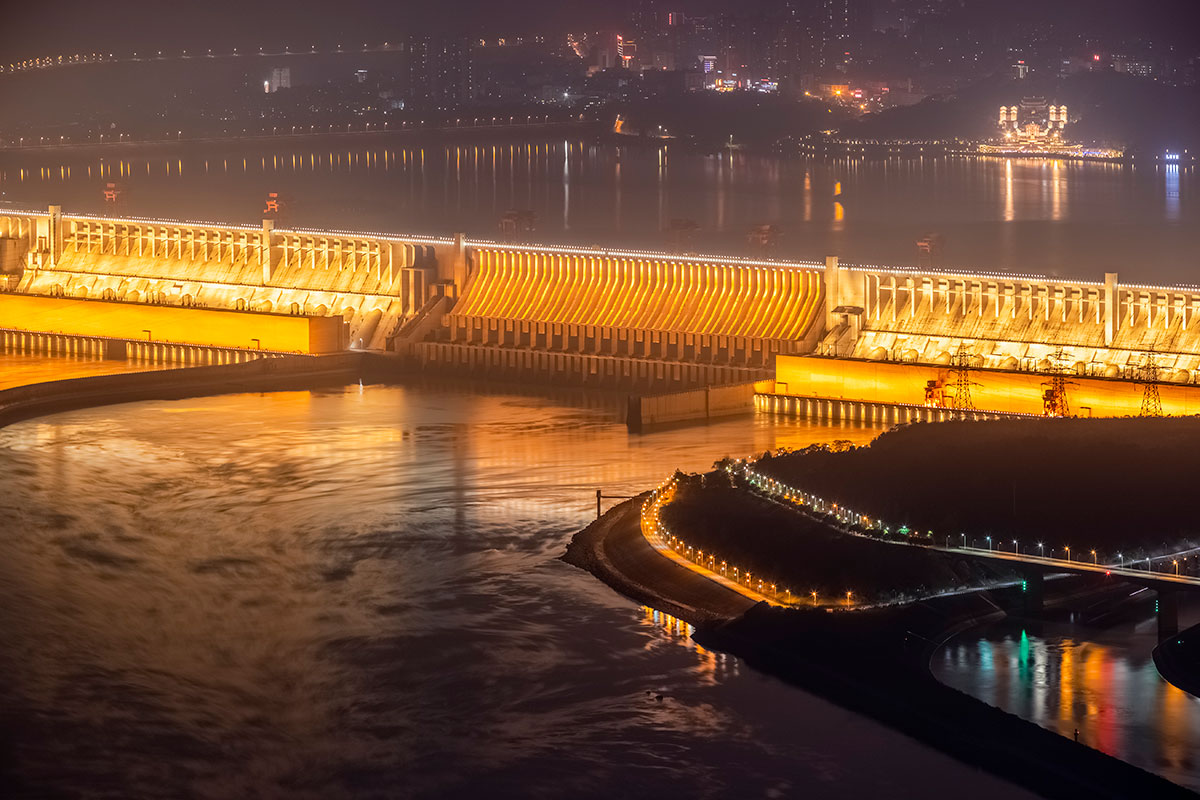
Three Gorges Dam, nestled in Hubei province along China’s Yangtze River, is a colossal feat of engineering. At 2,335 meters long and 185 meters high, holding up to 40 cubic kilometers of water, it is the world’s largest hydroelectric power station. But could its massive reservoir actually affect the Earth itself? According to NASA, this dam might slightly slow Earth’s rotation.
The science behind the claim
How could a dam influence Earth’s rotation? The answer lies in the laws of physics, specifically the moment of inertia. Imagine a figure skater spinning: when they pull their arms in, they spin faster, and when they extend them, they slow down. By filling the Three Gorges Dam with billions of tons of water, the redistribution of mass moves slightly farther from the axis of rotation, which can cause Earth to spin marginally slower. NASA estimates this redistribution could shift the poles by about 2 cm and lengthen the day by a tiny 0.06 microseconds.
This phenomenon is not unprecedented. For example, the catastrophic 2004 Indian Ocean earthquake, which caused a massive tsunami, redistributed Earth’s mass enough to shorten the day by about 6.8 microseconds. Human activities, however, entering the equation on such a profound scale is thought provoking.
How significant is this change?
When stacked against the forces of nature, the impact of the Three Gorges Dam may seem insignificant, barely a blip in the grand timeline of Earth’s rotational history. But its importance lies in what it reveals: human activities, no matter how small they appear on a planetary scale, are creating measurable effects. Compare this to the ongoing melting of polar ice caps, which redistributes Earth’s mass and impacts global systems. Individually, these changes may be minuscule, but cumulatively, they signal a planet under pressure.
In fact, scientists have discussed whether such shifts could one day lead to the addition or elimination of a leap second to keep our clocks synced with planetary motion.
The broader context: cause for reflection
As we extend our reach with infrastructure like the Three Gorges Dam, we also must grapple with its implications on a broader scale. While this reservoir helps power millions of homes with renewable energy, it simultaneously underscores how deeply intertwined human activity and natural processes have become. Around the world, similar projects are underway or in planning, each shifting Earth’s delicate balance in its own way.
These changes serve as a reminder of our immense influence on the planet. What other hidden interactions might we be triggering without even realizing it? The delicate dance between development and sustainability has never been more urgent to address.
Source : https://www.iflscience.com/its-true-chinas-three-gorges-dam-is-so-big-it-changes-earths-spin-75997