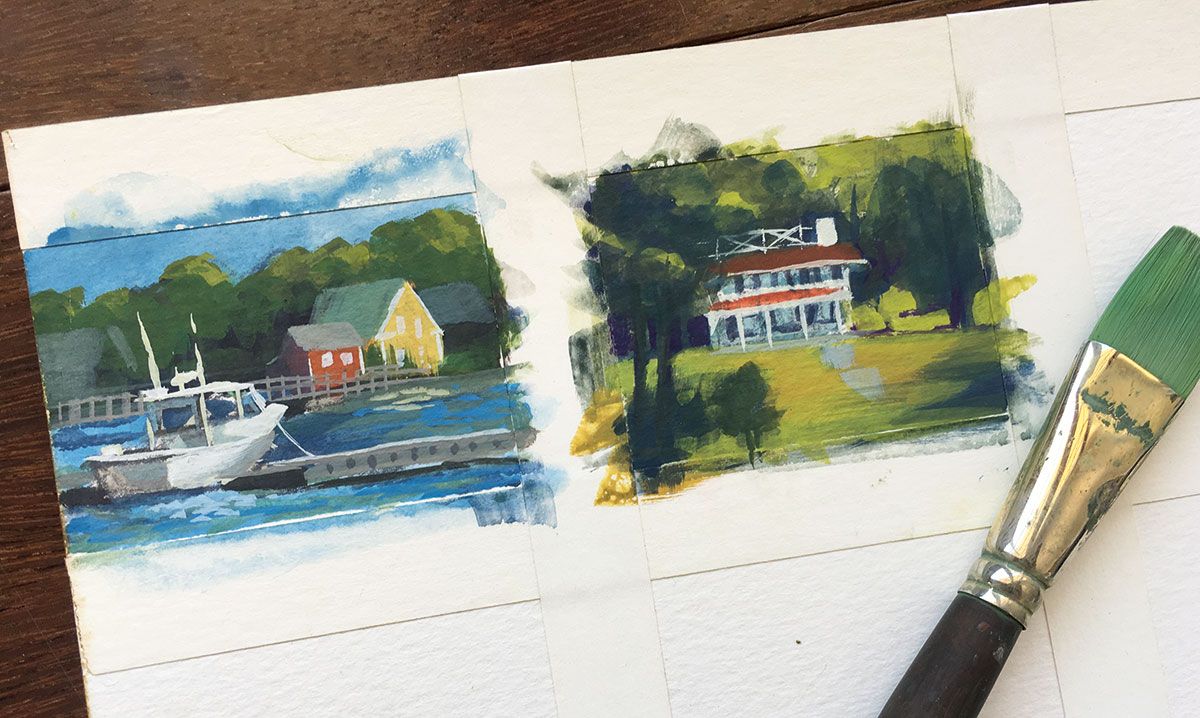
A few years ago, it looked like physical art was going the way of analogue film photography. Digital tools were getting better, faster and cheaper, or even free. Painting on an iPad made more sense than lugging canvases around. Learning to draw on a Wacom tablet seemed more practical than buying sketchbooks and charcoal. The future was clearly digital, and anyone still mixing oil paints by hand seemed quaint at best, stubborn at worst.
Except that’s not what’s happening.
You may like
What’s behind the trend?
AI is part of this story. But it’s not the whole story. For many, it was actually the pandemic that lit the touchpaper.
While most of society was stuck inside, staring at screens, many youngsters did something simple: they went outside. Not to take reference photos, but to actually paint what they saw, right there, with real, gloopy paint. And in a globally locked-down world, plein air painting – that old-fashioned thing your art teacher’s dad might do – suddenly felt like the most exciting thing in the world.
More recently, AI showed up and made everything weirder. Now, anyone can type a few words and get a perfect-looking portrait in 30 seconds. So what’s the point of spending years learning to draw a face? Turns out, everything.
Because AI images, for all their polish, feel dead. They’re statistical averages. They lack the thing that makes a painting feel like it was made by an actual person who was actually there, actually looking. So it makes sense that the smart artists are going back to the drawing board, so to speak.
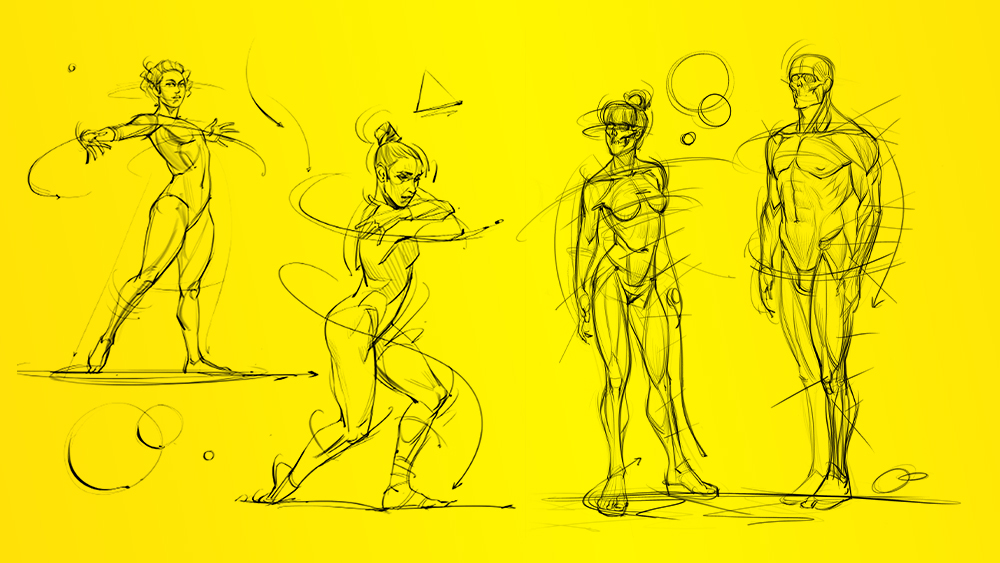
Hence, the renewed interest in anatomy: creatives want to know how things actually work. How a shoulder rotates. How light hits a collarbone. How gesture show character? It’s about having real knowledge so you can make real choices. AI shows you what a body looks like, but drawing one in real life teaches you what it actually is.
(Image credit: Joshua Black)Capturing the moment
The gesture drawing boom is even more telling. If you haven’t heard of it, the principle is simple. A model holds a pose for anywhere from 30 seconds to two minutes, and you try to capture the essence of it (the movement, the weight, the energy) by making quick, loose marks. There’s no time for details. You’re not rendering a perfect figure. You’re catching something alive and unrepeatable.
You may like
This is, importantly, the complete opposite of how AI works. AI builds up images methodically, detail by detail. Gesture drawing is more like jazz: improvised, responsive, catching something that only exists in the moment. And it’s having a moment of its own, because it offers everything AI can’t: spontaneity, intuition, a real-time response to something that will never happen exactly that way again.
As for plein air painting, it’s having a full-blown renaissance. A few years back, Icelandic artist Ragnar Kjartansson told Vogue: “When I paint en plein air, I know who I am.” And in a world where your identity is increasingly a data profile being harvested and monetised, Gen Z can certainly see the appeal of that.
In this light, the simple act of sitting in front of a landscape with a paintbrush becomes something of a personal revolution. You’re not scrolling, you’re not consuming. You’re just there, present, translating what you see into marks on canvas. Bliss.
That said, these young artists aren’t technophobes. They’re not burning their iPads or swearing off Photoshop. Instead, they’re treating digital and analogue as complementary tools, each with distinct strengths. Some of them might even document their plein air sessions on TikTok: three hours of painting condensed into 90 seconds, complete with time-lapse clouds and a lo-fi soundtrack.
What’s emerging, then, is a new hybrid practice. Artists who understand both worlds, who can move fluidly between them, who know when to use digital, and when to put down the tablet and pick up a brush. They’re not afraid of tech: they just know that by itself, it’s no substitute for understanding, for looking, for being present.
In short, reports of the death of painting have been greatly exaggerated. At the dawn of 2026, from where I’m standing, it’s never felt more alive.