
Jasper Carrott once quipped: “Glenn Hoddle has found God. It must have been some pass.” One of the most famous stand-up jokes of the Eighties played on the fact that the footballer, undoubtedly the best passer in the game at the time, had become a Christian.
But that was nothing compared to four days in June 1984 when nearly 4,000 people found God at Norwich City Football Club. The main person responsible was the American evangelist Billy Graham (obituary, February 22, 2018), but no small part was played by the architect Frank Tucker.
Norwich would only allow Graham to preach the gospel over four nights at their Carrow Road ground if a stage could be built that did not touch the pitch. Tucker designed an ingenious cantilevered structure that appeared to hover over the turf — grass that was already hallowed if you were a Norwich fan and a surface jealously protected by the head groundsman.
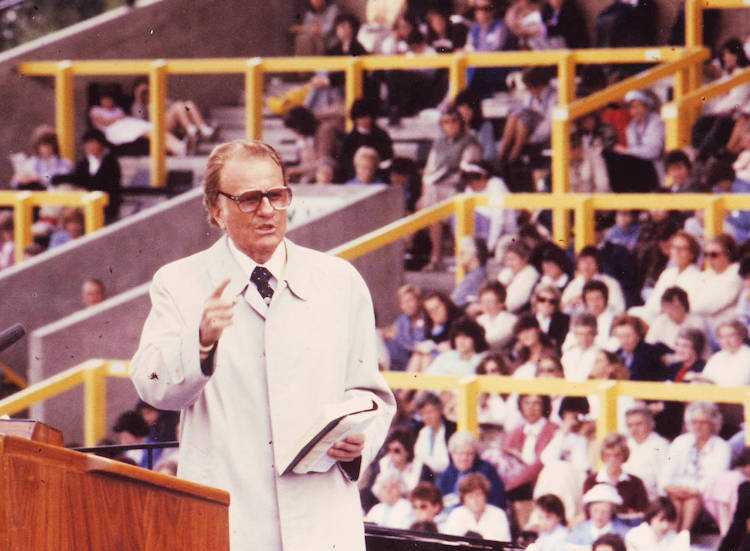
Billy Graham spoke for four nights at Carrow Road in 1984
NETWORK NORFOLK
Tucker’s hard work in a small window between the end of the football season and Graham’s first “Mission England” rally in Norwich on June 9 paid off. Preaching over four nights to a total crowd of 63,000, Graham asked people to come to the stage and make a public commitment to Jesus Christ — 3,700 people did.
Tucker influenced the built environment of the medieval city in many other ways, from overseeing the design of police stations to probation offices and schools. As county architect of Norfolk, he led the design of Norwich magistrates’ court, completed in 1985. Perched on the river by Whitefriars Bridge, the courthouse took the form of a riverside warehouse, in keeping with the area’s heritage. The result generated grudging praise from Nikolaus Pevsner, the German-British architectural historian, who was not renowned for doling it out. In the Norfolk volumes of his The Buildings of England series, he said the court “resorts to debased classical but with so much conviction that the Property Services Agency in 1988 could only copy it for the adjoining Crown Courts. The block is held together by five gables on the roof, each with a Diocletian [semi-circular] window.”
Tucker was a keen amateur magician and for his next trick he designed another magistrates’ court that looked interesting. The Great Yarmouth court (1989-91) was described by Pevsner as “hard lines, two storeys with a pedimented portico on the front”. Several of Tucker’s school buildings also passed under Pevsner’s scrutiny, and if they weren’t lavished with praise they escaped censure. Tucker devised a concept of a central covered courtyard surrounded by pavilions. Of Hethersett High School (1979-80), Pevsner said: “In the pavilion style with the separate blocks arranged round a rectangular covered way … originally seven blocks, apparently placed without formality, all different sizes, rectangular or square, under contrasting pyramid or gabled roofs.”
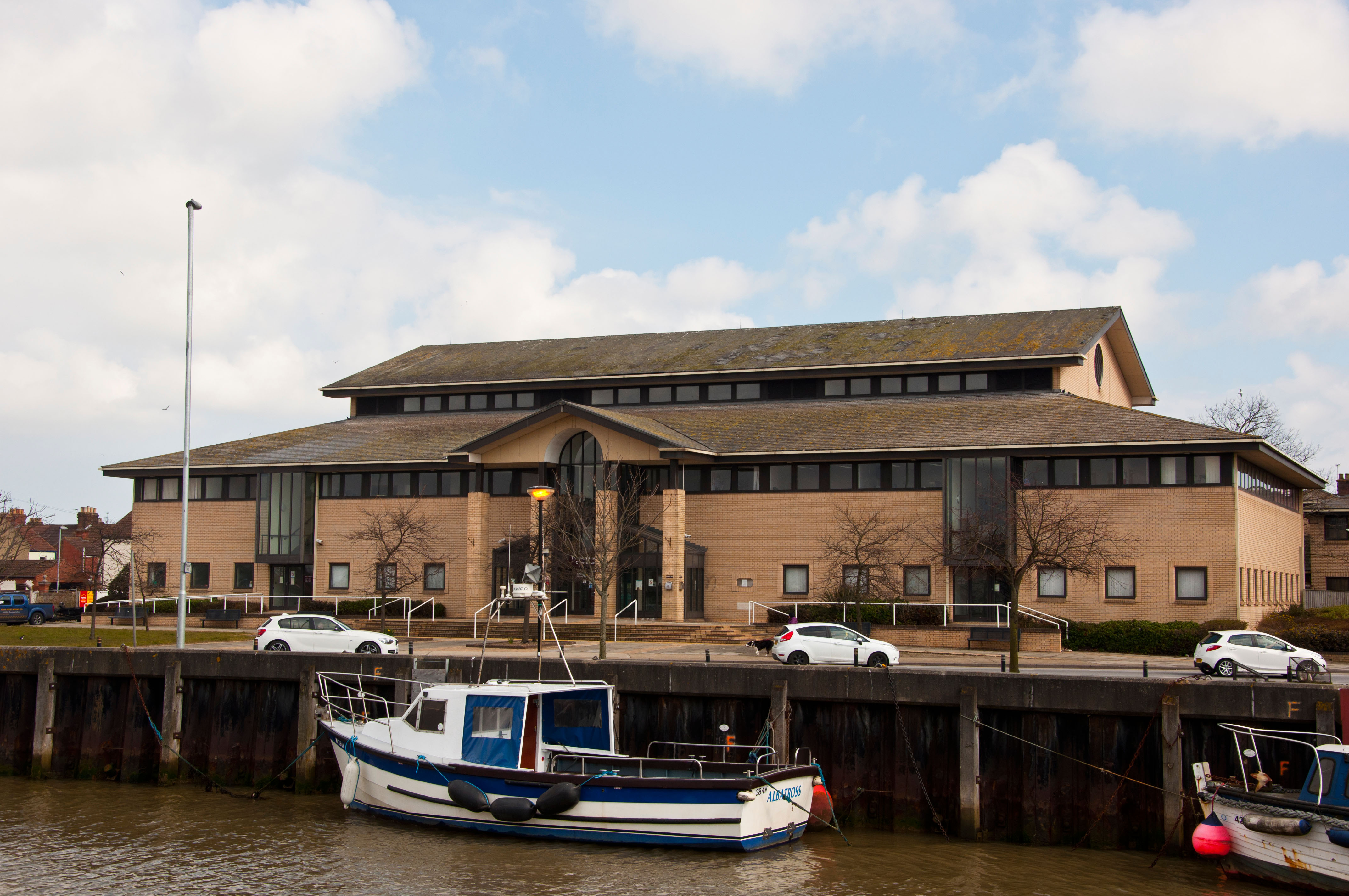
Great Yarmouth magistrates’ court
ALAMY
Long before architects started bothering about energy efficiency, Tucker was innovating building design that saved Norfolk county council millions of pounds in its energy bills and won national awards. He was especially proud of the geothermal heat pump installed at a school in Dickleburgh, near Diss, which was way ahead of its time for the British public sector. He went on to become an energy adviser for many other county councils in England and Wales and in retirement lectured at Cranfield University for an MSc on “energy in the built environment”.
As well as energy efficiency, Tucker was as much concerned with what he saw as saving souls. Before heading to work he would hand out Gideons Bibles in schools, hospitals and local hotels.
John Frank Tucker was born in Bridgend, south Wales, in 1933. His father Bill was a captain in the merchant navy; his mother Ceinwen ran her own general store in Kenfig Hill near Bridgend.
The family moved to Swansea when Frank was a small boy. After Swansea Grammar School, he trained as an architect at the Welsh School of Architecture in Cardiff. While working at the Glamorgan County Architect’s Department he met Elaine Evans, a town planner, at a local government Christian Union meeting. She promised to pray for him every day after he started his National Service in the Royal Engineers, where he was commissioned as a troop commander in a field survey squadron and later became a captain at the School of Military Survey. They married in 1961. His wife predeceased him in 2007. He is survived by their daughters Mary and Helen.
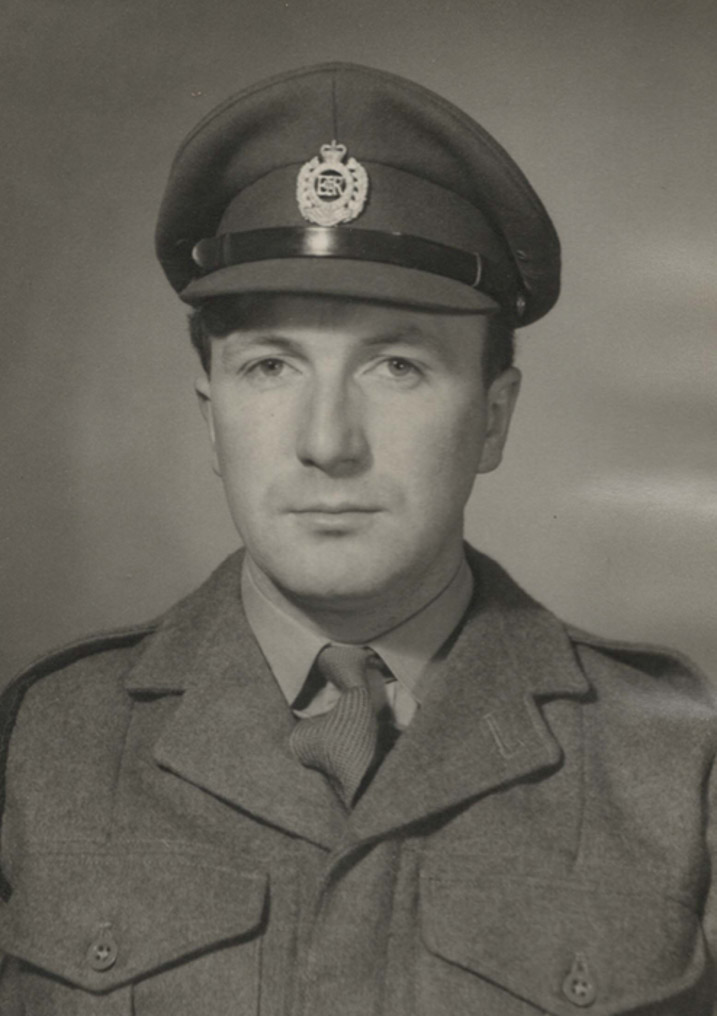
Tucker spent his National Service in the Royal Engineers
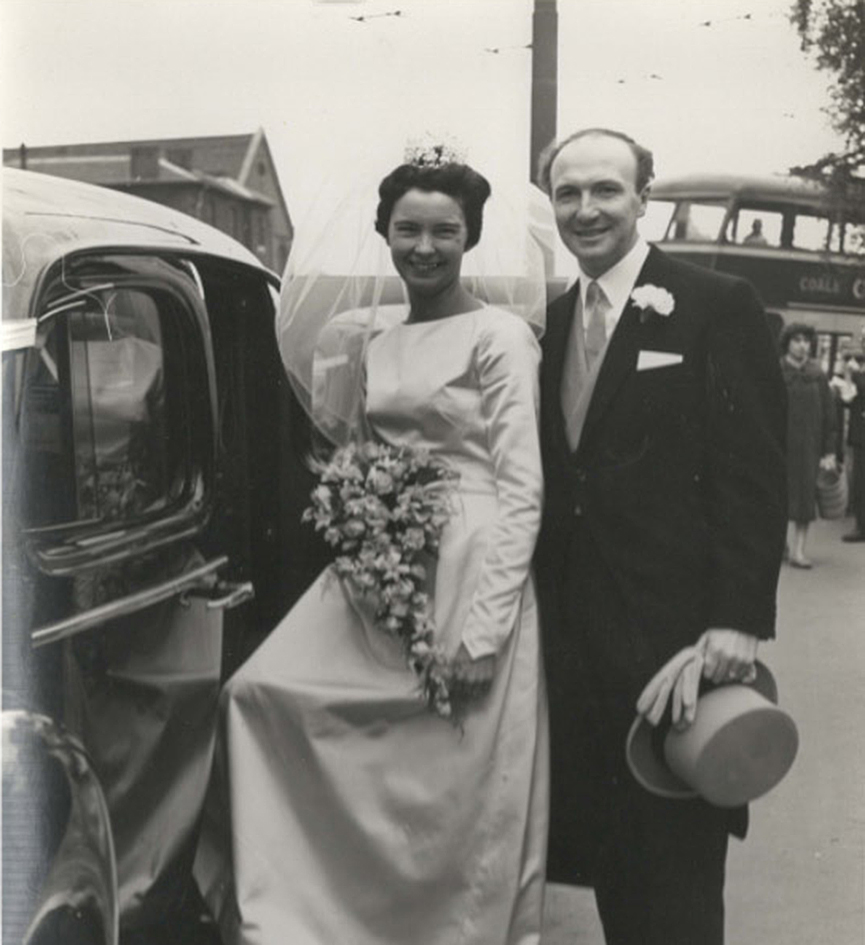
His wedding to Elaine Evans in 1961
Tucker rose to become deputy county architect in Denbighshire in 1970. He moved to Norwich in 1974 as deputy county architect of Norfolk, moved up to the top job in 1979 and remained in post until 1993.
A man of prodigious energy, Tucker was a pillar of civic society in Norwich and played prominent roles in the Welsh Society, the Norwich Society, his local Rotary club and later Probus, and the Norfolk Association of Architects. He loved steam trains and enjoyed taking his grandsons on the North Norfolk Railway; he built a landscaped model railway in his attic.
Exuberant, tenacious and jovial, Tucker was a keen rugby player in his youth and an ardent supporter of the Welsh national rugby team — he never missed a match. As befits a proud Welshman, he was a fine chorister. His ringing tenor voice rose over the swell of voices at Holy Trinity Norwich, where he was a longstanding churchwarden and lay reader whose regular preaching was aided by the red pen and wise counsel of his wife. At a thanksgiving service at the church, the interior of which he had redesigned some years earlier, the organist lustily played Hen Wlad Fy Nhadau (Land of My Fathers) as a postlude. Tucker would not have expected anything less.
Frank Tucker, architect, was born on January 11, 1933. He died on October 4, 2025, aged 92