Throughout 2025, advances in artificial intelligence continued at a fast pace across architecture and construction. From new models by established AI companies such as OpenAI to bespoke tools aimed at the AEC industry, the architect’s AI toolkit continued to grow, while data on where architects are, are not, and may soon use AI, offered insights into where bottlenecks remain, and competitive advantages can be found.
This year, Archinect’s editorial included exclusive insights from a firm that has built its business with AI from the ground up, as well as the perspectives of Venice Biennale curator Carlo Ratti. Elsewhere, we ran our own mini series on AI in architectural employment, including fun but informative experiments with you, our readers. Building on our expansive Archinect In-Depth: Artificial Intelligence series from 2023, meanwhile, we continued to keep you informed on the latest developments, research, and tools of note for the architectural community.
To further explore these trends, we have set out the key developments and stories throughout 2025 related to artificial intelligence in architecture and construction.
Our AI and hiring experiments
 Image generated by Archinect using AI
In May, we gave you the dos and don’ts for using AI when hiring
We began our deep dive into AI and architectural employment by giving readers an overview of where they should and should not use AI when hiring. While AI is best avoided when filtering applications, assessing portfolios and work samples, and making final hiring decisions, it can be a powerful tool for helping to write job descriptions, for applicant communication and scheduling, and checking local hiring regulations.
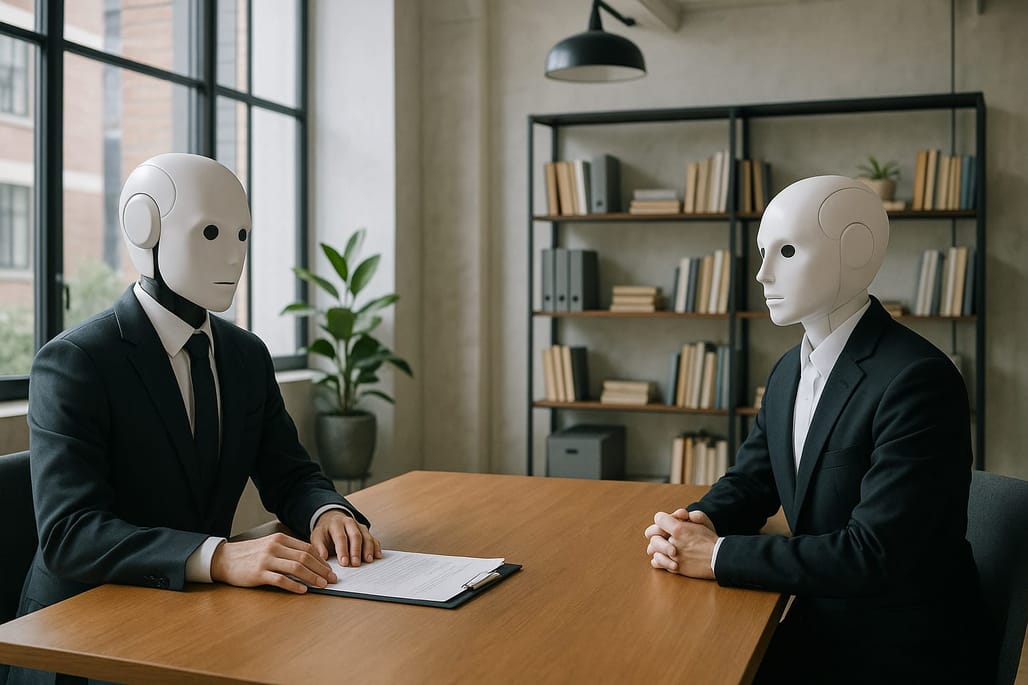 Image generated by Archinect using AI
While reminding you what is and isn’t legal
Speaking of checking local hiring regulations, we also gave you a crash course on five states that are either enforcing or planning regulations on how to use AI when hiring. As a summary, several states prohibit programming AI to carry out selection criteria that discriminate against the applicant based on protected classes, while others demand that employers give applicants notice on where and how AI is being used in their recruitment process.
 Image generated by Archinect using AI
In July, we challenged readers to tell the difference between AI and human-written cover letters
To conduct an experiment to test whether AI can (or cannot) be used to write a convincing cover letter for an architecture job application, we created five cover letters written for a fictitious junior architect. The catch? Only one cover letter was written by a human. The remaining four were produced by AI systems without any human editing. The challenge to readers was simple: Tell us which cover letter you thought was written by a human.
 Image generated by Archinect using AI
Only 28% of readers could do it
When asked to identify which of the five cover letters they believed was written by a human, only 28% of readers correctly picked Cover Letter D, with 72% picking one of the four AI-authored letters. Most readers also believed an AI cover letter was the best of the five. While most job seekers told us they do not use AI when writing cover letters, most employers told us they have noticed obvious AI use in job applications.
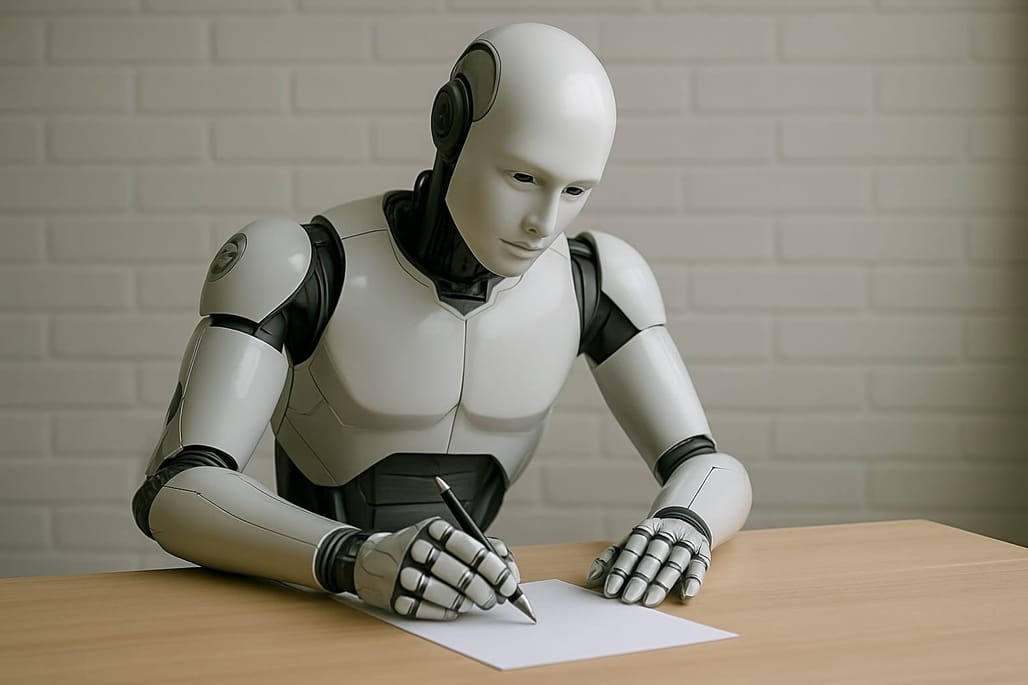 Image generated by Archinect using AI
Even though AI could write a better cover letter, our (human) writer didn’t care
In a feature article on the experiment, reflecting on the process of using AI to write cover letters, we felt that by ceding control of the cover letter composition to AI, we had also ceded control of our story. A cover letter presents us with a rare opportunity to tell the story of our career to an audience interested in reading about it. The best we can do is introduce ourselves to them in our own words.
 Image generated by Archinect using AI
But the experiment did show us that cover letters will evolve or die
In our closing reflection of the series, we explored how phenomena ranging from ChatGPT to TikTok have contributed to a decline in the perceived value of the cover letter. With the help of readers, we also looked to the future to theorize on what may take its place, influenced by AI, networks, and multimedia. There is no wrong approach, we concluded, only the approach that best expresses the designer’s skills and motivations.
Exclusive insights from industry leaders
 Carlo Ratti. Image credit: Andrea Avezzù, courtesy of La Biennale di Venezia
As the Venice Biennale opened, curator Carlo Ratti gave us his thoughts on AI
In May, Archinect spoke with Ratti in a wide-ranging conversation about the Biennale. In addition to exploring how AI could be used in the future for selecting projects from large numbers of biennale submissions and describing how AI was already a theme on show in the 2025 biennale, Ratti told us that, in some ways, the questions brought about by AI are similar to key technological questions we have struggled with over the last century. “Even though the technology has evolved immensely, and is changing and disrupting the way we work, live, and meet others, the fundamental questions about the relationship between humans and machines have not changed,” Ratti noted.
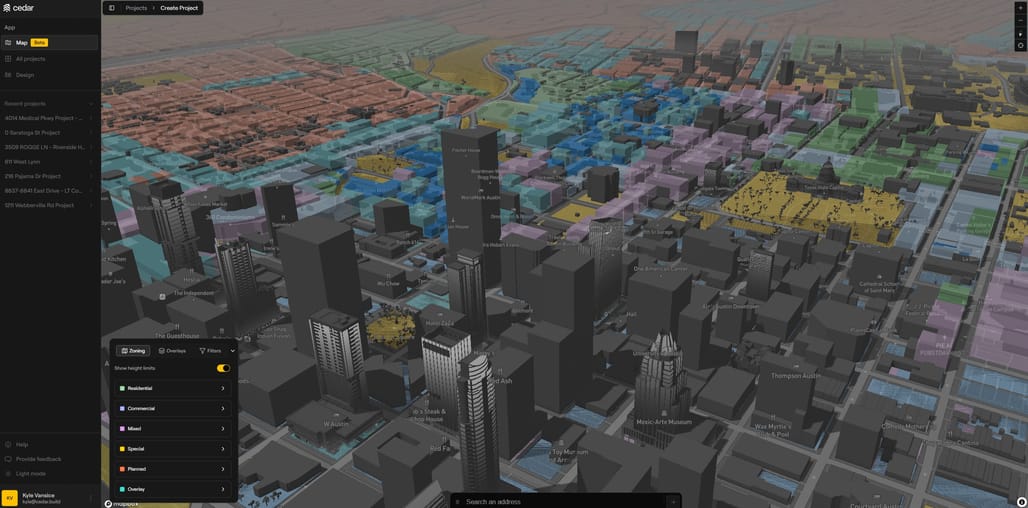 Compliance zoning map. Image credit: Cedar
While in November, an AI-first architecture firm explained to us how the industry needs to catch up
In our conversation with Austin-based Cedar, we explored where the firm uses AI, why it does so, the challenges it faced when adopting AI, and advice for firms looking to expand their use of AI in practice. “AI can accelerate decision-making, but it cannot define values, aesthetics, or vision,” Cedar told us. “The firms that succeed will balance automation with a strong, human-led design culture.”
How architecture is (and isn’t) adopting AI
 Image: Evgeniy Surzhan/Unsplash
In April, Autodesk found that AI optimism was down in AEC
In the company’s 2025 State of Design & Make report, Autodesk noted that concerns about AI’s destabilizing potential have grown. However, the report also noted that most companies undergoing digital transformation have seen measurable improvements in customer satisfaction, productivity, and innovation, often by over 50%.
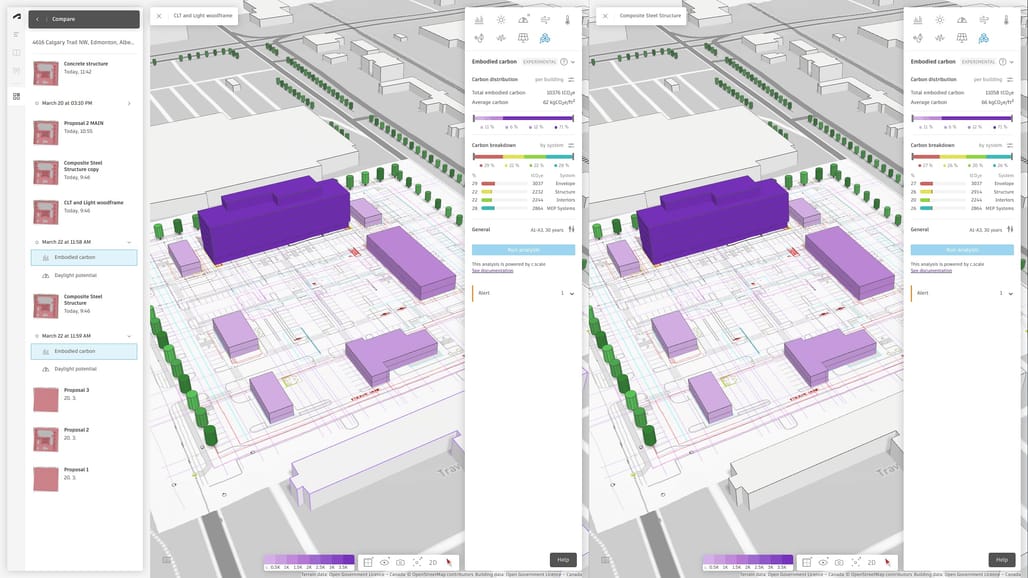 Image: Autodesk’s Embodied Carbon Analysis tool. Image credit: Autodesk
Meanwhile, the company cut its own staff by 9%
As reported by CNBC, the reduction in 1,350 employees came despite a 12% increase in revenues. CEO Andrew Anagnost noted that the move was made in part to protect the company’s expansion in cloud computing and artificial intelligence.
 Image: Thirdman/Pexels
Elsewhere, two former Autodesk executives teamed up to create an AI-aided BIM platform
The startup, named Motif, was promoted as a “next-generation design platform for buildings.” Founders Amar Hanspal and Brian Mathews explained to TechCrunch that their product helps address the current stasis of BIM software not being backed by cloud computing technology. At the time of reporting in February, the company had raised $46 million.
 Intuit Dome by AECOM. Image courtesy Los Angeles Clippers
While AECOM acquired an AI startup for $390 million
The Norwegian startup Consigli labels itself as an “autonomous engineer” and an “AI agent for real estate development.” Founded in 2020, the startup uses AI in planning and engineering, claiming that “up to 80 percent of today’s engineering work can be automated, freeing human experts to focus on innovation, oversight, and creating real value.”
 Image generated by Archinect using AI
According to the AIA’s report, only 6% of the profession regularly uses AI for their jobs, with the most common applications being chatbots, image generators, and grammar/text analytics. Other findings related to the adoption of AI were that experimentation and usage of AI are driven significantly more by architects under 50, and that only 8% of firms have implemented AI solutions into their practice.
 Image credit: Jan van der Wolf/Pexels
Though another report found many believe AI and automation will disrupt construction
In April, construction technology company Procore released a report finding that over half of industry leaders expect automation to disrupt construction practices within five years, as AI-powered tools for preconstruction and planning gain adoption. The integration of AI is anticipated to improve functions such as scheduling and workforce allocation, although the report emphasizes that human expertise remains indispensable.
 Chris Williamson. Image courtesy RIBA.
In September, the RIBA president said he feels ‘excitement and trepidation’ about AI
RIBA President Chris Williamson made the comments as part of a paper released by the institute, which found that 88% of architects expect AI to become increasingly important for business success within the next ten years. “We need to consider the capabilities of AI seriously and be prepared to embrace the immense possibilities,” Williamson added. “I’m equally convinced that the research-led insights and scenarios in this white paper are vital because they provide architects with the tools to harness AI in whatever form it may take in the next decade.”
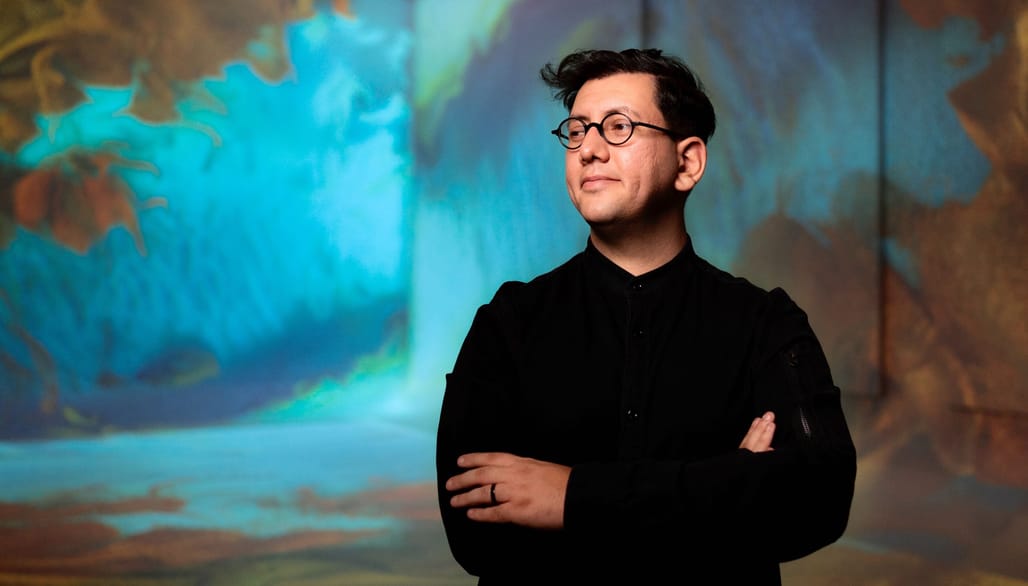 Refik Anadol. Photo by Efsun Erkilic
While Refik Anadol was named by TIME as one of the biggest names in AI globally
Anadol was among the recipients of the 2025 TIME100 AI Impact Awards, “recognizing individuals who have gone above and beyond to move their industries — and the world — forward in the AI space.” Reacting to the news on LinkedIn, Anadol said: “For as long as I can remember, I have imagined data as more than just information — I have seen it as a living, breathing material, a pigment with infinite possibilities.”
Notable advances in AI
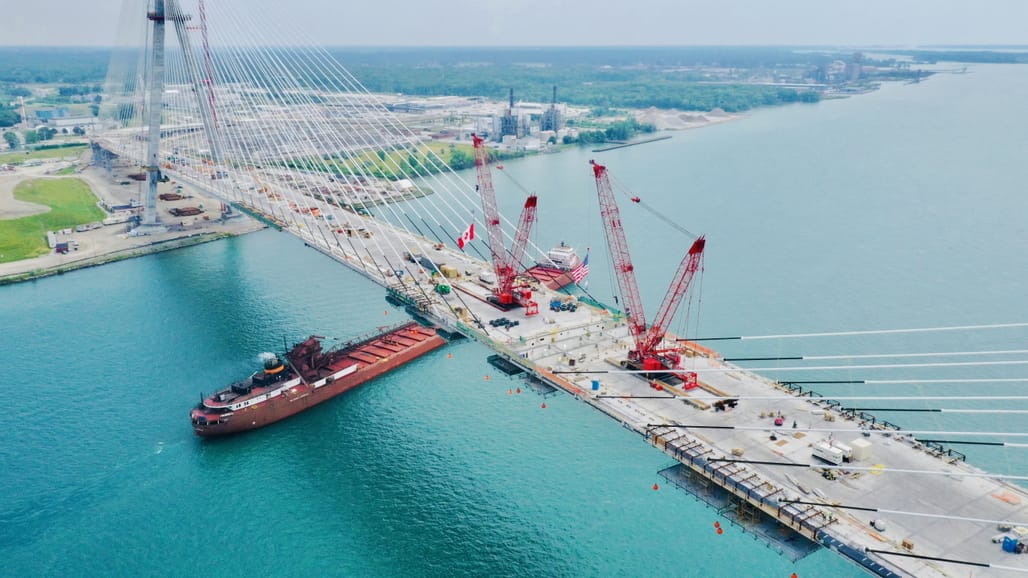 Gordie Howe International Bridge construction. Image credit: Pont International Gordie Howe International Bridge
In February, University of Mississippi researchers found AI could predict infrastructure damage
In a study, the team tested AI algorithms to predict moisture damage in asphalt pavements containing reclaimed asphalt pavement materials. While moisture can weaken asphalt, leading to potholes and cracking, particularly in wet and cold regions, the researchers found that AI algorithms could accurately predict moisture damage, enabling better material selection and maintenance planning.
 The Donald W. Reynolds School of Architecture Building at Oklahoma State University. Photo: Carol M. Highsmith/The Library of Congress
While Oklahoma State found AI tools could help in the creative design and learning process
In a study, AI software was shown to accelerate learning when compared to a control group of students who were assigned a similar task without the aid of technology. Though encouraging, the team admits that students may still be overreliant on AI to a fault in terms of their critical thinking capacities.
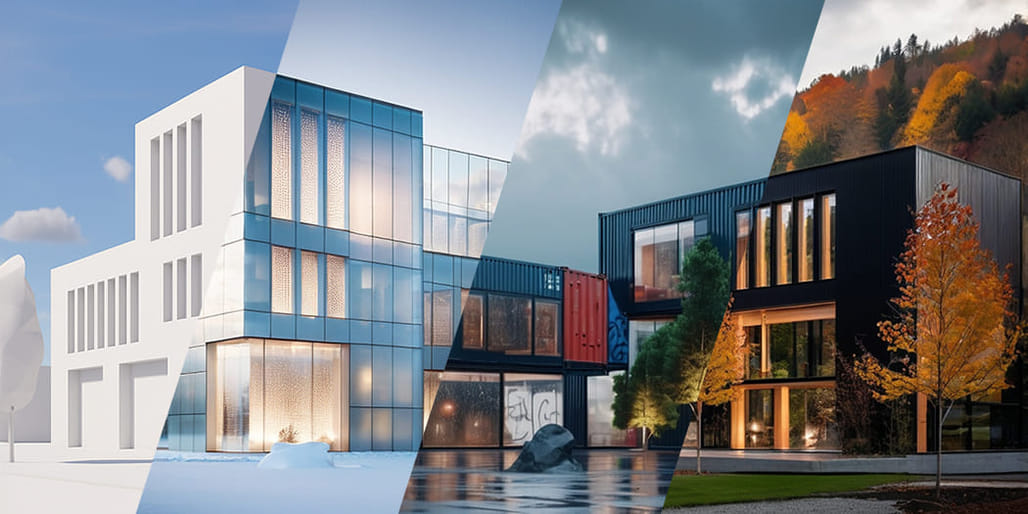 Chaos Veras streamlines the design-to-visualization workflow, from early massing to final photoreal imagery. Image credit: Cedar
In September, Chaos unveiled a suite of such tools, including image-to-video apps
Among the announcements made by the company at Autodesk University 2025 was the unveiling of Veras 3.0, the developer’s AI-powered visualization tool. Designed particularly for AEC workflows, Veras uses generative AI to transform sketches, 2D images, and 3D models into realistic renderings and animations.
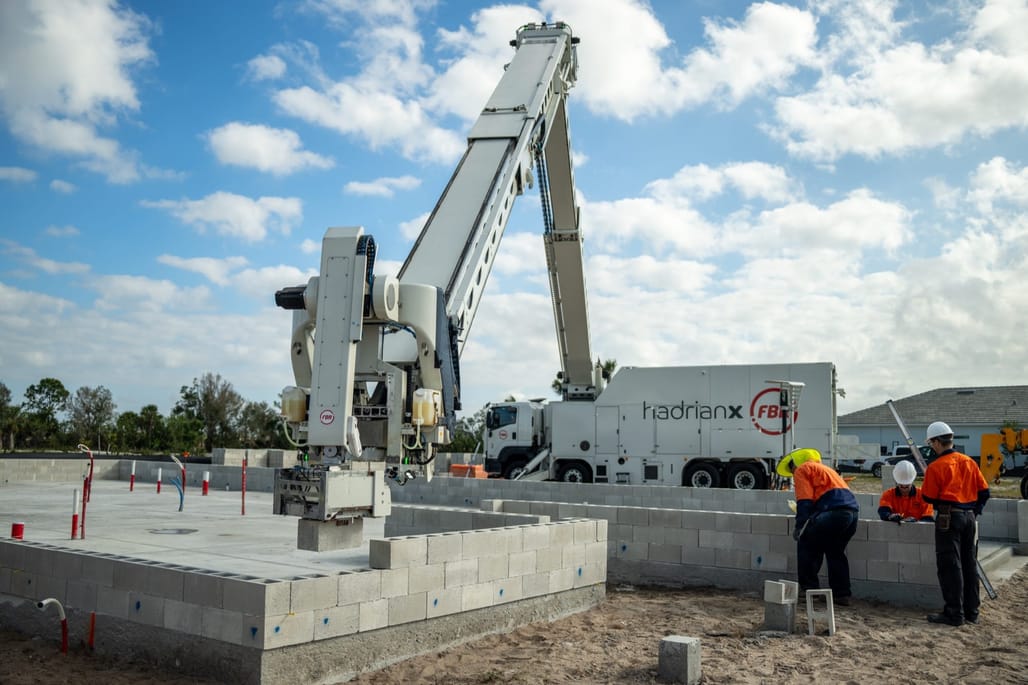 Image courtesy: Business Wire
In Florida, AI was used on a residential construction site
In February, homebuilding company PulteGroup completed a pilot project using robotic-assisted construction technology. The project involved building a home’s structural walls using an AI-guided construction robot. The system constructed the walls in a single day, and according to the company is one of ten homes in the U.S. built using the technology.
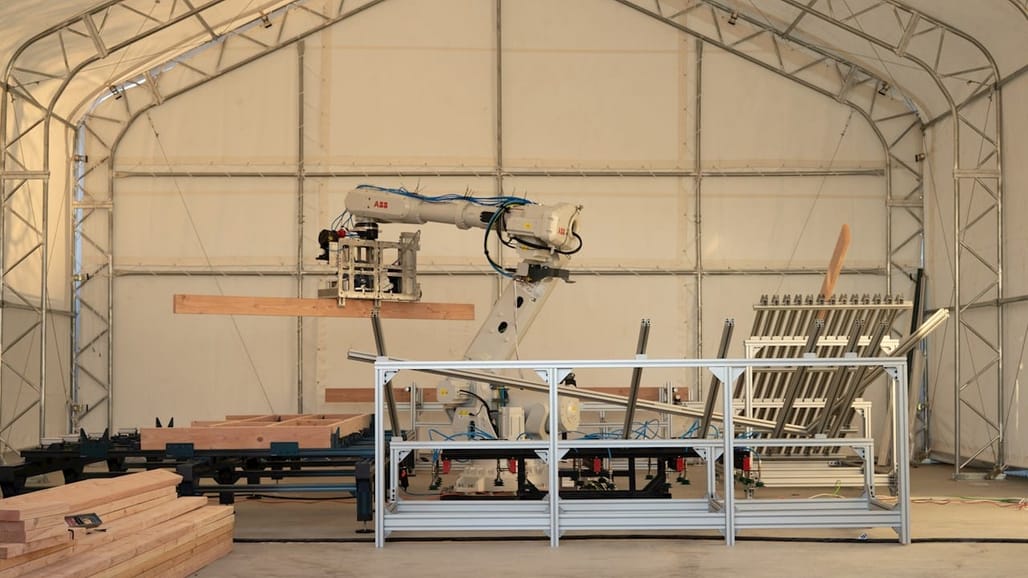 Image courtesy: ABB Robotics
While in the Palisades, AI played a role in post-wildfire rebuilding
In August, ABB Robotics partnered with Cosmic Buildings for post-wildfire reconstruction in Los Angeles through AI-enabled robotic construction. The initiative introduces a mobile robotic microfactory in Pacific Palisades, designed to produce modular housing components onsite. According to the companies, the approach can reduce construction time by up to 70% and costs by about 30% compared to conventional methods.
 Image by Archinect
AI did a lot this year… but it couldn’t predict the Pritzker Prize winner
Continuing an experiment we began in 2024, Archinect asked a series of AI models for their predictions on who would win the 2025 Pritzker Prize, one week before the announcement. While several architects featured on two or more lists, Tatiana Bilbao was the only architect to be included in all four lists. The eventual winner, Liu Jiakun, wasn’t on any AI radar.
Better luck next year!
Be sure to follow Archinect’s special End of Year coverage by following the tag 2025 Year In Review to stay up to date.