Tom’s Hardware Premium Roadmaps
(Image credit: Future)
When U.S. defense planners talk about supply chain risk, semiconductors usually dominate the conversation. But a quieter dependency is drawing growing attention inside the Pentagon and across the tech industry: batteries. From AI training clusters and hyperscale data centers to drones, satellites, and electric military vehicles, modern computing and warfare now rely on lithium-ion batteries and the materials that enable them.
Three high-level meetings on the battery supply chain are understood to have been held at the White House in recent weeks, and the National Energy Dominance Council, established by President Trump, has been meeting with battery companies. The Energy Department also recently announced up to $500 million for battery materials and recycling projects.
You may like
Structural dominance
U.S. dependence on Chinese batteries did not emerge overnight; it is the product of decades of industrial policy, aggressive investment, and vertical integration that have allowed Chinese firms to dominate nearly every stage of the battery supply chain. While the U.S. and allies have focused on downstream innovation and system-level design, China has built scale in mining, refining, cell manufacturing, and component processing. That imbalance is now colliding with surging demand from AI, electrification, and modern defense systems.
Chinese companies control the majority of global processing capacity for lithium, cobalt, nickel, and graphite, materials essential for lithium-ion batteries. Battery-grade graphite processing, for example, is overwhelmingly concentrated in China, and lithium iron phosphate cell manufacturing is similarly dominated by Chinese firms. Even when raw materials are mined elsewhere, they are often shipped to China for refining before entering the global supply chain.
This is significant because processing and component manufacturing are the hardest stages to replicate quickly. Mines can take a decade or more to permit and develop, but refineries, cathode plants, anode facilities, and separator production lines also require years of capital investment and technical expertise. China built these capabilities early, often with state support, and scaled them to a level that made competing facilities elsewhere economically unattractive. Western manufacturers increasingly opted to source components from China rather than to build redundant capacity domestically.
As demand for batteries has increased, driven first by consumer electronics and electric vehicles and now by grid storage and AI infrastructure, it’s apparent that this decision has become a significant liability. Battery packs for data centers, backup power systems, and industrial AI deployments are large, expensive, and complex to substitute. As a result, for many U.S. operators, Chinese suppliers remain the only realistic option at scale.
Military systems tied to the same supply chain
The Pentagon faces a much more profound version of this problem. Modern military platforms depend on batteries to power sensors, communications, guidance systems, and increasingly autonomous operations. Drones, loitering munitions, electric ground vehicles, and directed-energy weapons all require high-density energy storage. Even legacy platforms rely on battery-backed electronics that cannot function without a supply of critical materials.
Defense supply chain assessments have found that a significant share of U.S. weapons systems contain components derived from Chinese-sourced materials, particularly rare earths and battery inputs, says the New York Times. This is not always because the final part was made in China, but because upstream processing took place there. Once those materials are embedded in magnets, cathodes, or battery cells, tracing and replacing them becomes extremely difficult.
This is compounded by the fact that the proliferation of drones and electronic warfare systems has pushed energy storage from a supporting role into a central one. This creates a planning challenge for the Pentagon, as stockpiling batteries is not straightforward due to degradation over time and rapid changes in chemistry and form factor. Relying on just-in-time global supply chains for critical military energy storage is also untenable.
You may like
Congress has begun to respond by tightening sourcing rules for defense procurement, including future restrictions on batteries that rely on Chinese materials, but policy changes do not create factories. Even with aggressive use of the Defense Production Act, building domestic or allied capacity for battery materials and processing will take years.
A new layer of pressure
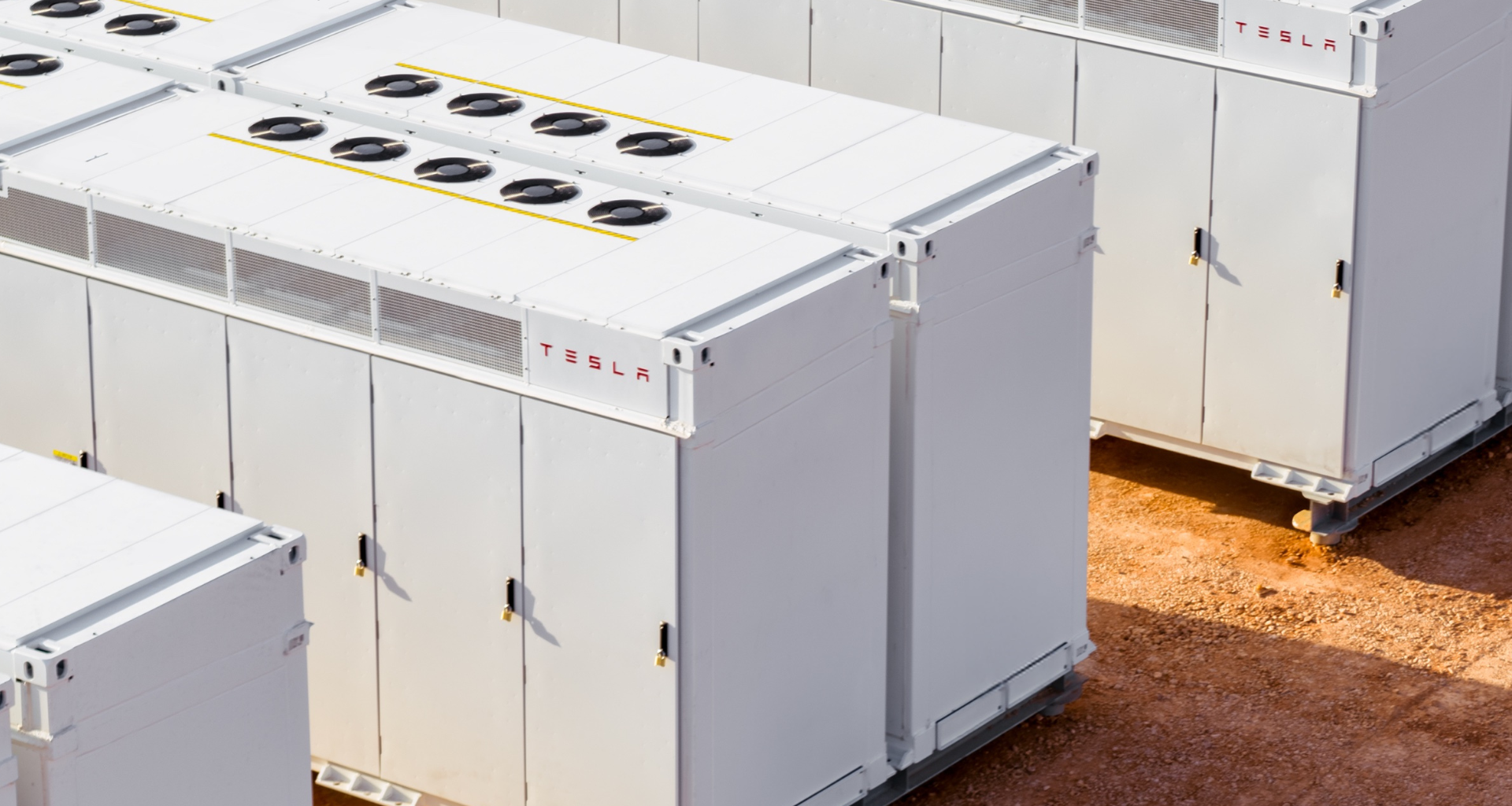
The rapid expansion of AI computing has added another dimension to the battery problem. Training and inference at scale require enormous amounts of power, and data centers increasingly rely on large battery installations for backup and load balancing. These systems are not small UPS units but rather industrial-scale energy-storage deployments measured in megawatt-hours.
As utilities struggle to deliver new generation capacity fast enough, battery-backed power systems have become a critical enabler of AI growth. In practice, many of these batteries are produced by Chinese manufacturers because they are available at scale and at prices that competitors have struggled to match. Cloud providers and AI firms typically face two options: Chinese batteries or no batteries at all.
This dependence sits uneasily alongside U.S. export controls and broader technology competition with China. The same companies racing to build sovereign AI capacity are relying on Chinese energy storage to keep their data centers running. That contradiction is not lost on policymakers, but alternatives remain limited in the near term.
The situation also complicates efforts to localize AI infrastructure. Even if advanced chips are fabricated in Taiwan, packaged elsewhere, and assembled into servers in the United States, the power systems that support those servers may still trace their supply chains to China. That weakens the overall system from a resilience perspective.
Unwinding the dependency
Washington naturally wants to respond and unwind the dependency that has built over several decades, but the timeline for doing so is unforgiving. The Inflation Reduction Act and related legislation have triggered a wave of announced battery and EV investments in the United States, often led by foreign firms seeking to qualify for incentives. These projects will expand domestic cell manufacturing capacity, but many still rely on imported materials and components.
Upstream efforts to build lithium refining, graphite processing, and cathode production in North America are underway, supported by federal loans and grants. However, these projects face opposition and cost pressures that slow deployment. Even optimistic projections suggest it will take most of the decade to meaningfully reduce reliance on Chinese processing for key battery materials — and we’re about to enter 2026.
In the meantime, both the Pentagon and the AI industry are being forced to manage risk rather than eliminate it. Defense planners are exploring alternative chemistries, recycling, and limited stockpiling, while tech firms are diversifying suppliers where possible and investing in efficiency to reduce battery demand per unit of compute. None of these measures fully solves the underlying issue.
The only factor that has meaningfully changed is how we view batteries; they are no longer viewed as a peripheral component, but as a technology on par with semiconductors. Energy storage sits at the intersection of computing, transportation, and military power, so control over its supply chain carries significant weight.
China recognized this years ago and treated batteries as a national priority, accordingly building the industrial base to match. The U.S. is only now beginning to respond seriously. Whether its response will be fast enough to keep pace with AI and evolving military needs remains to be seen.

Follow Tom’s Hardware on Google News, or add us as a preferred source, to get our latest news, analysis, & reviews in your feeds.