Thousands of declassified documents have been released in the last week from the archives of Dublin, Belfast and London, bringing new insight into Irish events, politics and personalities of times past.
Dublin’s archival material focuses mostly on documents which have turned 30 years old this year, centring on 1995. Here are eight things we learned from the State Papers.
1. Don’t release records on King Edward VIII’s abdication, British government urged Ireland
British officials were very concerned about papers Ireland might possess from the lead-up to Edward VIII’s abdication. Fearing what might come out in declassified documents in 1966, 30 years on from events, they asked Dublin not to release one conversation in particular in which Éamon de Valera was briefed on what was likely to happen. In the event, the record had already been lost.
2. Gerry Kelly named as ‘dominant figure’ of 1996 IRA leadership in Garda security document
Gardaí observed some discontent within republican ranks in 1996 over the Provisional IRA’s strategy, with a newly released document revealing the individuals the force thought held most sway in the leadership at the time. Gerry Kelly, who was among them, also gained some praise from officials for his peacekeeping efforts on the streets after the Good Friday Agreement.
3. Cheaper to send cervical smear samples to England than train staff, officials said
Problems with cervical smear samples were already on the minds of government officials in the 1980s, decades before Vicky Phelan and the Cervical Check scandal came to public attention. An official and a junior minister discussed delays in testing – and noted that it might be cheaper to send the samples to England than to train technicians.
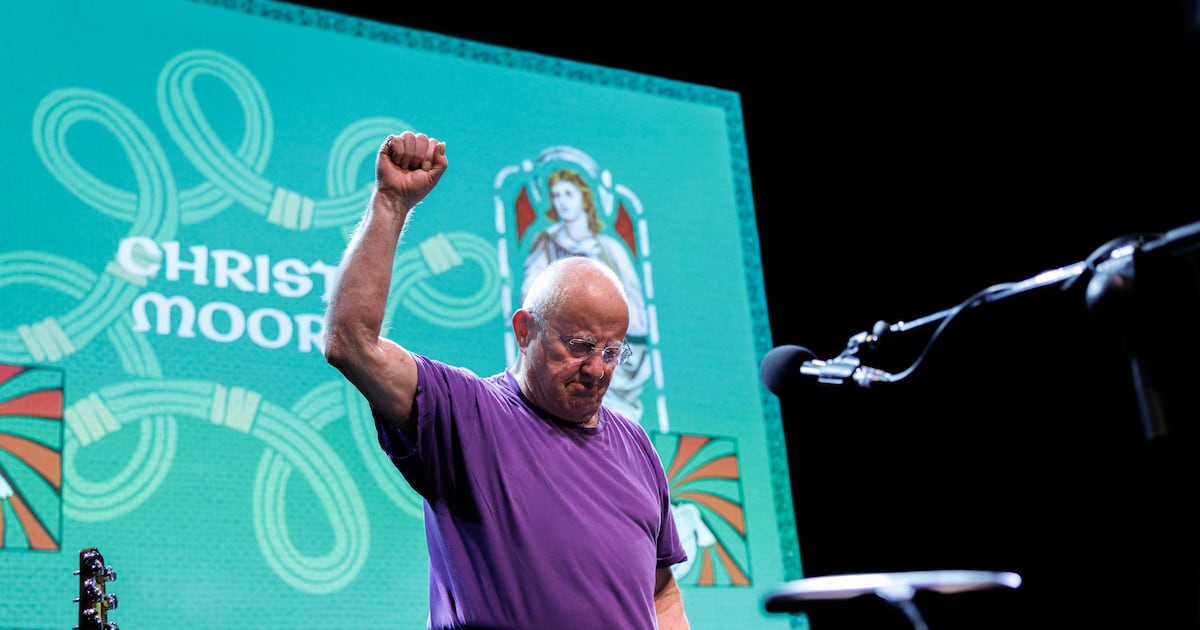
4. Christy Moore complained about questioning at Holyhead under terror laws in 2004
In the wake of the September 11th, 2001, attacks, checks got much stricter at UK ports and airports, leading to consternation among the Irish community at the time. Singer Christy Moore issued a complaint about his treatment when he and his driver were detained and interviewed in Holyhead in 2004.
5. Dublin Zoo ‘distressed’ as panda’s death on return to China linked in report to Irish stay
In 1986, one of the social occasions on the calendar for any curious Dubliner was a visit to the two pandas briefly at Dublin Zoo on loan from China. Keepers were concerned, however, when one of the pandas died after returning home, with the implication that their trip to Ireland could have contributed. They sought more information from Irish diplomats.
6. Concern over UK media coverage after vandalism at Limerick Jewish cemetery
A 1995 attack on a Jewish cemetery in Limerick, during which a Swastika was drawn amid other damage, drew widespread condemnation. The incident, documents reveal, drew interest in the UK, with media queries sent to embassy press officers seeking information on further developments. Limerick City Council took the cemetery under its control, it was confirmed.
7. Northern nationalists increasingly ‘anti-British’ rather than ‘anti-unionist’ by 1980s
Northern nationalists had become increasingly anti-British by the early 1980s, complicating any UK state efforts to tackle the violence there, then-taoiseach Garret FitzGerald was told by a senior official.
While prior generations were anti-unionist, remembering discrimination in housing, votes and jobs, the younger generation had faced direct rule and British security interventions. Under Thatcher, there was no “escape valve” of appealing directly to London.
8. Boyzone fans falling ill due to ‘heat and hysteria’ prompted call for concert law change
Twelve people were taken to hospital due to “heat and hysteria” at a Boyzone gig in Tallaght in 1995, prompting the attorney general to warn the government that concert legislation needed to be urgently updated.
The National Basketball Arena concert on July 31st came as the band, led by Ronan Keating, had reached international stardom. In the event, some concertgoers fainted and were carried outside and given medical treatment by ambulance crews. Problems were encountered bringing stricken fans to hospital.
1995 overview
This week, the National Archives in Dublin, Belfast and London will release thousands of documents held in their files to be reviewed by the public for the first time. A selection of those documents has been picked out by reporters for The Irish Times in the three cities as particularly interesting, whether for giving new insight to the politics of the day, revealing something about behind-the-scenes relations between states, or simply prompting curiosity.
Many of the papers released by the Dublin archives relate to 1995, as files reach the 30-year cut-off for being made public.
The Catholic Church was trying to move past its 1994 “annus horribilis”, The Irish Times review of the year in its final edition of 1995 noted, while Labour education minister Niamh Bhreathnach abolished tuition fees for university education, and Gerry Adams reminded us that the IRA “haven’t gone away, you know”.
The heatwave of 1995 lives long in memory, as the warmest, hottest and driest weather in a century took hold across the summer months.
Seán Dublin Bay Rockall D Loftus, Dublin’s most colourfully named lord mayor, took office in June, and in November dedicated an unassuming park in south Dublin to Chaim Herzog, former president of Israel – a story that returned to prominence in 2025.
RTÉ Radio 1 was set to finally move to a 24-hour schedule, but the collapse of The Irish Press was the main media story in the review of the year. More than 600 jobs were lost. Meanwhile, The Irish Times “consolidated its electronic version on the World Wide Web” – where it remains to this day.
Beyond 1995, many other documents, older and newer, have also been released, and coverage will span subjects from the Irish State’s interaction with the power brokers of pre-second World War Europe to the much more modern likes of boy bands and travelling football fans.
In Belfast and London, a 20-year rule is in operation, and the Irish State has released files related to Anglo-Irish relations from the period up to 2005 too. As a result, reporting will cover both a time when long-lasting ceasefires remained a hope rather than a reality, and a time in the mid-2000s when the peace process had advanced and focus fell more on legacy issues, as well as the challenge of building a functioning state under the North’s new dispensation.
It is the time of Bertie Ahern and Tony Blair, with George W Bush’s war on terror under way and Ireland yet to face the financial crash that was to come.
The State Papers coverage, touching on everything from paramilitaries to pandas, will run until Tuesday, online and in print.