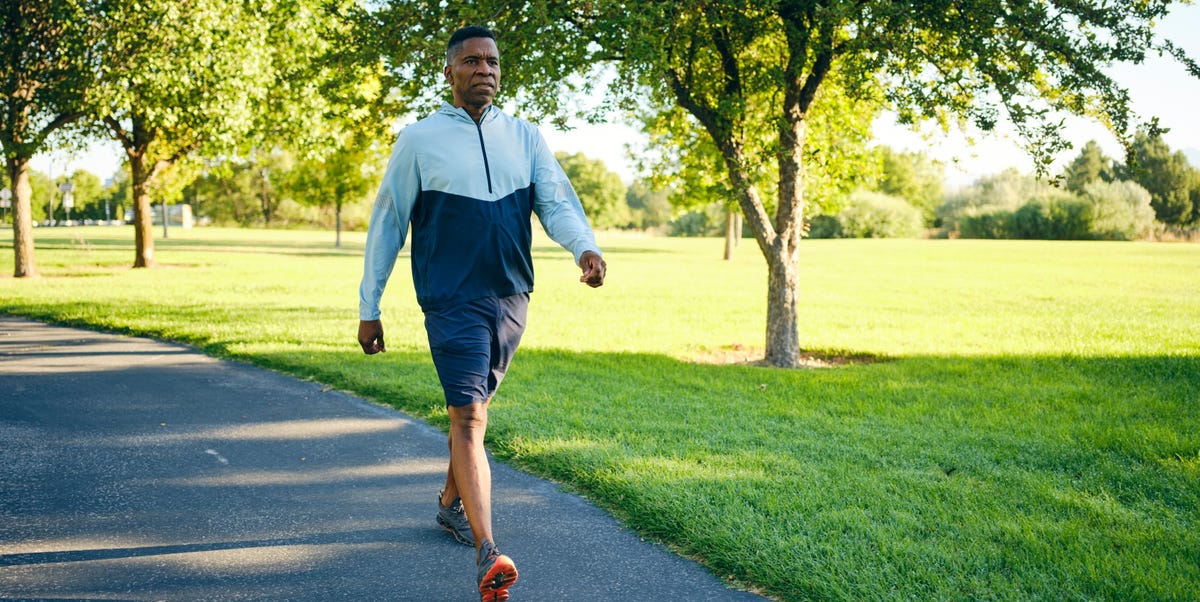
Low-impact activities like walking are having a moment – and for good reason. While it feels good getting your steps in, walking also has legit health benefits that can compliment any workout routine.
Walking has been found to increase aerobic fitness, decrease body fat, and reduce blood pressure in sedentary adults, according to a 2023 study in GeroScience. The review also found that people who live in Blue Zones do low-impact activities (like walking) on a regular basis.
However, building muscle is also incredibly important when it comes to living and moving healthily for a long time. Ahead, find out whether walking on its own can build muscle, which muscles it works, and how to reap more strength benefits from your walking routine.
Can Walking Actually Build Muscle?
While walking can help develop muscular endurance (a.k.a., your muscles’ ability to sustain exercise for long periods of time), it’s not the most effective way to build muscle, says Grace Horan, a certified exercise physiologist at the Hospital for Special Surgery.
‘To build muscle, the human body must be continuously challenged by increasing resistance and/or volume of exercise, which is known as progressive overload,’ Horan says. Walking alone doesn’t provide enough resistance to induce muscle hypertrophy, though, which is better accomplished through resistance training. That’s because walking activates your slow-twitch muscle fibres, which build muscular endurance and resistance to fatigue, as opposed to your fast-twitch muscles fibres, which build muscle mass.
‘You can increase the intensity of walks to engage more muscles by adding inclines or a weighted vest, but ultimately you need a greater external stress on the body – like resistance training – in order to build muscle,’ adds certified personal trainer Lindsey Bomgren, CPT.
That said, older research suggests that aerobic exercise can build muscle in older adults and sedentary folks. In fact, regular exercise of any intensity, including walking, may help prevent age-related loss of muscle mass, per 2024 research in the International Journal of Behavioral Nutrition and Physical Activity. So, if you’re older or live a more sedentary lifestyle, walking may help build muscle mass. Your best bet is still to lift weights for gaining strength, though.
The Muscles You Work With Walking
Walking engages multiple muscle groups: your quadriceps, hamstring, glutes and calves are all involved. They help to extend and bend your knees, push your forwards and provide stability with each step.
The secondary muscles walking strengths include your core and lower back muscles, which help hold you up and allow you to maintain good posture as you move.
5 Tips For Building Muscle When Walking
You can add certain variables to your walking routine to put more of an emphasis on certain muscles, Bomgren says. Horan recommends walking for 30 minutes a day, five days a week at a moderate-intensity. And since walking is not the most effective modality for building muscle and overall strength, it’s important to do other types of activities that do build strength at least two days out of the week, like doing bodyweight exercises and lifting weights.
Try these tips to elevate your chances of building muscle while you walk, according to our experts:
1. Walk on an incline
‘Walking up a hill, on a hike for example, or a flight of stairs, will activate your glutes, hamstrings, hip flexors, and core muscles more than a flat surface,’ Bomgren says.
If you’re not walking outside or don’t want to climb your stairs over and over, try the 12-3-30 treadmill workout or the 25-7-2 Stairmaster workout for an excellent burn.
2. Use props to increase the intensity
Rucking – which is wearing weights while you walk, such as ankle or wrist weights or a weighted vest – ‘will increase the load while you’re walking, which can help strengthen your muscles,’ says certified personal trainer Erica Coviello, CPT. Wearing a weighted vest will recruit more core muscles, and using poles to do Nordic walking will activate more upper-body muscles, Bomgren says.
When it comes to adding weight, start gradually. Opt for the lightest weights, especially if you’re new to resistance training, and work your way up to avoid injury. You’ll know you’re ready for heavier weights when the weights you’ve been using feel light and you’re not as fatigued after your walk.
3. Add strength-based exercises
Because strength training builds more muscle than walking, stop every five to 10 minutes on your walk to bust out a few reps of moves like squats or lunges. If you’re walking outside, you can even use a park bench for pushups or triceps dips.
‘Exercise snacks’, which are repeated short bouts of physical activity, like banging out a set of sit-ups while you’re waiting for your morning coffee to brew or stopping to do some squats during a walk, can benefit muscle growth, especially for folks who are largely sedentary, per 2024 research in Sports Medicine and Health Science.
4. Try some HIIT
Incorporating interval training into your walks can help you build more muscle than walking at a slow, steady pace would, says Bomgren. That’s because the faster you walk, the harder your muscles have to work.
You can start with a ratio of walking fast for one minute, followed by five minutes of walking slowly. As you get used to this cadence, you can increase the amount of time you walk fast for.
5. Try different terrains
‘Changing surfaces can help strengthen some muscles and connective tissues in your ankles and legs,’ Coviello says. Try walking on the beach or on some wooded or unpaved trails to add variety to your walking routine and work the muscles harder than you would on your normal sidewalk.
While walking, especially on flat surfaces at a low intensity, likely isn’t enough to build muscle, you can play with variables like intensity, resistance, incline, and terrain to up your chances of seeing gains. Just don’t forget to add some resistance training for the best chances of increasing your muscle size and strength.
Related Stories