We all want to become more successful at photography, don’t we? Of course, success is a personal thing and can be defined in many ways. If you want that as your New Year’s resolution, there are ways to go about it.
What Does Success Mean to You?
No matter how you gauge it, there are specific attributes that most successful photographers share. You might measure your success against how many competitions you win, how many commissions you get, or how much money you earn. Alternatively, it could be just a feeling of contentment with your photography. Alternatively, success for you could be about personal growth and how much better you think your photos are this year compared to last. Then again, it could be your reputation that defines your success.
Whatever measure you choose, if you want to succeed in photography, there are approaches you can take that will make that success far more likely.
Feeling Lucky? It makes No Difference
Success is not about luck. Instead, it’s a combination of mindset, behaviours, and interpersonal skills that brings success. Of course, some people are given a financial head start, and many buy a lot of high-end equipment. But that is no guarantee of long-term success. The phrase, “All the gear and no idea,” was coined for a good reason.
Despite saying that, I fully appreciate that there are those whose personal circumstances make it exceptionally difficult to even make a start in photography. I don’t want to dismiss those who struggle because of their socio-economic status. Moreover, I wonder how many potentially great photographers there are who have no access to a camera. If you are reading this and have an unused camera sitting in a cupboard, consider passing it on before the battery fails from disuse. You might inspire a future great.
Become an Overnight Success
The now-often-forgotten vaudeville entertainer, Eddie Cantor (1892-1964), was a comedian, singer, and actor. He was one of the most influential entertainers of the early 20th century. Throughout his career, he was widely regarded as hardworking and relentlessly energetic. That commitment paid off. He was reportedly the first to say that it took twenty years to become an overnight success.
Like everything in life, succeeding in photography takes commitment and work.
The Successful Photographer’s Personality
I’ve met many hundreds of photographers of all levels. All of those who have been successful in their field have also been nice people. Part of their positive personality has been their generosity in sharing knowledge and in encouraging others’ success. Most great photographers throughout history were known for supporting and inspiring others and, in turn, were inspired by their mentors.
Inevitably, for successful photographers, their art is a vocation. They show a dedication that absorbs much of their life. They are also great at seeing the world in a different light, challenging norms, and provoking thought.
The opposite is true, too. Have you noticed that those who lurk in online photography forums and spread negativity and derision are never talented photographers?
Be Ambitious
To be a successful photographer, you need ambition. A strong desire to achieve the goals you set for yourself to advance your photography career will fuel your persistence. That desire can only come from a genuine enthusiasm for photography, which sustains both motivation and creativity.
You also need self-confidence and trust in your photographic abilities. It doesn’t matter if you are a novice or a seasoned professional; you have a set of photographic skills, and your aim is always to improve them. It’s a never-ending journey.
To be successful, you will persevere and take risks by exploring new approaches. Don’t aim to be the next Cindy Sherman, Zanele Muholi, David Bailey, or Annie Leibovitz. You will never be them. Instead, aim to be the unique photographer that you are.
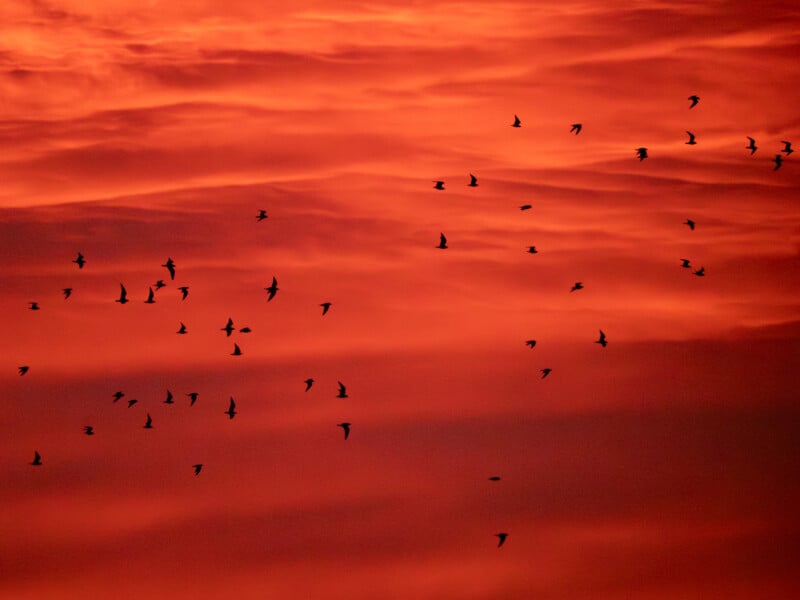 ISO 25,600, 500mm, f/5.6 1/1250 Dealing with Setbacks
If there is a setback, instead of taking it to heart, adapt. The more you adapt, the more it will help you to take on new photographic challenges. That approach is known to foster resilience against failure. Consequently, it will help you continuously improve your photography.
Practice, Practice, and Practice Some More
By repeatedly shooting the same subject in different ways, you will discover what approach gives the best results. Play with composition, adjust exposure, change proximity, lighting, and focal length, and explore your camera’s other settings to find what works best for you. However, you should accept that your best might not necessarily be the best for the next person, as “best” is entirely subjective.
Once you have got to grips with one subject, try another, and then another. That approach will embed the techniques you use for different situations in your brain. Thus, you will build a portfolio of skills and styles you can call upon when shooting similar subjects.
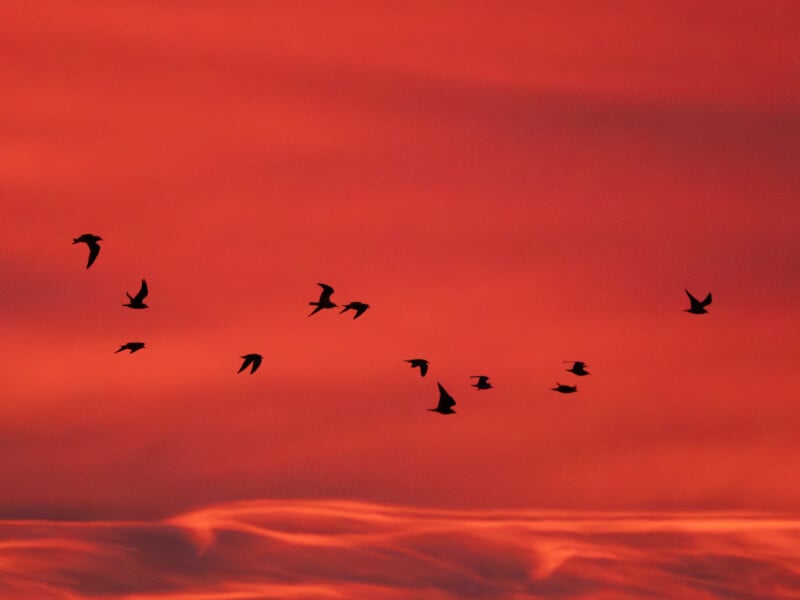 ISO 25600. 275mm, f/5.6, 1/6000 Resources That Can Motivate You
There has never been such a plethora of learning resources as there is now. The internet has revolutionised learning, with free tutorials like those on Petapixel, and paid learning on sites like Udemy. There are also thousands of YouTube and Vimeo videos to watch, along with podcasts to listen to. Maybe you prefer learning from books and magazines; there are plenty of excellent publications to choose from.
However, I always recommend working with well-established professional photographers who run workshops. Any who are successful and will be eager to help you succeed.
Should You Compete?
Extensive research has examined whether competition fosters creativity. Studies indicate that it can either enhance or undermine motivation depending upon how it is structured. If competition is framed in a supportive, informational way, it can boost motivation. However, when it becomes pressuring or ego-driven, it usually impedes motivation. That leads to stress and then disengagement.
Sadly, I could not find a definitive longitudinal study that directly compares the persistence rates of artists who avoid competitions versus those who participate. (That sounds like an excellent study for someone’s psychology PhD research.) Nevertheless, most evidence suggests that non-competitive environments foster intrinsic motivation, and that is a strong predictor of long-term engagement. Plus, overall, those who strive for excellence without needing to beat others will stay engaged for longer.
Moreover, research on creative performance shows that whereas competition can increase creativity and effort in the short term, excessive competition often leads individuals to stop a creative activity altogether. In other words, although competitions may spark your immediate enthusiasm, they can also lead to burnout or withdrawal over the long term.
It has also been shown that if you win a creative competition, you are more likely to remain engaged because you continue to enjoy it. However, those who do not come out on top only persist because they are trying to undo the damage to their self-esteem caused by losing. That type of persistence is less sustainable, and people will stop engaging with the creative activity.
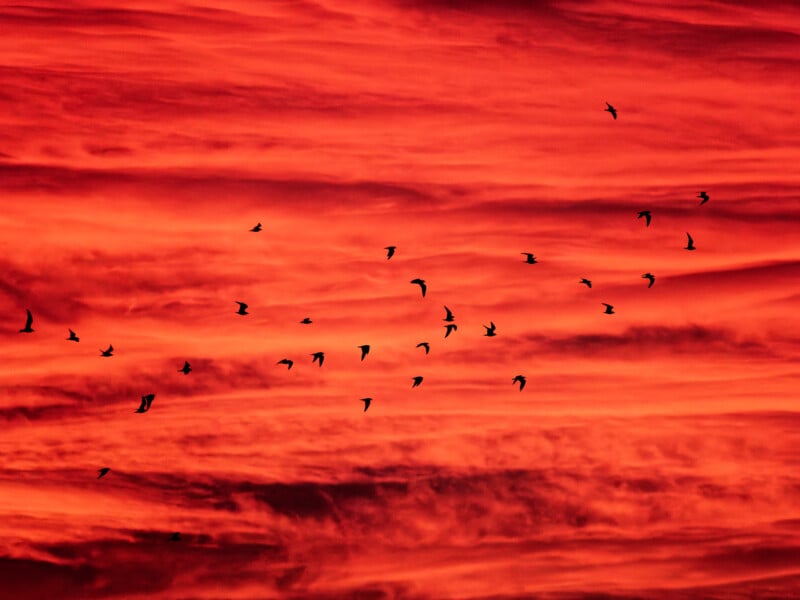 ISO 20,000 400mm, f/5.6 1/1600 Measure Your Progress
Finally, many New Year’s resolutions fail because those making them fail to set realistic, specific goals or to plan. Write down in detail what you intend to do and track your progress. If you don’t reach a goal, it doesn’t mean you have failed. Change the timescales and press on.
Team up with a fellow supportive photographer and ask them to check on your progress and help them by checking on theirs.
Happy New Year.