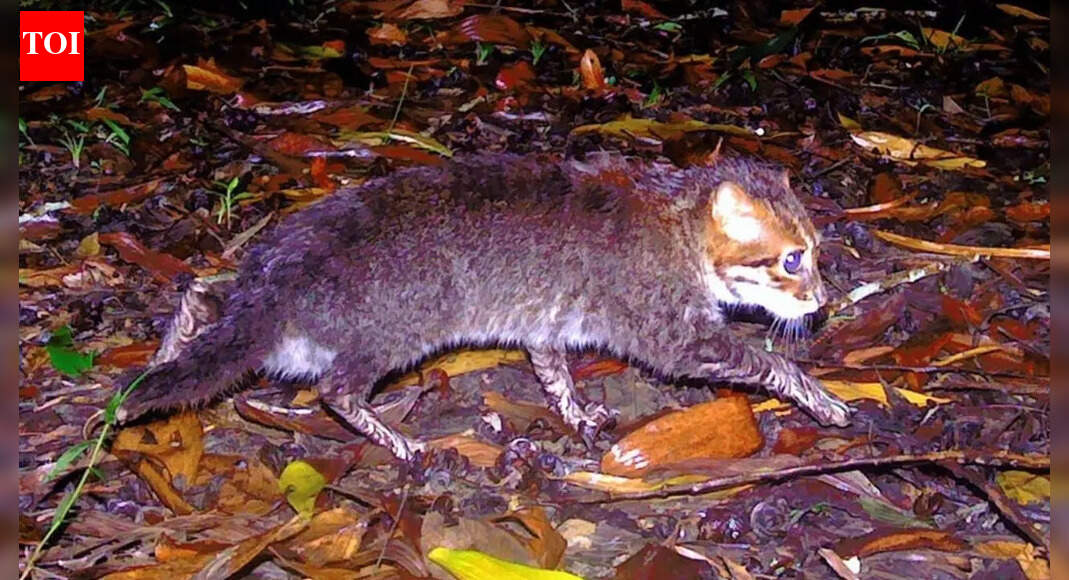
 For close to three decades, the flat-headed cat in Thailand was no more than a disturbing question mark. Last seen in 1995, the cryptic wetlands predator saw itself incrementally classified as “possibly extinct” in their homeland, their quiet reflection of the disappearance of most Southeast Asian species left on the edge due to habitat degradation. This has undergone a radically different transformation. In southern Thailand, camera traps are now capturing images of flat-headed cats roaming their designated habitat of wetlands in the peat swamps, including a female flat-headed cat roaming alongside her offspring. It started off as an important find by the Department of National Parks, in collaboration with Panthera Thailand, but goes beyond their declaration to tell the larger story of just how many flat-headed cats continue to live undetected.
Flat-headed cat sightings reveal breeding success and hidden wetland survival in Thailand
It came after extensive surveying efforts had been carried out in wetland habitats in southern Thailand after 30 years. In only 2024, the flat-headed cat had been spotted thirteen times by cameras set to take snaps. In 2025, further spotting had increased to sixteen times as the project to monitor the species continued to be undertaken by Panthera.However, one of the most important observations made was that of a female flat-headed cat with her offspring. This is a crucial phase, according to conservation scientists, as it shows evidence of successful breeding. It appears that there is not just a single surviving individual, but rather a small viable population that can breed. The flat-headed cat is very hard to track down. Indeed, it is the Southeast Asian mainland’s smallest wild member of the feline family and is mostly nocturnal. Not to mention its already rare nature in the wild, it also does not venture very far from wetland habitats like peat swamps and slow-moving streams like most larger feline species do.There was reason to believe the species may have been living unnoticed for a period of years, and there was no hard evidence to prove otherwise, until the use of remote cameras was employed in an attempt to gather more information on the species’ existence and whereabouts. These cameras were set up in strategic areas around waterways and fishing grounds.
Adaptations and the growing threats to its wetland habitat
The flat-headed cat is like no other wild cat in this part of the world. Its forehead, elongated head, and partially webbed toes are an adaptation of a life around water. This helps the cat to hunt fish, frogs, and other aquatic animals with remarkable ease. The cat is one of the few cats in the wilderness that are so specialised.Its specialisation, however, is also its drawback. The wetlands in Southeast Asia have been destroyed or drained for farmland, aquaculture, and development projects. Pollution, diminishing fish resources, and diseases carried from pet animals contribute to the decline of the species. Worldwide, the International Union for Conservation of Nature estimates that fewer than 2,500 mature flat-headed cats survive in the wild.
Conservation success rooted in protection and community support
Thai conservation experts have described the finding as highly meaningful to the region. Athapol Charoenshunsa, director general of the Department of National Parks in the region, attributed their efforts to long-term conservation of their habitats and their close involvement in the region. Locals in some parts of southern Thailand have remained instrumental in some areas where Muslims abide by their honest catch from the sea instead of hunting.Efforts are currently being placed on improving the patrol training, surveillance, and reporting systems to conserve the remaining habitats. Experts have noted that continued observation will be important in the future. The fact that the flat-headed cat is back proves that as long as the ecosystems are conserved, endangered species will persevere.