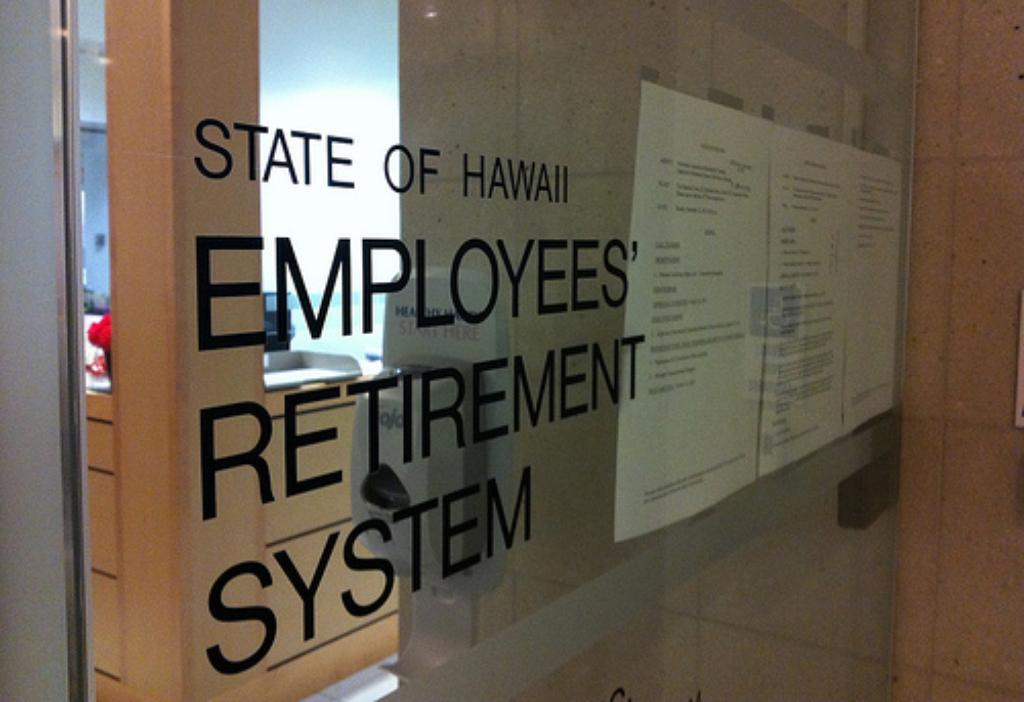
Pension spiking by public employees has cost Hawaiʻi taxpayers more than $434 million over the last seven years, money that could otherwise be spent on public services, such as expanding emergency services or public works projects.
That tab has gone up dramatically in recent years, according to public records obtained by Civil Beat. As the number of public workers stepping into retirement increases, the annual cost of inflated pensions more than doubled, skyrocketing to more than $78.3 million in the fiscal year that ended in June, up from about $29.5 million in 2019.
More than a decade ago, lawmakers took a drastic step to prevent the amount of money owed to retired public workers from eclipsing the funds available to pay out their pensions. The 2012 law put government agencies on the hook when an employee’s pension cost more than expected over the course of their retirement.
But the law did nothing to stop employees hired before 2012 — nearly half of public workers not counting police and fire — from finding ways to inflate their pensions. Now, state and county employers and Hawaiʻi taxpayers are paying the price.
The implications are far-reaching, according to Keith Brainard, the research director at the National Association of State Retirement Administrators, a nonprofit working to build sustainable public employee retirement systems across the country.
“Public money is a zero-sum game,” Brainard said. “There’s only so much, and if you’re spending more on pension costs for employees who are working overtime … that’s money that’s not available for something else.”
How We Got Here
In the early 2010s, Hawaiʻi’s pension fund was barreling toward a crisis, in part fueled by spiking. The unfunded liabilities threatened to throw government agencies’ budgets into jeopardy.
In 2012, the gap between money contributed by public workers and their employers to the Employees’ Retirement System, which manages the state pension system, and the billions needed to make good on funds owed to public employees was about $8.4 billion.
Projections for 30 to 50 years out showed it would be “very, very” difficult for contributions coming in from state and county departments to keep the pension system afloat, according to Wesley Machida, who led the retirement system from 2010 to 2014. Public workers’ benefits are protected by the state constitution, so employers are required to come up with the money, even if that means reducing the services they provide.
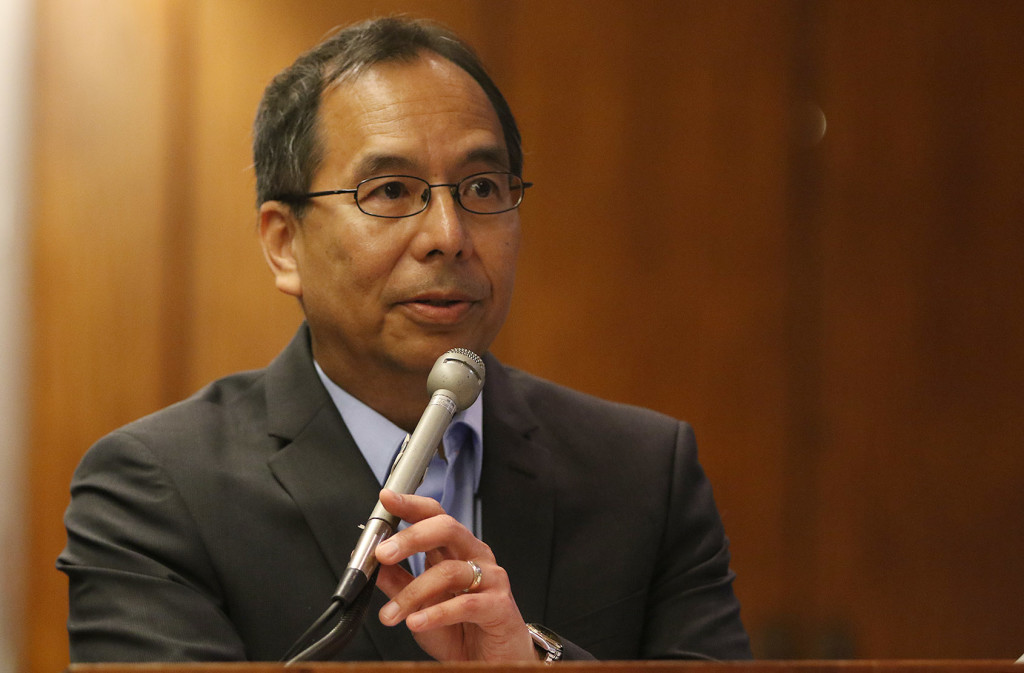 Wesley Machida ran the Employees’ Retirement System and was instrumental in the push to bill counties for excess pension costs. (Cory Lum/Civil Beat/2016)
So Machida and lawmakers did something uncommon nationwide in enacting the new law that allowed the retirement system to bill county and state departments if a public worker’s pension costs more than expected. Employers have two years to pay up.
“It’s not something that you would want to do,” Machida said. “But I think it was something that was necessary to do to make sure that the system was sustainable for future generations and it would be affordable also for taxpayers.”
Under the law, it also became harder for new employees to inflate their pensions, which are now calculated by averaging their highest salaries for five years. For employees hired after 2012, overtime no longer counts, upending one of the most common pension-spiking methods.
The change only went so far, though. Without a constitutional amendment, lawmakers couldn’t adjust pension benefits for people already working for government agencies. So retirement benefits for workers hired before 2012 are still based on their three highest years’ salaries — and overtime earnings are included in the calculations.
Many of those employees are retiring today, leaving taxpayers to foot the bill for millions more in unexpectedly high pensions. That unfunded liability currently totals around $14 billion.
Budget and finance officials expect excess pension costs to drop after pre-2012 employees leave the workforce. The state is “on the trajectory to eliminating the unfunded liabilities” in about 20 years, said Thomas Williams, the retirement system’s executive director.
Still, he and Machida consider the almost half a billion dollars in excess pension costs a troubling warning sign.
“It concerns me,” Machida said, eyeing the potential need for further action. “I think more is going to be needed in the future.”
Paying The Price
When Cpl. Thayne Costa left the Honolulu Police Department in 2020 after 28 years on the force, he had collected enough overtime to drive up the cost of his retirement by more than $1.5 million, according to records obtained by Civil Beat. The records show what the retirement system billed state and county agencies for retirees collecting unexpectedly high pensions, but they do not reveal how much retirees collect in annual benefits.
That $1.5 million ranks Costa at the top for excess pension costs among Hawaiʻi public employees in recent years.
“I have a very good pension,” he said. “There’s no denying that.”
Costa said the high figure is the result of hard work and opportune timing. Toward the end of his time on the force, department leadership changed minimum staffing requirements to increase the number of people working each shift, creating more need for overtime.
The base pay for a corporal ranges from $72,372 to $100,500. Costa, who was already making the highest base salary of his career, seized the opportunity. With his son grown, he said he threw himself into work, picking up hours on his wedding anniversary and going without vacation. He clocked more than 2,480 hours of overtime in fiscal year 2020, according to records obtained by Civil Beat.
“My intent was to make as much as I could,” he said.
Costa, now in his mid-50s, took a break for about two years to travel and golf after he retired. Now he works as a security guard. He doesn’t see a problem with the size of his pension, although he would not specify how much he’s making.
“They gave me the opportunity, and I took advantage of the opportunity, and I worked it,” he said. “So it’s not like I did anything nefarious to get it.”
Depending on how long they live and other factors, people with high excess pension costs don’t necessarily pocket all the money, according to Williams. But the retirement system has to be prepared to cover the payments for the course of their retirement. So for taxpayers, the result is the same: it’s more money set aside for inflated pensions instead of other public services.
Costa is at the top of the list, but he’s just one of at least a dozen people — all police officers in Honolulu and Maui counties — who have surpassed the million-dollar mark in recent years. Honolulu has had to fork up more than $11 million in unexpected pension costs for just nine retired police officers. In Maui County, two police lieutenants and a sergeant are projected to cost taxpayers more than $3.3 million, on top of their expected pensions.
Statewide, more people are retiring after spiking their pensions, sometimes substantially. The number of people with excess pension costs has more than doubled to over 780 in fiscal year 2025, from about 350 people in 2019, Employment Retirement System data shows.
The cost to taxpayers has gone up too. Excess pension costs in three counties and the state have more than doubled. Only Kauaʻi saw a decrease, of 16%.
The median employee’s excess pension costs increased by about half over the last several years, declining slightly from the peak of $90,000 in fiscal year 2021. That sum obscures the costs of pension spiking at both ends of a vast range. Since July 2018, about 130 people have cost taxpayers more than $500,000 apiece in unexpected pension costs.
Employers don’t know how much they’ll be required to pay until they get the bill, and counties go about budgeting for it in different ways.
On Oʻahu, coming up with an exact dollar amount for each department to incorporate into its budget in advance would be next to impossible, said Honolulu budget director Andy Kawano. Instead, the county uses past years to estimate how much money to set aside for the whole county and lumps this with regular pension contributions.
 Honolulu Director of Budget and Fiscal Services Andy Kawano says the county is in good shape as long as excess pension costs remain around current numbers. (Cory Lum/Civil Beat/2020)
Provided that these extra costs stay around $30 million to $35 million a year, Kawano said, Honolulu should be fine.
Kauaʻi leaves more up to each department, according to Reiko Matsuyama, the county’s managing director. The county only sets aside money for the fire department’s unexpected pension costs. For everyone else, it comes straight from their budget, and it’s up to department heads to figure out how to cover these costs and where to make cuts if necessary.
Ultimately, that’s money that could be going elsewhere, such as incentives to attract police officers, the expansion of emergency medical services or catching up with deferred maintenance at parks, Kawano said.
“It just goes on and on and on in terms of what the city needs,” he said.
Few People, Large Impact
Oʻahu is where pension spiking happens the most.
The individuals with the highest excess pension costs overwhelmingly come from the Honolulu Police Department, which is severely understaffed and does not impose caps on overtime. HPD made up more than a quarter of excess pension costs statewide last fiscal year and nearly two-thirds of Honolulu’s total bill.
Excessive overtime, officials there say, doesn’t necessarily point to nefarious spiking.
Emergency services, such as police and fire, tend to have the highest unexpected pension costs, according to state and county data. There’s often a legitimate public safety reason for that, said Honolulu Fire Chief Sheldon Hao. There needs to be an adequate number of people staffing each fire truck, for instance.
“It’s operational need,” he said. “Situation dictates tactics. We live in a dynamic world.”
The Honolulu Fire Department’s excess pension costs have been decreasing since a peak of $9.5 million early on in the pandemic. But the department was still responsible for about $5.9 million in excess pension costs in fiscal year 2025, about a fifth of the county’s total.
When Hao looks at some of the retirees from his department who have the highest unexpected pension costs, he said most of the time he understands why. The pandemic required the fire department to step up to run vaccine and testing sites, for instance. Other times it had to do with vacant roles at the top levels.
“Think about a bunch of people going to dinner. Some people might order a bottle of wine and get steak, and other people might just have water and get chicken. But if you’re going to divide the bill evenly among everybody, then some people are going to be subsidizing others.”
Keith Brainard, research director at the nonprofit National Association of State Retirement Administrators
Even in situations where overtime is needed, experts say those extra hours should be equally distributed to avoid overtaxing the pension system.
“It’s more problematic when it’s manipulated to occur in those final years prior to retirement, and the overtime is concentrated with just a few people,” Williams said. “When you see those kinds of increases, the contributions did not have a chance to keep up.”
Only a handful of public workers spike their pensions. But these people have an outsized impact, according to Brainard.
“Think about a bunch of people going to dinner,” he said. “Some people might order a bottle of wine and get steak, and other people might just have water and get chicken. But if you’re going to divide the bill evenly among everybody, then some people are going to be subsidizing others.”
Hao said the fire department is making changes to distribute overtime more equitably. Currently, if there is a staffing hole in a particular fire station, firefighters who work at that station get dibs on those overtime hours. Now, the department is transitioning to prioritizing people who have worked the least amount of overtime. That requires updates to their staff management software, but Hao is aiming for this process to be in place next year.
Hao is heartened to see the amount of excess pension costs from the Honolulu Fire Department going down and expects the bill coming from his department to decrease even further.
“I don’t know if you’re ever going to be able to actually zero it out,” he said. “There’s always going to be some sort of situation. But when I look forward in time … very hopeful.”
Departments Drive Costs Down
Kauaʻi has been particularly proactive in finding ways to address overtime abuse. Matsuyama points to successes at the fire department, which has historically seen high excess pension costs.
“There was a lot more tracking that needed to be done,” she said. “It really rests within HR and within the actual department that we were focusing on, which at that time was fire.”
The fire department has responded. Officials overhauled the training program to require less overtime and began holding recruiting classes more frequently to fill staffing gaps faster, according to Fire Chief Michael Gibson.
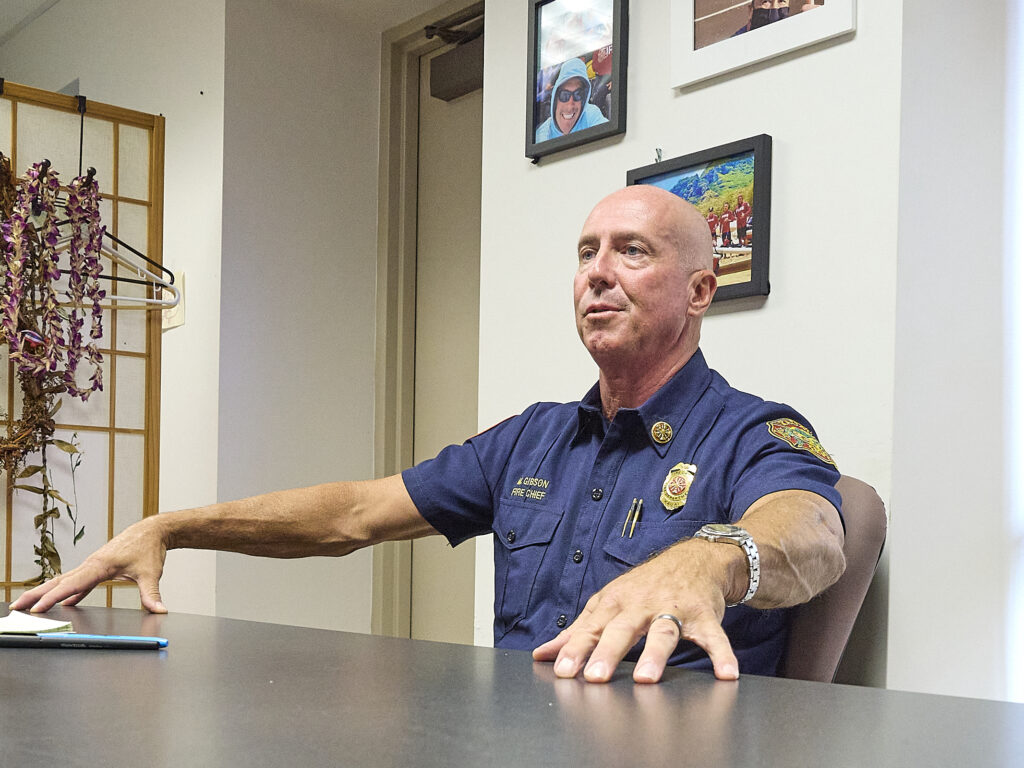 Kaua‘i Fire Chief Michael Gibson said his department closely tracks overtime and limits certain types of overtime, contributing to a decrease in excess pension costs. (David Croxford/Civil Beat/2024)
Battalion chiefs also started keeping overtime logs. The contract with the union representing firefighters statewide limits overtime in certain circumstances.
For example, firefighters are entitled to one rank-for-rank overtime shift a month, meaning if a captain calls out sick another captain can step in. But the union’s bargaining agreement sets the cap at 144 such hours every six months.
“I can scroll through and look at everybody’s hours to see if there’s any red flags that stick out.”
Kaua‘i Fire Chief Michael Gibson
“That maintains the accountability,” Gibson said.
Tracking is manual, but the county is building tools to streamline the process.
Gibson gets a list of staff hours per pay period from the county payroll team, which he says helps him keep an eye on overtime too.
“I can scroll through and look at everybody’s hours to see if there’s any red flags that stick out,” Gibson said. “I can go through that list pretty quickly and not see any double-digit overtime numbers.”
Matsuyama, the county’s managing director, also started asking the Employee Retirement System for data on pension overages earlier in the year, so departments could better manage their budgets.
All this diligence has paid off. In fiscal year 2018, the Kauaʻi Fire Department owed more than $2.24 million in excess pension costs. By fiscal year 2025, the department had brought that down to $265,325 — nearly a 90% decrease.
While pension spiking is concerning to the retirement system board, Williams said, it’s up to department leaders to take steps to reduce it. But he doesn’t think people should be getting rich off their pensions.
“When you increase your pension such that you’re making more in retirement, it seems to be wonderful for the recipient, but … at some point, the cost of the plan can become unaffordable,” Williams said. “And if it’s unaffordable, it harms everyone.”
“Hawaiʻi’s Changing Economy” is supported by a grant from the Hawaiʻi Community Foundation as part of its work to build equity for all through the CHANGE Framework.

Sign up for our FREE morning newsletter and face each day more informed.
Sign Up
Sorry. That’s an invalid e-mail.
Thanks! We’ll send you a confirmation e-mail shortly.