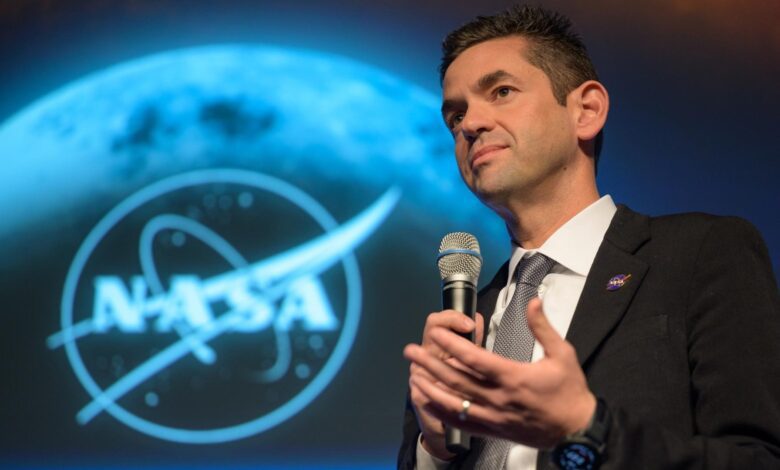
In 2025, the National Aeronautics and Space Administration (NASA) found itself at the heart of sweeping changes. The agency, which for decades had embodied dreams of reaching the Moon and Mars, suddenly faced grave threats from deep budget cuts, mass layoffs, and the possible cancellation of several scientific programs. The debate over how much these events have transformed NASA—and whether it can ever return to its former levels of activity—has sparked intense discussion in political and scientific circles. Now, Congress must decide what the future holds for the agency and whether it can maintain its position in the global space race.
The situation was further complicated as many seasoned experts with unique knowledge and in-depth understanding of NASA’s inner workings left the agency. Some of them might have retired anyway, but the mass exodus can’t be explained by this alone. After an entire department focused on policy and economics was disbanded, NASA lost a significant portion of the expertise that once drove key decision-making. It remains to be seen just how painful this gap will be for future projects.
Scientific Losses
The cuts have hit the scientific sector especially hard. If Congress fails to provide the necessary funding, NASA risks losing not only new initiatives but also ongoing programs. Scientific research has always been a relatively small but crucial part of the agency’s work. It has brought new knowledge about the Universe and spurred technological progress. Now, experts warn that NASA may face long-term challenges in attracting and retaining top scientists. Many are already seeking employment outside government agencies, threatening the loss of unique expertise.
At the same time, as government spending shrinks, investments in defense and commercial space projects have surged. However, experts note that most of the money is flowing into military, not civilian, programs. This means that innovation and new developments will primarily serve security interests rather than scientific research. As a result, both the commercial and government space sectors are evolving, but along a very different path than before.
Goddard and JPL
The spotlight has turned to events at the Goddard Space Flight Center. Here, the cutbacks have been most severe: about half of the buildings and laboratories are being closed, and long-term plans to modernize the center have been scrapped. NASA management accelerated the restructuring process, sparking widespread discontent among staff and a flurry of inquiries from Congress. The agency’s responses to these questions have been notably reserved, further fueling anxiety about the future of scientific programs.
A similarly worrisome situation has unfolded at the Jet Propulsion Laboratory (JPL), which has also seen significant layoffs. The loss of so many specialists is raising concerns about America’s leadership in space research. According to experts, employee morale has suffered: many who dedicated their lives to advancing science and technology now feel their work is no longer valued.
Impact on the future
The cuts have affected not only current projects but also the next generation of scientists and engineers. Withdrawal of over $315 million in funding and a reduction in research grants have put training for young STEM (Science, Technology, Engineering, and Mathematics) professionals at risk. With NASA operations spanning every state and most congressional districts, the impact will be felt nationwide.
Nevertheless, there are also signs of hope. Congress has already expressed its willingness to restore the agency’s funding in 2026, rejecting the harshest proposed cuts. In addition, the appointment of a new administrator — Jared Isaacman — could mark a turning point for NASA. The new leadership promises to restore the agency’s former momentum and inject fresh ideas into its work.
If you didn’t know, NASA is the leading US government organization engaged in space research, technology development, and launching both crewed and robotic missions. Founded in 1958, the agency has become a symbol of scientific progress and has inspired millions around the world. Among NASA’s most renowned achievements are the Moon landing, the launch of the Hubble telescope, and numerous missions to Mars and other planets. Despite various challenges, the agency continues to develop new projects today.