Last year Ella Mills’s world took a drastic turn. Over the past decade the softly spoken student blogger who had “cured” herself of a debilitating illness through diet has transformed herself into a powerhouse in the lucrative wellbeing sphere, becoming a key player in the rebranding of avocado and quinoa from musty hippy health foods into middle-class staples. Her debut cookbook, Deliciously Ella, became the fastest-selling cookbook of all time; her six subsequent books sold more than 1.5 million copies worldwide.
With her husband, Matthew Mills, she created the all-natural Deliciously Ella (DE) brand, which to date has sold more than 150 million units and is stocked by every supermarket chain. This was done while they were also bringing up two daughters — Skye, now six, and May, five — and coping with the death of Matthew’s mother, the former Labour cabinet minister Tessa Jowell.
Quite a vindication for someone who has always grappled with accusations of being a Sloaney nepo baby (her mother is the Sainsbury’s heiress Camilla Sainsbury, her father the former Northern Ireland secretary Shaun Woodward, who left her for his cameraman lover Luke Redgrave, whom he subsequently married).
Yet by 2024 the strains of running the business had become too much. In July that year the couple sold DE for an undisclosed sum (but rumoured to be in the £70 million ballpark) to the Hero Group, the Swiss brand best known for its baby food Organix pouches. Yet when I last met Mills, 34, two years ago she had sworn this would never happen. “What would we do? What would we talk about? It’s just our world,” she asked of her and Matthew without the brand.
So why did they change their minds? Blame Covid, war and inflation, all of which have brought plenty of other entrepreneurs to their knees. “It was a wildly unstable environment, which took the pressure of owning a business, particularly one without investors, to another level,” Mills says now, sitting in the DE offices in central London.
• Quick Wins: four exclusive recipes from Ella Mills’s latest collection
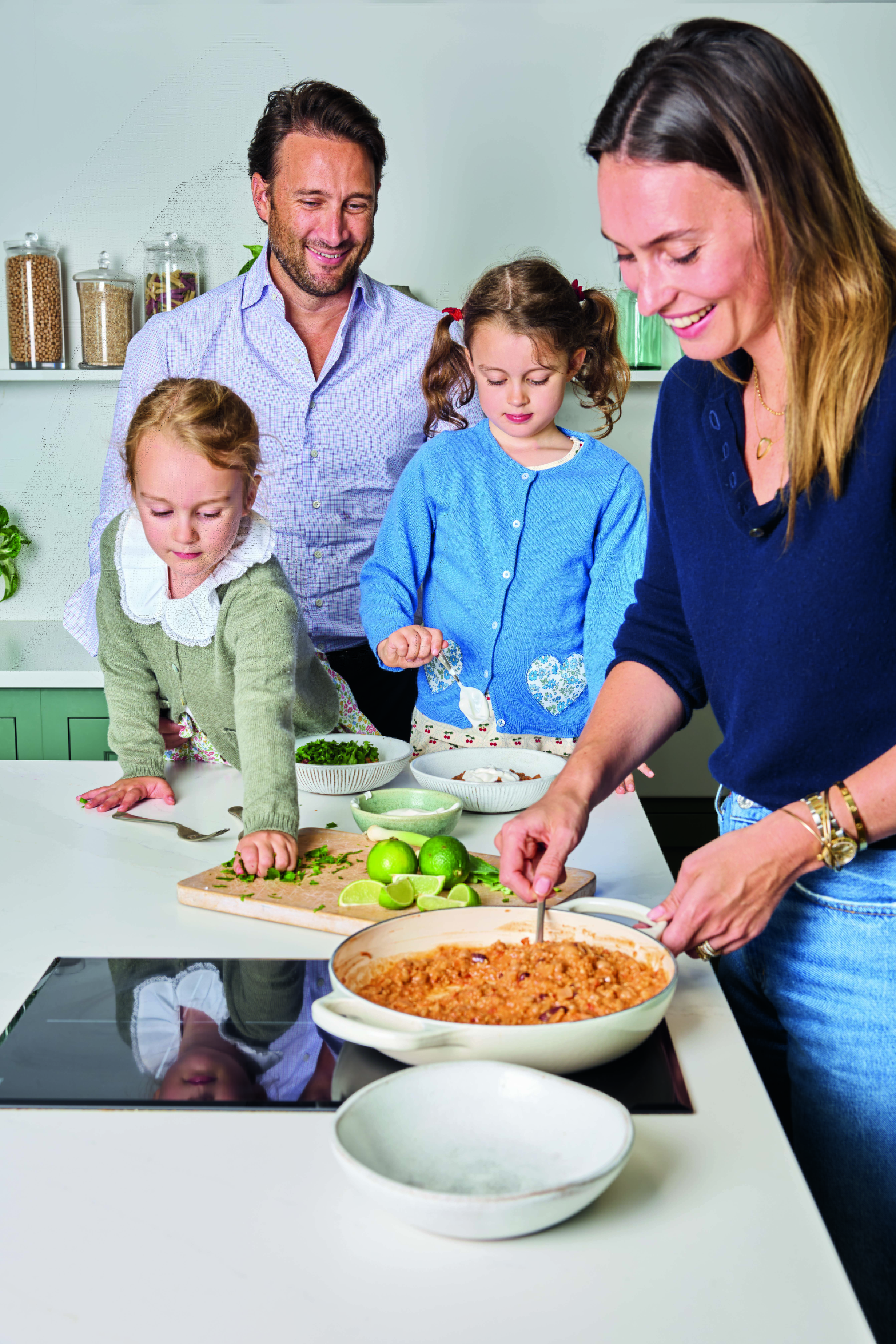
Ella cooking with her family
CLARE WINFIELD
“We had a loan against our house and when you have that you just don’t sleep because you’re seeing prices go up and up and then you have no margin left. There was this consistent sense of ‘Is this boom or bust? The business is growing but we have all these problems.’ It’s a really anti-business climate today and you can probably only handle it for so long.”
Certainly when I’ve previously met Mills she’s always been impressively glowy, a walking testament to the power of chickpeas and kale. Yet she also had a wild-eyed aura that spoke of lack of sleep and coursing adrenaline. Today she seems infinitely more relaxed. She laughs. “I’m very aware of that irony. I started a brand about health and wellness. Obviously nutrition is one pillar of health, but stress management is very much another and my cortisol levels were definitely not brilliant.”
Yet now with the business sold, Mills — always on millennial trend — is finally able to lead the “soft” life, idealised by many of her followers who’ve grown up with her, rejecting the hustle culture in favour of self-care. Matthew has stayed on as DE’s CEO, focusing on international expansion, but she has gone down to part-time hours as the “face and creative director” of the brand.
“It’s a very different life, having worked 24/7 my whole adult life,” she says. “At first I did have a bit of an existential crisis.” Since the sale, the family have — as documented to her 2.4 million Instagram followers — been on some fabulous holidays, to Thailand and Disneyland Paris among other destinations.
“Last time I spoke to you we might have taken two days out of the office, but I wouldn’t have been present really, I would always have been looking at emails. You’d be in line for the teacups at Disneyland and suddenly you’d be like, ‘Oh my God, this thing has happened!’ and suddenly you’d be talking about how you were going to resolve this challenge. It’s really nice now to feel there’s a line between urgent and important — it’s a much healthier way of living.”
They’ve also made the inevitable Sloane lifestyle step from their Kensington flat to an Oxfordshire manor house, which — again judging by Instagram — has acres of green space, an Aga that Mills is still struggling to master, a veg patch, and flowerbeds where she’s planted daffodil bulbs. “Until they come up, I don’t know if I’m green-fingered — I’m desperate to be.”
It’s all very yummy mummy, yet Mills isn’t idling her days away in the Estelle Manor spa. Rather, she’s using her energies once invested in worrying about the rising cacao prices and national insurance contributions to concentrate on the more creative side of the business. She has a podcast, The Wellness Scoop, has launched a kitchenware range with John Lewis and has now produced her eighth cookbook, Quick Wins: Healthy Cooking for Busy Lives, whose goal is to help us eat 30 different plants every week.
• Read more expert advice on healthy living, fitness and wellbeing
“It sounds really daunting,” she says, seeing my anguished face. “But it’s not as hard as it sounds. Remember nuts and seeds count — you can buy mixed bags of them in any supermarket that you can sprinkle on any salad or soup — that gets you to about nine plants. Mixing up onions with red onions and shallots — that’s three plants. You can use them all if you’re making a curry.” And coffee counts, I say hopefully. “Coffee counts, and so does dark chocolate — but it’s got to be over 70 per cent.”
As nutritional advice goes, this is incontrovertible. Yet not so long ago Mills was shouted down every time she made such statements, told that she and the other “clean eaters” (not an expression they ever used) of those far-off 2010s — think Amelia Freer and the Hemsley sisters —– were responsible for everything from anorexia to orthorexia (a preoccupation with eating only “healthy” food) and that encouraging people to eat goji berries and butter beans was “elitist’’.
Initially, Mills — formerly a Haribo-munching St Andrews student who had overcome the rare autoimmune disease POTs (postural orthostatic tachycardia syndrome) by making radical changes to her diet — found the vitriol overwhelming.
“When I started, telling people that what you put in your mouth might affect your body was like telling them the world was flat,” she says. “I wish I had been a bit older and a bit wiser when it happened, because I probably would have taken a stronger position. But I was very young and pretty nervous on the back of it and unprepared, so it made me retreat.
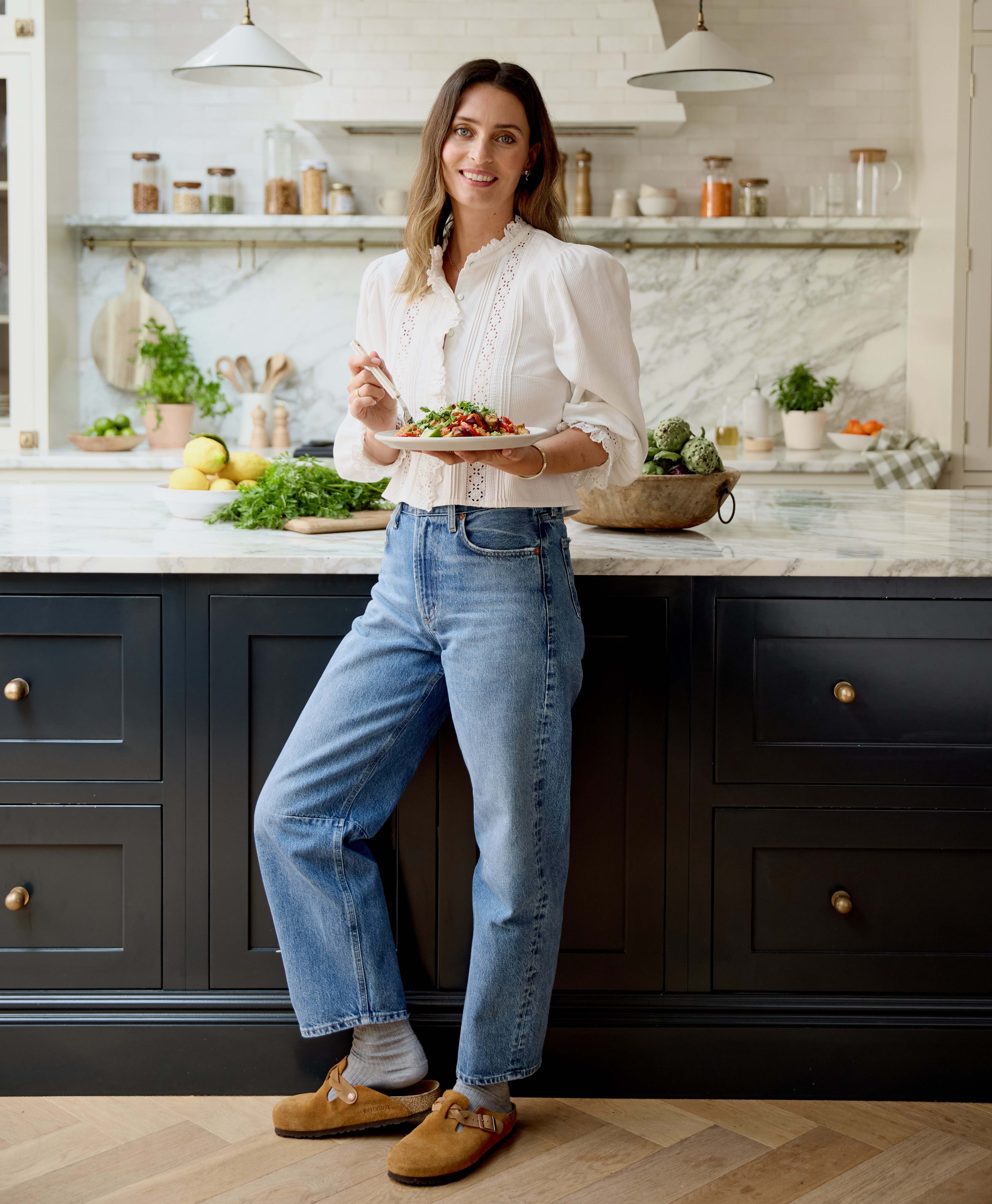
“I had low self-esteem anyway, so when people start telling you you’re a terrible person, you believe it”
SOPHIA SPRING
“In your early twenties, your sense of self is quite fragile. I had low self-esteem anyway, so when people start telling you you’re a terrible person, you believe it. But now I’m like — you know what, I’ve got my family, my dogs, the foundations of my life. I just don’t really care what people say about me. It’s words on a screen.
“I feel really fortunate to have spent almost 15 years working in this industry and to have an element of a voice and a community. I feel a responsibility to use that, because the way we approach food is terrible. We have to inspire people to change. If a person really doesn’t want to hear what I have to say, then fine, but if it reaches some people who then suddenly start cooking a little bit more with plants or think, ‘Oh my gosh. I never thought to use a cucumber in this way,’ then great.”
Age isn’t the only thing that’s empowered Mills. In the 2010s her insistence on avoiding everything from sugar to gluten to dairy (she’s since become decidedly less prescriptive) sounded like faddy narcissism. Yet now she comes across as a Cassandra — warning us about the dangers of ultra-processed foods a good decade ahead of her time.
• Read more restaurant reviews and recipes from our food experts
Today, educated by the Zoe app and Dr Chris van Tulleken’s book Ultra-Processed People, everyone agrees that ultra-processed foods are a very bad thing. Nonetheless, last month it was revealed that Brits are eating fewer vegetables than at any point in the past 50 years.
“We have a trillion-dollar wellness industry, but we’re eating less vegetables. It’s the easiest summary you could ever have of where we’ve got to,” Mills says. “Although we are eating lots of cucumber, there’s a TikTok trend for smashed and pickled cucumbers. But seasonal British vegetables like cabbage have gone over a cliff.”
Mills has just come across the phrase “wellness washing” — following the latest social media health trends with total disregard for their efficacy. “Every gadget and gizmo under the sun is sold to you, almost at the expense of the foundations of our health. We’re so distracted by powders and supplements, even though there’s no evidence taking lots of multivitamins is good for you.
“But supplements are an enormous industry. What we need to be doing is eating carrots and going for 20-minute walks in our lunch breaks — but that’s not going to get TikTok cut-through.”
According to the adverts bombarding me, I’m protein-deficient and should be eating five eggs and two steaks for breakfast alone. “Protein is really important but almost no one in the UK is deficient in it, it’s not one of our chronic problems, whereas 96 per cent of people don’t eat enough fibre. But protein is very much linked to looking like a certain aesthetic, while fibre is really related to gut health and poo. That’s just not so sexy.”
The other game-changer since Mills started are weight-loss drugs. Will anyone bother with celery bakes if they can simply lose pounds from sticking a needle in their thigh? “There’s a quite glaringly obvious irony that we have created this problem with the food environment that we live in, where we now need a pharmaceutical way out of it.
“It’s slightly Black Mirror, but we do have that environment and the impact they’re going to have is going to be absolutely enormous. But it becomes even more important if you’re eating less that you just try to add one portion of plants to every single meal to get the nutrition that you need.”
It’s the most impassioned I’ve ever heard Mills sound. I have a feeling the spa-day era may still be many years off. After all, she and Matthew have retained control of their Plants brand, a separate arm of the business supplying soups and the like to chains such as Waitrose (it’s imminently going into Tesco).
“I think we’ve concluded working together will always be central to our relationship,” she says. “We do like to talk about FMCG [fast-moving consumer goods] and retail brands. It’s just what makes us tick.”
Quick Wins by Ella Mills (Hodder & Stoughton £25). To order a copy go to timesbookshop.co.uk. Free UK standard P&P on orders over £25. Special discount available for Times+ members