Your support helps us to tell the story
From reproductive rights to climate change to Big Tech, The Independent is on the ground when the story is developing. Whether it’s investigating the financials of Elon Musk’s pro-Trump PAC or producing our latest documentary, ‘The A Word’, which shines a light on the American women fighting for reproductive rights, we know how important it is to parse out the facts from the messaging.
At such a critical moment in US history, we need reporters on the ground. Your donation allows us to keep sending journalists to speak to both sides of the story.
The Independent is trusted by Americans across the entire political spectrum. And unlike many other quality news outlets, we choose not to lock Americans out of our reporting and analysis with paywalls. We believe quality journalism should be available to everyone, paid for by those who can afford it.
Your support makes all the difference.Read more
Large amounts of screen time for toddlers is linked to anxiety during their teenage years, according to a new study.
As technology has progressed in the past several decades, more kids are being exposed to screens on TVs, computers and tablets. While some may see screens as a hack for unruly children and overwhelmed parents, there are concerns over the developmental effects that these devices can have on tykes.
Researchers in Singapore tracked 168 children for more than a decade, using brain scans at ages 4-and-a-half, 6 and 7-and-a-half to determine the developmental effects of kids being exposed to high levels of screen time.
The study, published in The Lancet’s eBioMedicine journal on Monday, found that children who were exposed to more screen time showed an accelerated maturation of brain networks that deal with visual processing and cognitive control.
While this may not sound like a bad thing, Dr. Huang Pei, an author of the study, explains how this can actually cause your child to struggle to adapt to life as they get older.
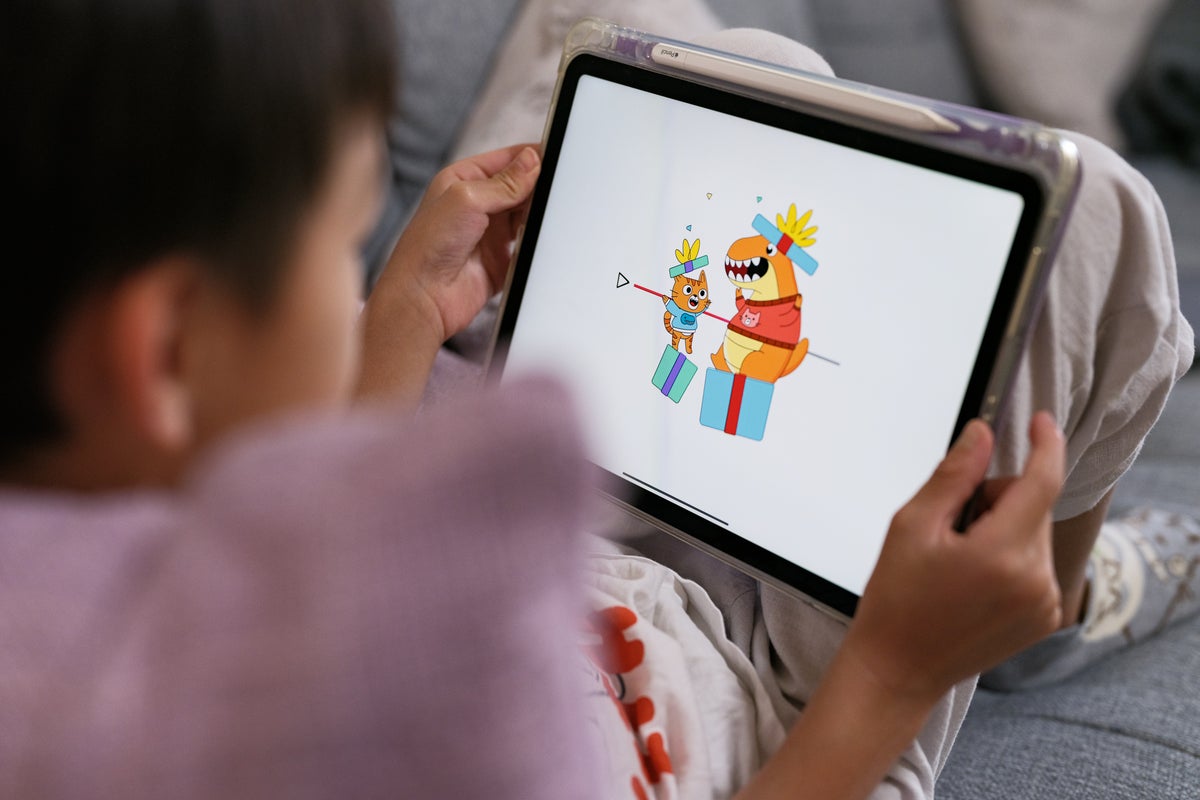
.jpg) Large amounts of screen time for toddlers is linked to anxiety during their teenage years, according to a new study (George Chan/Getty Images)
Large amounts of screen time for toddlers is linked to anxiety during their teenage years, according to a new study (George Chan/Getty Images)
“Accelerated maturation happens when certain brain networks develop too fast, often in response to adversity or other stimuli,” Huang said in a press release from the Singaporean government. “During normal development, brain networks gradually become more specialized over time.
“However, in children with high screen exposure, the networks controlling vision and cognition specialized faster, before they had developed the efficient connections needed for complex thinking. This can limit flexibility and resilience, leaving the child less able to adapt later in life.”
Children in the study who had these altered brain networks took longer to make decisions during a cognitive task when they were 8-and-a-half years old and later reported higher anxiety symptoms at age 13.
A related study published in Cambridge University Press’ Psychological Medicine journal in February 2024 found toddler screen time is also linked with changes in brain networks that deal with emotional regulation, and that parents reading to their kids frequently could counteract some of these changes.
“This research gives us a biological explanation for why limiting screen time in the first two years is crucial. But it also highlights the importance of parental engagement, showing that parent-child activities, like reading together, can make a real difference,” Assistant Professor Tan Ai Peng, the study’s senior author, said in the press release.