
Guido Nasi (43), the Italian man who was left paralysed as a teenager after an unprovoked attack in Dublin, died on Wednesday morning after suffering a cardiac arrest.
Mr Guido was just 17 during his first trip to Ireland in 1999 when he was attacked in Dublin’s Fairview Park.
In 2001 James Osborne, the then 31-year-old from East Wall in Dublin who smashed a beer bottle over his head, was sentenced to eight-and-a-half years in prison. Mr Nasi told the court his experience was “a nightmare from which I try to wake myself”.
Despite being paralysed from the neck down and requiring round-the-clock care, the Turin native maintained a deep affection for Ireland and dreamed of moving here permanently.
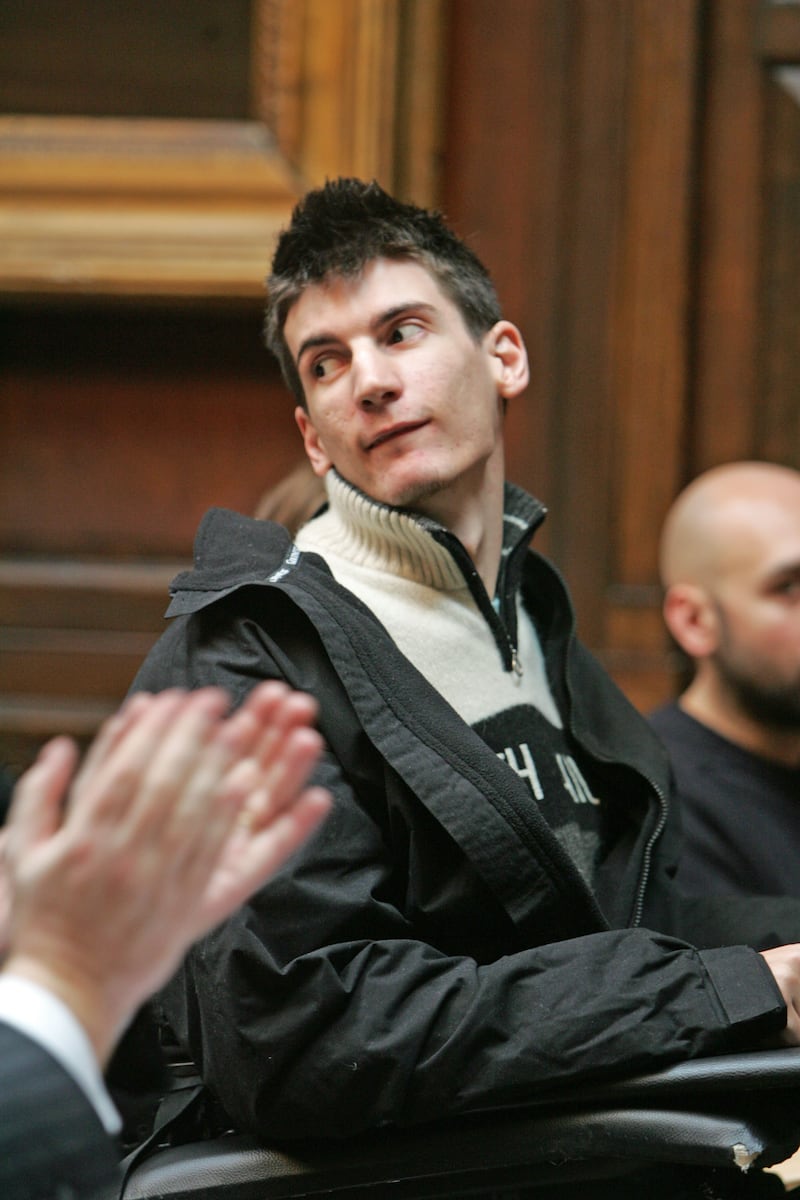 Guido Nasi receives applause after a message from him was read out at a meeting marking the 15th anniversary of the establishment of the Irish Tourist Assistant Service at the Mansion House in Dublin in 2009. Photograph: Frank Miller
In 2019 he returned to Ireland on a visit and was given a special reception by then president Michael D Higgins at Áras an Uachtaráin. Since then, his health has rapidly deteriorated.
In November last year he was hospitalised after suffering a cardiac arrest, and he remained in hospital until his death on Wednesday following a second cardiac arrest.
Bernadette Kelly, a former victim support worker and long-time friend of the Nasi family, said: “I’m so sorry to learn of Guido’s passing. He had a terrible life after he was attacked in Dublin. His injuries were horrific, and he suffered badly with his mental health.”
She said his mother died a few years ago, leaving him without family members to support him so he was cared for in a nursing home.
“It’s amazing, though, that he never lost his love for Ireland. He dreamed of moving over here to live, and that was what kept him going. And the Irish public were always very supportive to him, always sending him birthday cards and Christmas cards,” she said.