Argonne National Laboratory and Intel have partnered to deploy and run a 12-qubit quantum processor based on silicon quantum dots.
What Did Argonne & Intel Achieve in Quantum Computing?
Developed by Intel and operated at Argonne, the 12-qubit silicon quantum dot processor is among the most advanced demonstrations of quantum dot qubits to date. Its successful deployment demonstrates that standard semiconductor manufacturing methods can be utilized to construct quantum computers at scale.
The collaboration combines Intel’s semiconductor manufacturing capabilities with Argonne’s open-science expertise, drawing on decades of experience in silicon transistor manufacturing to advance quantum dot technology. The project was led by Q-NEXT, the Department of Energy’s National Quantum Information Science Research Center hosted at Argonne, with initial results published in Nature Communications.
“This collaboration between Argonne and Intel is a cornerstone of Q-NEXT. It shows the impact of a national quantum research center: Only at this scale can industry and discovery-driven organizations like the national laboratories combine their strengths to build such a complex system,” said David Awschalom, inaugural director of Q-NEXT.
What Are Quantum Dots?
Quantum dots confine particles such as electrons to spaces smaller than their natural wavelengths, forcing them into discrete, tunable energy states governed by quantum physics. Scientists can precisely control these energy levels by varying a dot’s size and material makeup. Building on single-electron demonstrations, researchers are now scaling quantum dot-based spin qubits for use in quantum computing and related technologies.
How Will Quantum Dots Scale to Useful Quantum Computers?
Scaling practical quantum computers will require systems with hundreds or millions of qubits. Intel is advancing the fabrication of larger quantum dot processors, while Argonne is studying how qubits interact and perform as systems grow. This feedback between physics research and device engineering is guiding the development of larger, more capable quantum dot systems.
Prior Argonne-Intel Collaborations
Argonne and Intel have collaborated on advanced computing initiatives, including the development of the Aurora exascale supercomputer and a semiconductor testbed to support algorithm testing activities at Q-NEXT.
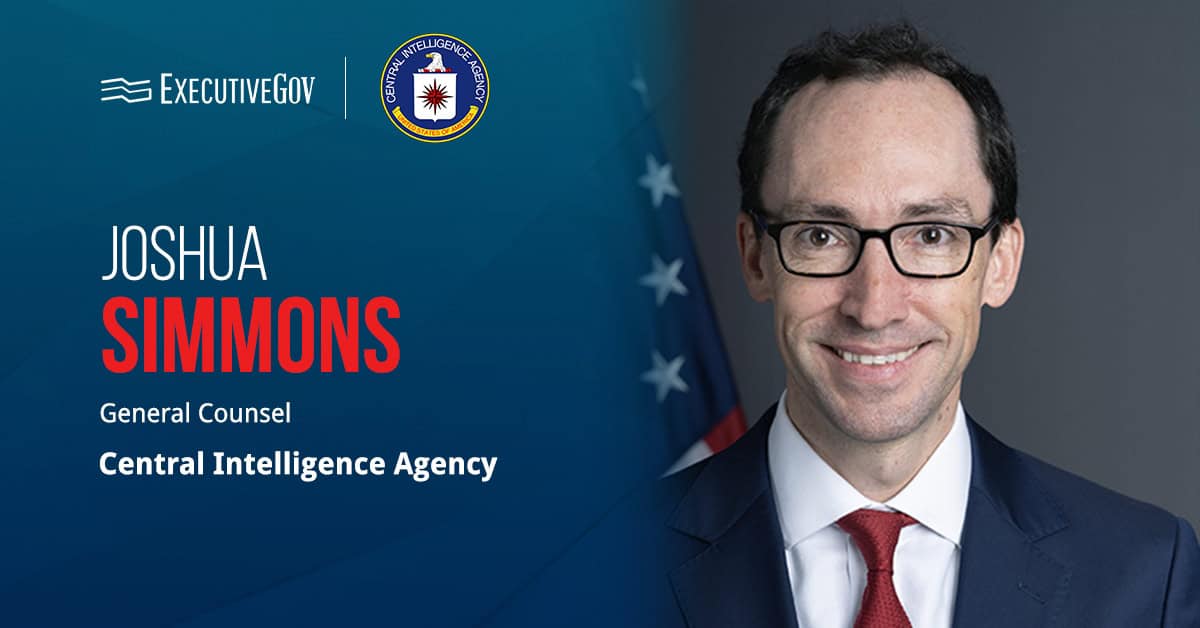 Joshua Simmons Confirmed as CIA General Counsel
The Senate on Tuesday voted 53-47 to confirm Joshua Simmons, principal deputy legal adviser at the State Department, as the CIA’s next general counsel. What Are CIA Chief John Ratcliffe’s Thoughts on Simmons’ Confirmation? In a statement published Tuesday, CIA Director John Ratcliffe welcomed Simmons as the agency’s new general counsel following the latter’s Senate confirmation. “Josh brings an impressive record and the expertise to advance the President’s priorities at the Agency. He will be a valuable asset to our leadership team, in addition to playing a key role in strengthening CIA,” said Ratcliffe, a previous Wash100 awardee. In September,
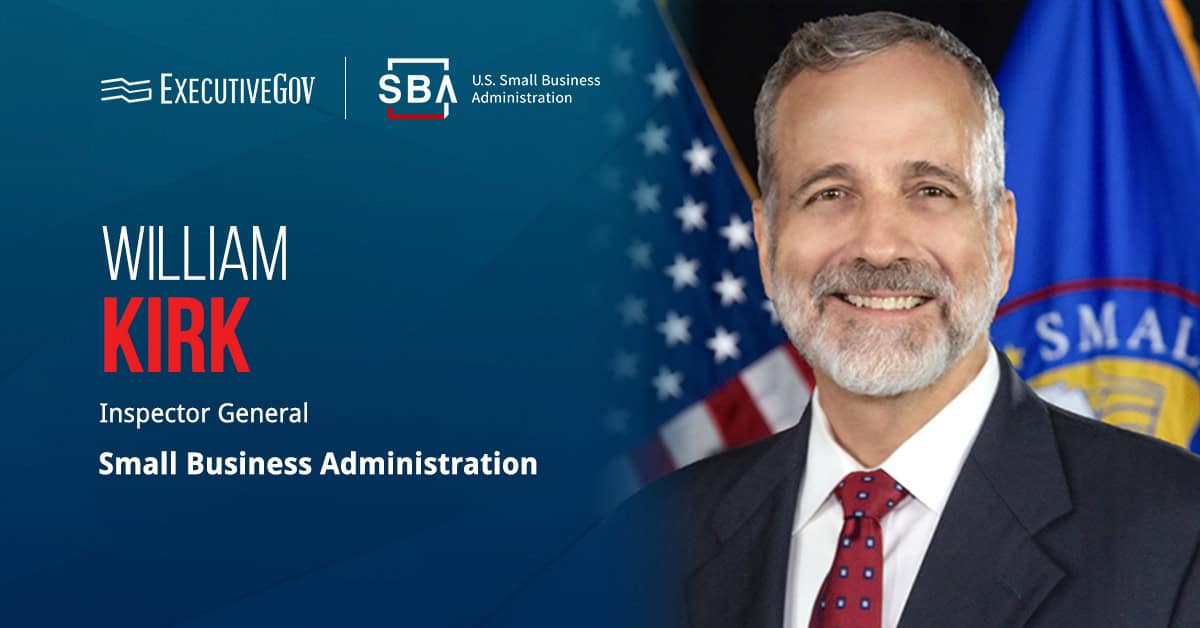 William Kirk Takes Office as SBA Inspector General
William “Bill” Kirk has officially stepped into the role of inspector general of the Small Business Administration. SBA said Tuesday that Kirk was sworn in during a ceremony held at the SBA headquarters in Washington, D.C. Who Is William Kirk? Kirk brings to the role over 30 years of leadership experience across the federal government, higher education and private enterprise, according to his bio on SBA.gov. Prior to his appointment, he served as acting chief of staff in the Office of General Counsel at the Department of Education from March to October 2025. His background also includes senior roles at
 SSC Establishes System Delta 89 to Synchronize Space Capability Acquisitions
Space Systems Command officially activated System Delta 89, or SYD 89, during an assumption-of-command ceremony on Sept. 30 at the Los Angeles Air Force Base in California. In a news release published Dec. 29, SSC said Col. Brendan Hochstein assumed command of SYD 89 during the ceremony presided over by Col. Andrew Menschner, SSC deputy commander. What Is the Mission & Purpose of SYD 89? SYD 89 will support the Space Combat Power Program Executive Office portfolio, synchronize acquisition efforts for critical space capabilities and help improve mission readiness by facilitating collaboration with Combat Forces Command’s mission deltas. The newly