Leanne Brownin Kirton Lindsey
 BBC
BBC

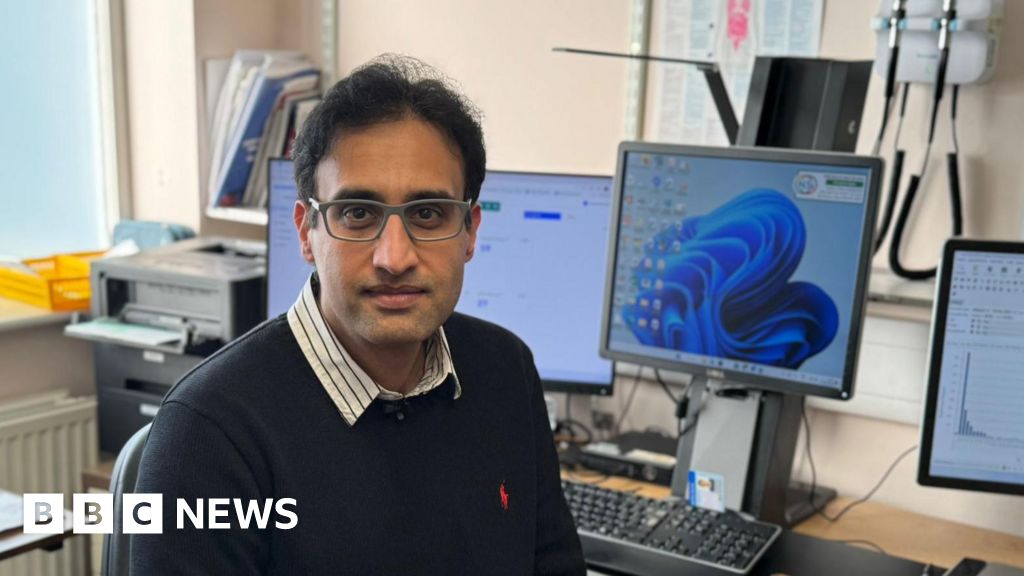
Dr Satpal Shekhawat says AI technology has reduced the amount of time patients are spending on the phone
An artificial intelligence (AI) receptionist named Emma has been introduced at a North Lincolnshire GP practice to cut call waits – but not everyone wants to talk to her.
The Kirton Lindsey & Scotter Surgery introduced the advanced technology in November, tasking her with answer calls, collecting information and prioritising appointments.
Dr Satpal Shekhawat said the practice had previously received complaints from patients about call waiting times and wanted a solution where “nobody was 10th or 15th in a queue”.
However, some patients have complained that Emma fails to understand dates of birth or the nature of call. Officials said she system would be refined in due course.
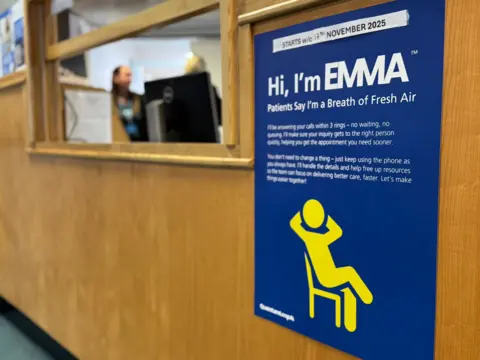
Emma the AI receptionist has been working at the surgery since November and has handled thousands of calls
Under the new system, Emma asks a patient about their health problem or query before recording the answer for a doctor or member of staff to review. Most patients are contacted within two or three hours, the BBC was told.
Shekhawat said: “The quality of the information I’m receiving [from Emma] is good, the relevant information to help me decide what clinically needs doing, is good.”

Patient Sandra Dodsworth says Emma kept getting her date of birth wrong
Despite increasing efficiency, some patients have raised concerns, with Shekhawat admitting there had been “mixed feedback”. He said the software developer would be working to refine the system.
Sandra Dodsworth said she ended up visited the surgery in person after Emma failed to understand her date of birth.
“I gave up, I’ve driven down. I’m not happy,” she said.
“I’d rather speak to a person who can understand me because it’s universal really isn’t it, whenever you speak to one of these things, there’s something they don’t understand.”
Another patient, Alex, said: “I’m in a lot of pain. I just want to speak to a person, get an appointment, but instead I’m just having to scream at a robot.
“I don’t think healthcare is the right place for it.”

Patient Alex believes healthcare “is not the right place” for AI technology
The surgery, which has about 10,500 patients, insisted AI would not replace human staff and patients could request to be transferred to a person.
“Any practice needs receptionists because when patients walk in you need somebody on your front desk,” Shekhawat added.
“The idea was to support them [receptionists], so it frees up their time so they can do other things.”
A spokesperson for the NHS Humber and North Yorkshire Integrated Care Board said the new system had attracted attention across the region.
They said: “We’re excited to see how Kirton Lindsey and Scotter Surgery gets on with its new system, and we know other practices will be watching with interest.”