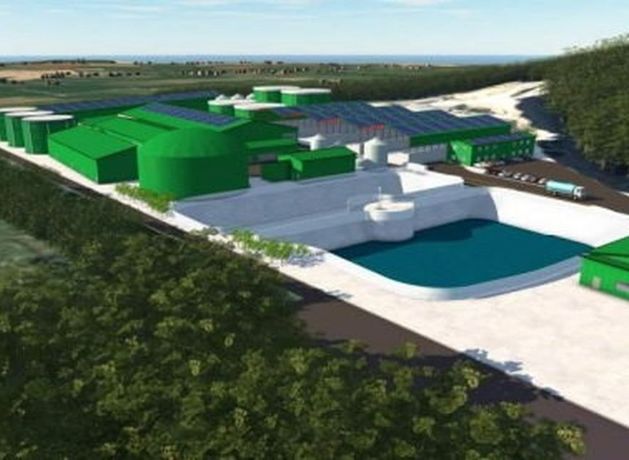
The Killough Biogas Concern Group are voicing their opposition to the plans put before Tipperary County Council by Roadstone Limited for their quarry at Killough, in Holycross, near Thurles.
The plans would see a bio-renewables facility built on a 6.3 hectare site, which would incorporate an anaerobic digester to convert animal feed into biomethane gas.
Plans were lodged with Tipperary County Council last January, with the local authority seeking further information from Roadstone before they are able to make a decision.
Killough Biogas Concern Group have a number of concerns about the proposed development, including that the roads in the area would not be able to sustain an increase of heavy goods vehicles (HGVs), and that drinking water supplies would be at risk as a result of the plant.
Speaking to the Irish Independent, Pat Shanahan of the Killough Biogas Concern Group said that the proposed biogas plant would be co-located on an active quarry where explosives are used, which raises concerns for locals living in the area about potential for an explosion.
“Around 10 or 15 tonnes of explosives have been detonated in the quarry over the last 20 years, and our point now is that with a biogas plant, there’s potential there for an explosion. There was an explosion in the UK, there’s been a few around the world,” he explained.
“We’re also worried that if there’s an accidental spill, there’s no containment for it,” he added.
Killough Quarry is a karst area, similar to the Burren, and while the planned biogas plant would be located on a limestone quarry floor, if a spill was to happen, the group say, it would damage water supplies in the area.
“Directly below the quarry, there’s a regionally-important aquifer, it’s huge and it’s a very vulnerable site,” Mr Shanahan explained.
“So our issue isn’t with the technology of the biogas plant, but purely we’re concerned, is this the correct site?
“In the initial pre-planning discussions, Tipperary County Council said that there’s a bioenergy park on the site of Lisheen Mines, and they asked Roadstone if they would consider putting the biogas plant on this site, because on that site, you have soil, so if you have a spill, it can be contained,” he added.
A further information request from Tipperary County Council pointed out that the groundwater in the area was already suffering from high levels of nitrates, with a potential spill from the biogas plant possibly causing fatalities to children under four months old who drink the water.
“The new anaerobic digestion (AD) plant will bring concentrated levels of nitrates and ammonia which, in the event of an accidental discharge, could prove fatal for children under four months old,” council planners stressed.
Road infrastructure is also a key concerns for the group. Last November, a pipe burst on the L1309 road close to the access point for Killough Quarry, reportedly caused by HGVs using the road in large numbers.
“Just 200 metres south-west of the Killough Quarry entrance, the L1309 has once again been turned into a river. Another fresh water pipe has burst, with thousands of litres of treated drinking water flowing down the road,” the community group said.
“This is yet another water main ruptured by heavy goods vehicles that are far too big for this rural road.
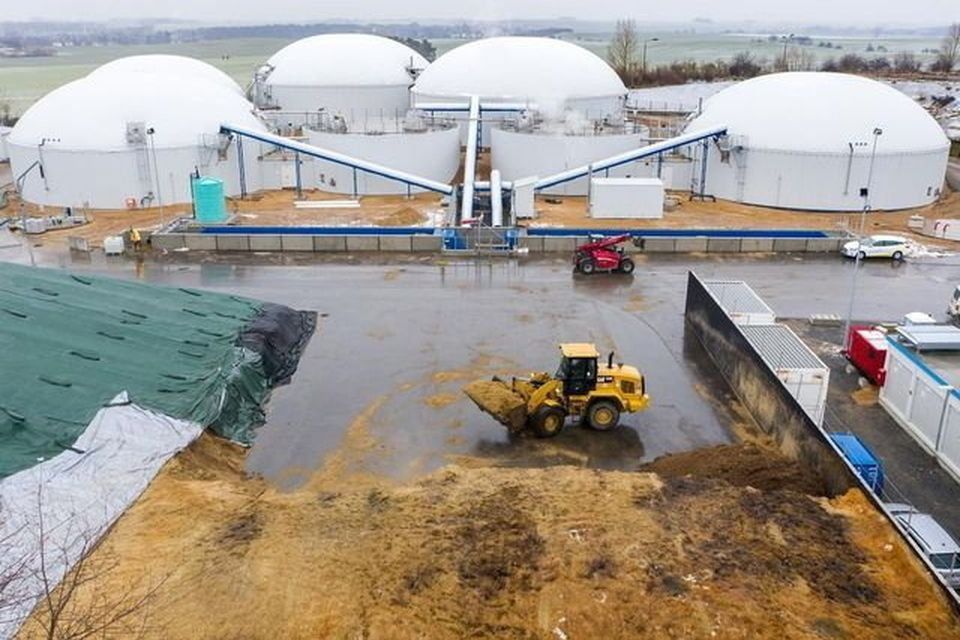
Plans have been lodged for a biogas energy facility in Tipperary. Photo: Getty
“If the road and the buried infrastructure beneath it can’t cope now, how can anyone claim it will cope with dozens more heavy loads every single day?,” they asked.
According to a further information submission by Roadstone, a traffic impact survey said that movement of trucks on the L1309 would account for a small number of total traffic on this road.
“Traffic generated by the proposed development will account for 8.98 pc to 11.90 pc of total traffic on the L1309 from 2025 to 2042,” agents for Roadstone said.
“This traffic assessment concludes that the local road network will continue to operate within capacity … and that the bio-renewables plant will have a negligible impact on the road network,” they added.
Calling on the Government to create a national strategy for the locations of biogas plants, Mr Shanahan said that Ireland needs to follow the example of other countries.
“It’s Government policy that these plants have to be built, but there’s no guidelines to say where they should be placed.
“The Government need to have proper regulations and policies because if there was proper guidelines, I don’t believe Killough would ever be considered for one of these plants,” he said.
“We have a house withing 10 meters of the site, there’s another house within 20 meters of it, so it should be the same as windfarms, the World Health Organisation (WHO) have guidelines on where you can have a wind turbine in relation to homes,” he added.
“There needs to be buffer zones for plants like this, and we believe that the buffer zone isn’t adequate enough for this area.”
Concerns have also been raised with information provided by Roadstone as part of the further information request about what the biogas generated at the site will be used for, Mr Shanahan said.
“In the planning application, Roadstone are saying they might use the biogas on the existing operation of the quarry, but in the further information stage, they said they might also use it elsewhere, and the council came back and that this would be materially different to what they had originally planned.
“They had originally planned biomethane and compressed gas, and now they’re saying it’s going to be Liquified Natural Gas (LNG), so our point of view is you now have an even more hazardous material, how can this be co-located within an active quarry where you’re blasting?” Mr Shanahan said.
“We’re also worried about the pressure this will put on food production, because if they need 60,000 tonnes of grass or maize to put into the plant, that’s going to undermine food production because now you’re using agriculture to provide gas,” Mr Shanahan said,
Now, the Killough Biogas Concern Group have arranged a number of public information sessions for locals to object to the plans, outlining the steps that need to be taken.
The first of the sessions was held earlier this month, with a second session coming up on Saturday, January 10, ahead of the deadline for submissions of January 17.
From the first session, group members heard from local farmers who had concerns about the impact on their livestock if the biogas plant is allowed to go ahead, Mr Shanahan explained.
“These anaerobic digestion (AD) plants were being marketed as being good for agriculture because it will remove nitrates from the farm, but a lot of farmers said that if you concentrate nitrates in this area and pollute our water it will undermine our agriculture and it could kill our animals,” he explained.
The sessions will help people to understand the further information submitted, how to make a submission to the council, and how to ensure their concerns are heard.
The information session will take place from 10am to 5pm at Gaile National School.
Roadstone have been contacted for comment on the plans for the biogas plant at Killough.
Funded by the Local Democracy Reporting Scheme