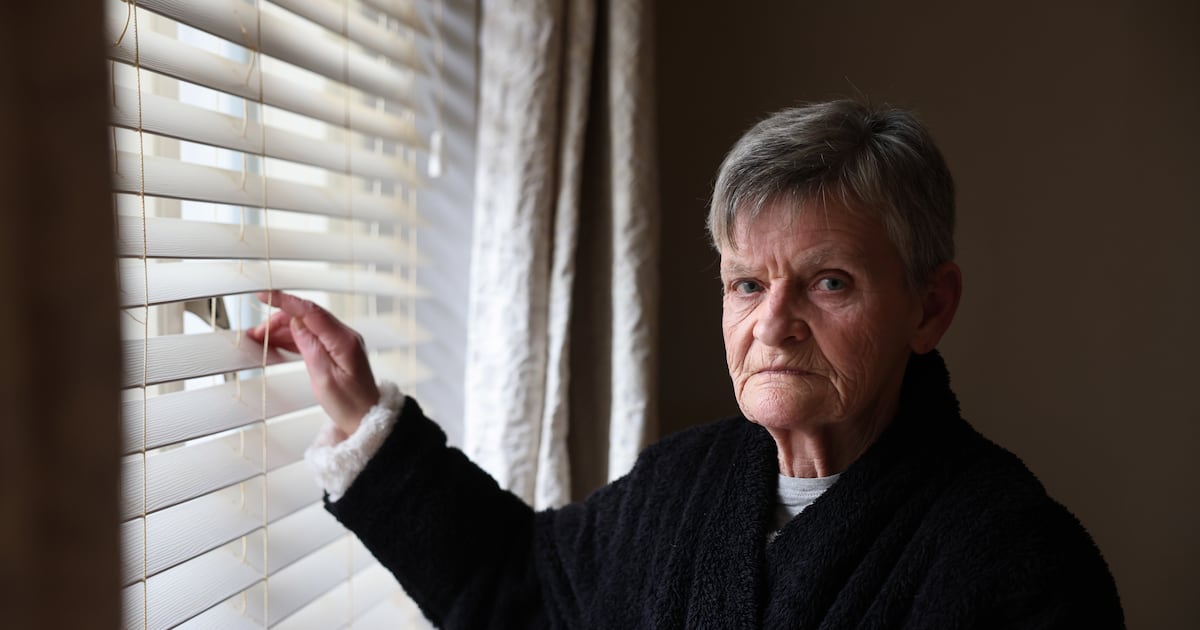
An elderly survivor of a Magdalene laundry says she is “frightened” and “has nowhere to go” as her landlord, the Royal Hospital Donnybrook Housing Association (RHDHA), moves to evict her for antisocial behaviour which occurred when she experienced psychosis three years ago.
Nuala Clarke (70), who was in the Donnybrook Magdalene laundry as a teenager, has a lifetime history of bipolar disorder.
Her former GP, Ranelagh-based Dr Philip MacMahon, now retired, says she is “well now and looking after herself”.
“She can experience psychosis secondary to her bipolar disorder”, which could result in her hearing voices, behaving irrationally and becoming paranoid and agitated, he says. “Now, she is fine. Her intelligence shines through.”
Ms Clarke says she has been “in and out of hospital, trying to survive, all my life”.
“I was born in Cavan and brought to Belfast by my mother when I was two months. I don’t know why.
“I came down to Dublin at the age of nine, supposedly on a holiday, and was put into St Clare’s [convent and now-closed orphanage for girls] in Harold’s Cross the next morning. That was all arranged.”
She lost contact with her late mother, who she says was abusive.
Aged 16 she “had to leave” St Clare’s but had “nowhere to go”. She “ended up at the door” of the Sisters of Charity Magdalene laundry near her current home. “I worked in the kitchen and diningroom … I felt sorry for the women. Some of them had a terrible life.”
After less than a year she got a job looking after children for a Sandymount family, which she “loved” but left when she got work as a cook and dishwasher in Switzer’s department store.
Still a teenager, she struggled with mental illness and spent long periods in St Brendan’s psychiatric hospital, as well as spells in homeless accommodation. She has worked throughout her life as a cleaner and cook.
She was housed by Dublin City Council in the RHDHA complex of 19 one-bedroom apartments, at Beech Hill, Donnybrook, in 2018. Her rent is €335 a month.
The RHDHA describes itself as a “social housing provider with a focus on accommodating frail older adults and people with disabilities”.
The Royal Hospital Donnybrook, which provides rehabilitative and residential care, says it is a “completely separate entity” to the RHDHA with “no involvement, or knowledge, in relation to any matter” before it.
The RHDHA on its website says, however, its “association with the Royal Hospital Donnybrook … gives us a unique understanding into the needs of older adults and people with disabilities”.
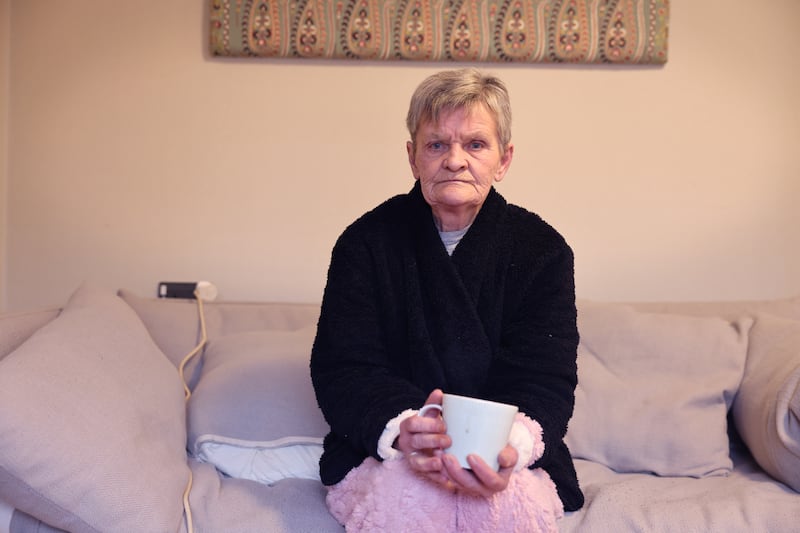 Nuala Clarke: Since April 2024, when she was discharged from hospital on new medication, there have been no reported incidents of antisocial behaviour, say those advocating for her. Photograph: Dara Mac Dónaill
In 2022, triggered by media coverage of institutional abuse, Ms Clarke stopped taking new medication that she says did not suit her.
“I started hearing more voices, especially at night. I was shouting at night. I know, hands up, I was,” she says. “And I went to somebody’s door. The voices told me to go there and I sat in her bathroom. I have apologised to her since.”
She says she heard people laughing at her, calling her names, shouting in at her. “I was shouting too, I know that.”
Her behaviour – which continued sporadically to March 2024 when she was brought to hospital by gardaí, who came upon her in a highly agitated state in the city centre – resulted in multiple complaints to RHDHA management.
She was issued verbal and written warnings, and finally a notice of termination of her tenancy in July 2023.
On March 13th, 2024, while she was in hospital, an adjudication hearing on “overholding” of her tenancy was heard at the Residential Tenancies Board (RTB). Ms Clarke was not represented. It determined the notice of termination was valid and that Ms Clarke must “give up possession” of the apartment.
Since April 2024, when she was discharged from hospital on new medication, there have been no reported incidents of antisocial behaviour, say those advocating for her.
The RTB determination was appealed on her behalf by Dr MacMahon and a solicitor, the late Jim O’Higgins, who knew Ms Clarke for many years. The two men contacted Sage Advocacy, which continues to support her.
[ More than 1,000 apply to buy 99 ‘affordable’ homes in DublinOpens in new window ]
The RTB appeal was heard in September 2024. In its ruling upholding the determination order, the tribunal said Ms Clarke’s behaviour had been “extreme” and posed a “danger” to other residents and RHDHA staff.
“The Tribunal notes that [Ms Clarke’s] behaviour has improved in the recent past but, unfortunately for [her], this does not cancel or negate the fact that the landlord had valid grounds to serve the Notice of Termination when it did,” it said.
Sage Advocacy and Dr MacMahon requested a “compromise” that would allow her to stay, but the RHDHA has initiated District Court proceedings to enforce the eviction.
Ms Clarke, supported by Sage, has lodged a claim under the Equal Status Act at the Workplace Relations Commission (WRC) alleging discrimination by the RHDHA on the grounds of her disability. She believes the initial RTB adjudication hearing should not have proceeded while she was in hospital and she alleges her disability was insufficiently considered.
The Irish Times understands the RHDHA made a request for her to drop the WRC case and any future litigation against it in exchange for being allowed stay on for an additional six months.
“I have nowhere to go,” she says. “I will have to go to a homeless shelter. I am frightened. I don’t know what I am going to do. Sometimes I feel like harming myself; wish God would take me. I just want to be left alone.”
A spokeswoman for the RHDHA said the association “considers any form of antisocial behaviour to be unacceptable”. “We aim to prevent antisocial behaviour from taking place in our complexes and to reduce its effect on people and neighbourhoods when it does occur.
“The tenant seriously breached the terms of her tenancy on multiple occasions. While every attempt has been made to resolve the situation, ultimately the safety of the other vulnerable residents and staff is our responsibility.”