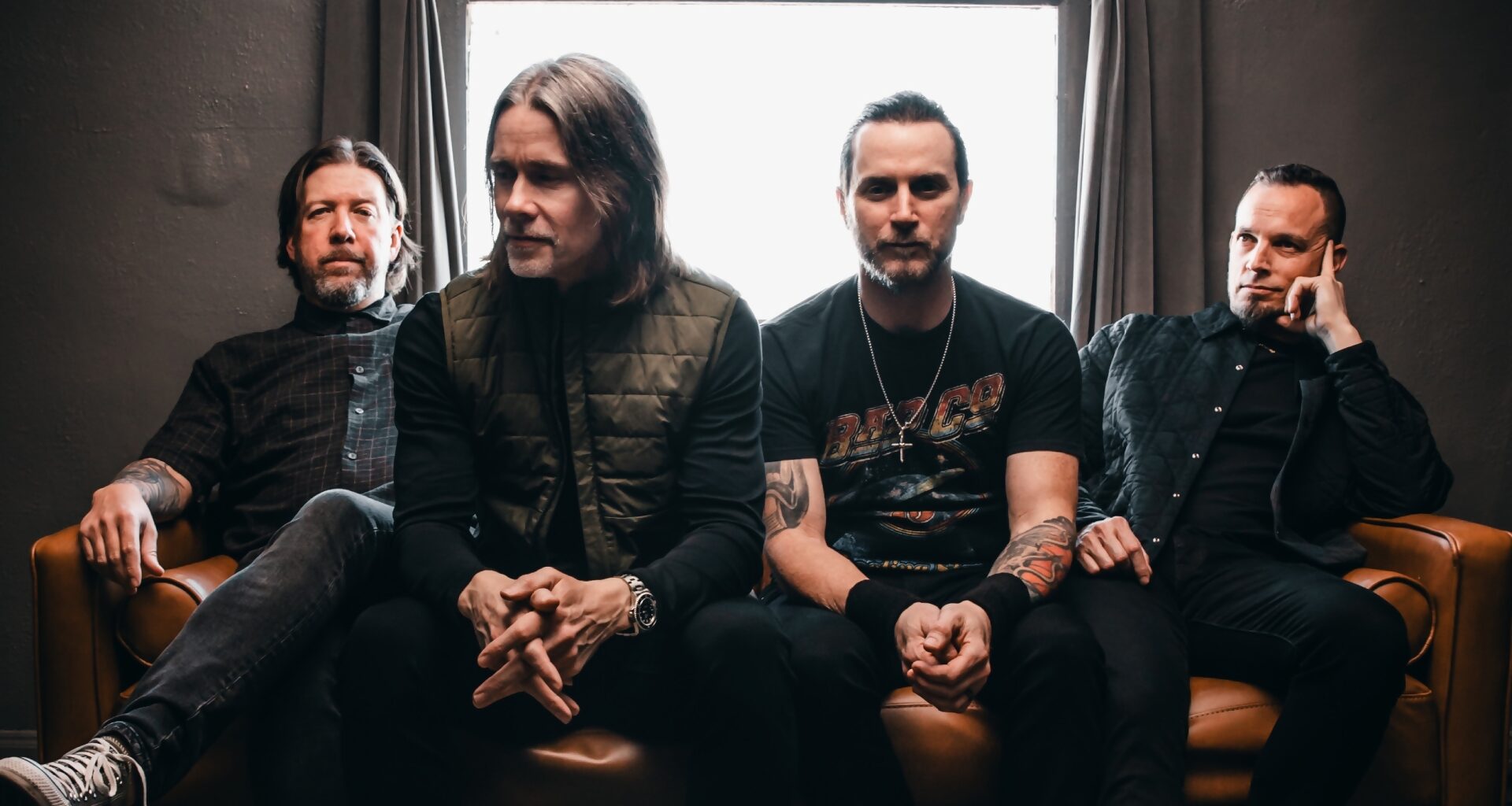
Whenever Myles Kennedy and Mark Tremonti reconvene to work on new Alter Bridge material, there is reason to celebrate.
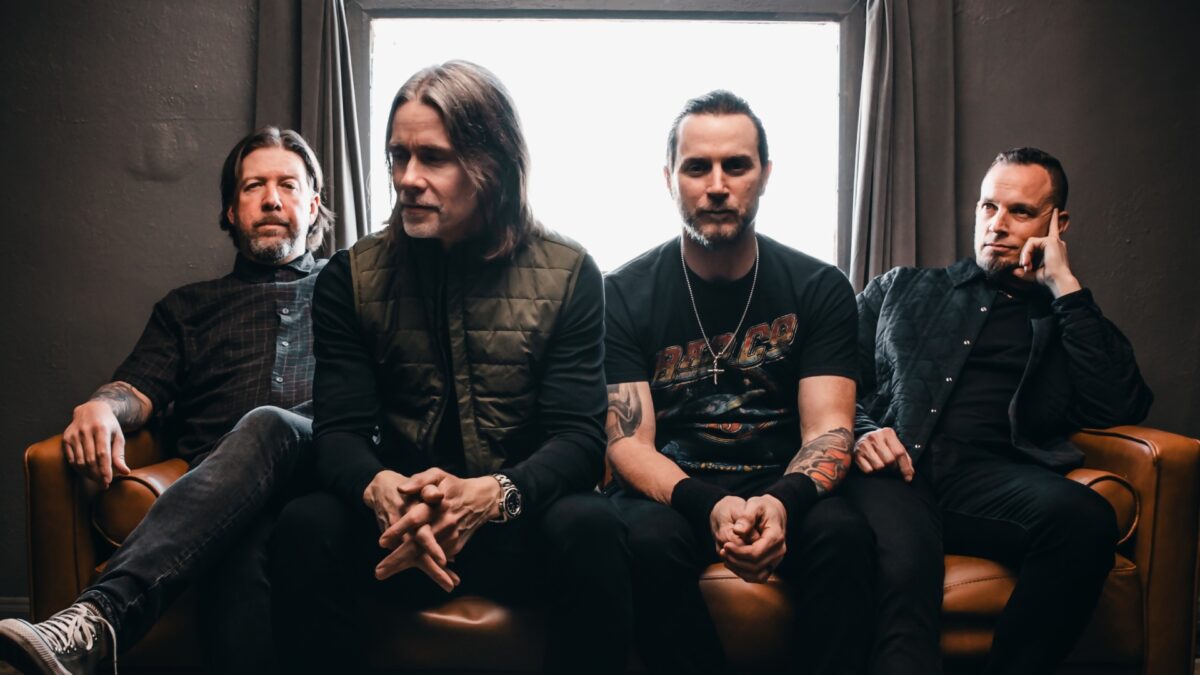 Photo by Chuck Brueckmann
Though with their eighth offering, the assumption, thanks to it being a self-titled effort, would be that they were taking stock of their over two decades together and using it to sum up the adventure they have been on.
But the truth is that, although ‘Alter Bridge’ does bring together everything that the band have produced over the last two decades, it never feels like retreading old ground or rewriting history. There are the soaring choruses, the euphoric builds and the gripping solos that are to be expected, but there is also a fresh energy to its 12 tracks. One that resonates with the place where not just rock music but also society as a whole is at present.
It is less of an all-encompassing sign of who and what Alter Bridge are, and more of a fork in the road for where they are right now. Based on the results, there is plenty of gas for further expansion and exploration in the future.
Rock Sound sat down with Myles and Mark to find out more about the album and discover what it takes to keep creativity, in all its forms, at the forefront of everything that you do.
Rock Sound: Was it always the intention for this album, being released in your 20th year, to have the weight that it does? Was it always going to be self-titled because of where you are in your career?
Mark: Myles and I don’t ever really pre-prepare for the album as a whole. It is always a song-by-song thing; once you look at what you have, you think about the rest. When somebody asked what we thought about for the title, that was when I thought, ‘Well, we haven’t done a self-titled album yet’. I think, within us, we felt like the album was worth it this time around. I think our catalogue is so deep now that people are going to get lost in it. It’s good to have your self-titled and your ‘AB III’ in there to keep people on track. You want to help people keep track of what came before and after. We’re proud of the record, though, and we felt that being self-titled would go hand in hand with that.
RS: When you think back to the early moments of the band, how would you compare how your mindsets were then to where they are now?
Myles: Well, 20 years later, we are different people. We have lived and learned. There is an element of survival in there. When you’re a new band, you’re just trying to keep your head above water because the chances of actually succeeding are slim to none. So, you do the best you can, and you try to define yourself with each record. You redefine yourself and rediscover yourself along the way. That part has definitely not gone by the wayside. The idea of fighting for your life. When you realise you have a fanbase, that helps, but you don’t want it to lead to complacency. That’s the big fear, and you see it happen time and time again. The work starts to go in the direction it shouldn’t. You want to be, if not evolving, maintaining. Personally, I try not to be too conscious of that. I like to stay where I am and let the universe drop moments of inspiration onto me. Or at least being ready for that. If there is any sense of overthinking, that will get in the way.
But there is not just the difference with us as people, but also in the way that everybody consumes music. Now it’s a totally different world. Knowing that definitely helps me. I find that with us, we are a couple of guys who are pretty prolific and like to come armed with lots of ideas to work with, and you know that you’re going to have a certain amount of those ideas and songs sacrificed. Not every song is going to get the same attention that other songs will, so you just do it for the love of creating.
RS: That is demonstrated in abundance here, because as the tracklisting goes on, that creativity increases. The ebbs and flows it goes through, culminating in a near-ten-minute closer, ‘Slave To Master’, show that you’re going to do exactly what you want, despite how it may be perceived or consumed.
Mark: I feel like we have really dialled into what we like for the band, and so we write so it more and more. The lines have blurred between mine and Myle’s initial ideas. You used to be able to tell who had written what over the years. But now, even our producer is like, “I had no idea Myles wrote that riff’ or ‘Mark, you did that part? It would have been the opposite in the beginning.
As far as the end of the record, we looked at that from the angle of what would be the most interesting thing that someone would want to hear on the record. Well, it’s this nine-minute tune, so put it at the end so you can’t just turn the record off. You have to hear what that song sounds like. But in writing for the band, the more you do that, the more you play off the strengths. You play off the strengths of your bandmates and take advantage of them.
RS: It’s clear that even when you both go your separate ways and work on other things, the cogs are always turning for what can then be brought back into Alter Bridge. It’s always there for those lightbulb moments on something that might not fit within other projects. Have you noticed that tendency increasing over the years?
Myles: It’s interesting. Because when Alter Bridge is in its power-down mode, we aren’t engaging all the time. We’re busy people, and we do our thing. But then, when we get back together, we pick up right where we left off. It’s like riding a bike; you know what to do. For us individually, we have developed an understanding that when we are coming up with ideas for the other projects, you just know. You’ve stumbled upon something that particular sequence of notes that is probably better suited to Alter Bridge, so you make a little mark where, when the time comes, you can pull it up.
Once in a while, you’ll have an idea that comes up, and then you think about checking in. I feel like that might have happened with ‘Tested And Able’, but I can’t remember what stage it was at. It was definitely before we were in the thick of it. But it was an idea I had for my solo record, which we had recorded, and it was then that it was clear that it would have been better in the context of Alter Bridge. That’s one of those rare moments. But that’s what makes this band so unique. You have two guys who are still so engaged with the love that comes with the creative process, and we continue to run towards that. I personally fear when that well is going to run out, because it’s going to eventually, right? But right now, it’s so far and so good.
RS: You never know when your mind might shift, not just creatively but also in terms of your passion. But there is comfort in knowing that it hasn’t shifted for two decades on this project, and that is a substantial amount of time for the well to remain tappable.
Mark: We take those things day by day. I think back to COVID, for example, and a lot of people fell off with music. I know that I did. I was depressed and didn’t want to play guitar; I wasn’t writing much. But then that’s when I got into the jazzy stuff and did the Frank Sinatra thing, and that was me very much switching gears. Hopefully, that doesn’t happen again. I feel like the only way it could be is if you become discouraged from writing because the whole world is using AI to make music. Like, what the hell is the point if nobody is going to believe this is real? That’s why I feel like there needs to be a way to detect if AI was used in any art. But that could be the next thing that could knock people off their musical paths.
RS: The thing that combats that is also an artist remembering how it felt to fall in love with music in the first place and using that as a guiding light to bring you back around. Because nothing can recreate that feeling, it is as human as it gets. And the fact that there are people who are experiencing that now with your music, and will even be doing it with this new album, that makes it even more pertinent.
Myles: It is really nice to see younger people listening like that. Our manager told us he read a comment the other day from someone who said, ‘How had I not heard of this band yet?’ And that’s cool, the fact that people are still discovering music. When you’re at this stage, you almost assume that most people are returning listeners, and you have established your base. But knowing that you can still put things out and add new people to it is really wonderful. What it does is help me to be aware that you might be somewhat relevant. I’m not going to lie and say that I don’t sit there at this stage of my life and not think about that. It would be naïve not to. But we are very happy to know that young people are finding and embracing what we do.
RS: It’s the fact that people are still craving this sound. Your sound. But in saying that, are there any elements of this record that, when you looked back on what you had created, you thought to yourselves, “That’s something that I wasn’t expecting”?
Mark: I would say that the first and the last tracks are the most different in terms of the beginning and the ending. ‘Slave To Master’ was one we never expected to be nine minutes long, by any means. I think it was four and a half to begin with, with Myles writing the original demo, and it ended on a cliffhanger: ‘What should happen now?’ That’s when we started riffing, and that demo became the nine minutes we have now.
Whilst the first track, ‘Silent Divide’, was built around that riff, it certainly changed a lot from where it started. So it’s good where that happens. You can only do so much on your own. Sometimes you get lucky, and the arrangement stays pretty much intact. But the purpose of coming together as a band is to hold onto that original idea and know that these four or five heads are better than one at expanding it.
RS: When it comes to the lyrical turns, what would you say were the emotional strands that you were pulling on? What feelings kept coming up, both as individuals and within that group dynamic?
Myles: It’s tricky because there was an emotion and dynamic that did inform a lot of the material. Musically, I felt there was a certain intensity that worked really well with the emotion being explored. It felt like the appropriate narrative to put with the music. That emotion would be the idea that there’s a lot of toxicity in this world. What we have come to know is that enragement equals engagement. That’s how you stay addicted to things like your phone. So the question is whether you are going to allow yourself to be sucked into these things, into the drama, or are you going to stand back, establish a moat, rely on your better angels, and not allow yourself to be sucked down to that level?
Some of these songs are so intense. ‘What Are You Waiting For’, I love that so much because of just how intense it is, and how intense the lyrics are too. First, you think it’s about being ready for a fight because it’s so aggressive, but then by the end of the chorus, we say, ‘But I choose to disengage’. I feel like that is the prominent theme here.
RS: It’s easy to let anger and aggression take over, and then you add to the pile of what other bands and artists are feeling annoyed about as well. But in approaching things from a place where you want to ignite change and encourage peace, that is what we need more of now than ever before. There’s a lot of hope for what could be here.
Mark: I feel like everybody can agree that the world is a very difficult place right now, and it’s almost hardwired for everybody to turn against each other. That’s what the algorithms and the news are trying to do. Everybody is so black and white about everything. Left and right. Myles said to me the other day, ‘We’re not left, and right, we want to move forward. And music should be escapism. It shouldn’t make you angry. A lot of people like to turn on heavy music when they’re working out, but it should be a release, not something that perpetuates that anger.
RS: You mention the idea of moving forwards, and what does that mean to you when you consider where Alter Bridge is going as we look towards the future?
Myles: I like to think of it as how you take an old film, the sort you would get on a projector, you lay it out, and you can see every shot on its own. And for us, that’s what this is. Each record is us looking at the individual shot, and you’re capturing where you are at that time. Then, when you roll it up, it tells the whole story. But for both of us, we want to make sure that each one of those shots is true. Make sure it is authentic and that you’re not just doing it because you feel you have to. I have a feeling that those scenes would be very transparent and would feel like bullshit, and the fans would feel like it was bullshit too. As long as that is there, as long as we understand it and know we are doing it for that reason, then the film, at the end of the day, will be worth watching.