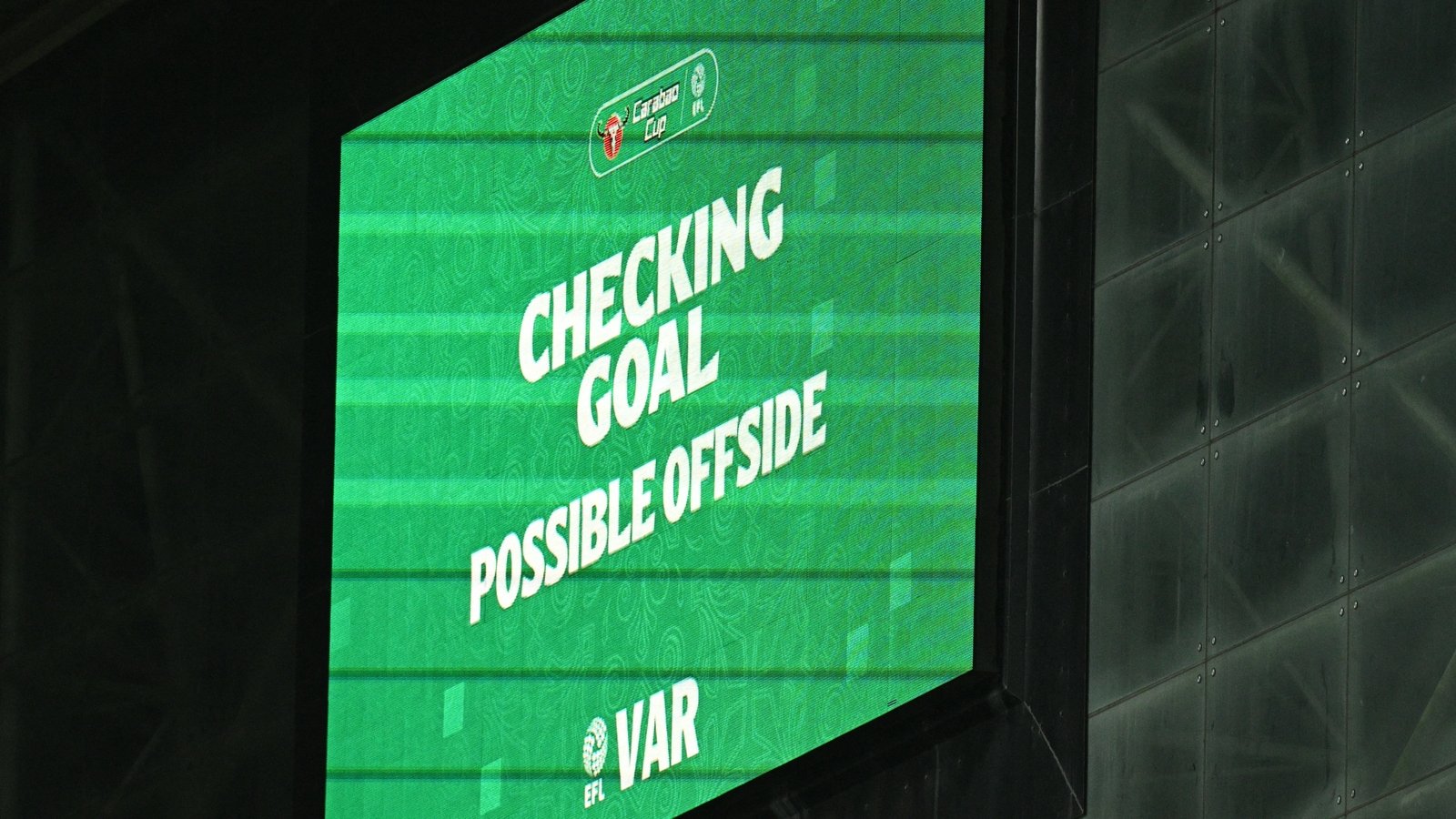
The delay in ruling out a Manchester City goal for offside in Tuesday’s Carabao Cup win at Newcastle was extended because semi-automated offside technology could not be used in the incident.
It took more than five minutes for a check to determine that Erling Haaland was offside and had interfered with play by holding defender Malick Thiaw, with referee Chris Kavanagh disallowing what would have been a second goal of the night for City’s new signing Antoine Semenyo.
It is understood the check would have been significantly quicker if semi-automated offside technology (SAOT) had been available, but the number of bodies in the box at the time of the incident meant it could not be used.
Officials instead had to revert to the old system of drawing crosshairs because of the number of bodies in the box. The Premier League website refers to such incidents where SAOT cannot be used as “edge cases”.
City manager Pep Guardiola criticised what he saw as inconsistencies around VAR after the match, with Newcastle’s winner against City in the league in November only confirmed after a lengthy offside check.
He also questioned why City had not been awarded two penalties in that match, one in the 20th minute for what he felt was a handball and one for a foul on Phil Foden on the hour.
The Key Match Incidents (KMI) Panel which reviews such decisions felt a penalty should have been awarded for the challenge on Foden.
Guardiola said Howard Webb, the chief refereeing officer at Professional Game Match Officials Limited (PGMOL) would call him for an “explanation” regarding the Haaland goal, but there was no immediate word from either PGMOL or City regarding any contact.
Webb has proactively contacted clubs in the past where clear errors have been made, but that does not appear to be the case here.