Remote and unforgiving, the Gobi Desert is not a place often associated with signs of new life. Spanning southern Mongolia into northern China, its terrain is defined by scarcity: of water, vegetation, and human presence. Few species live here. Even fewer thrive.
At the centre of this vast arid zone lies the Great Gobi “A” Strictly Protected Area, one of the most inaccessible conservation zones in Central Asia. It protects a unique set of fauna, including species found nowhere else. Among them is one of the least observed large mammals on Earth.
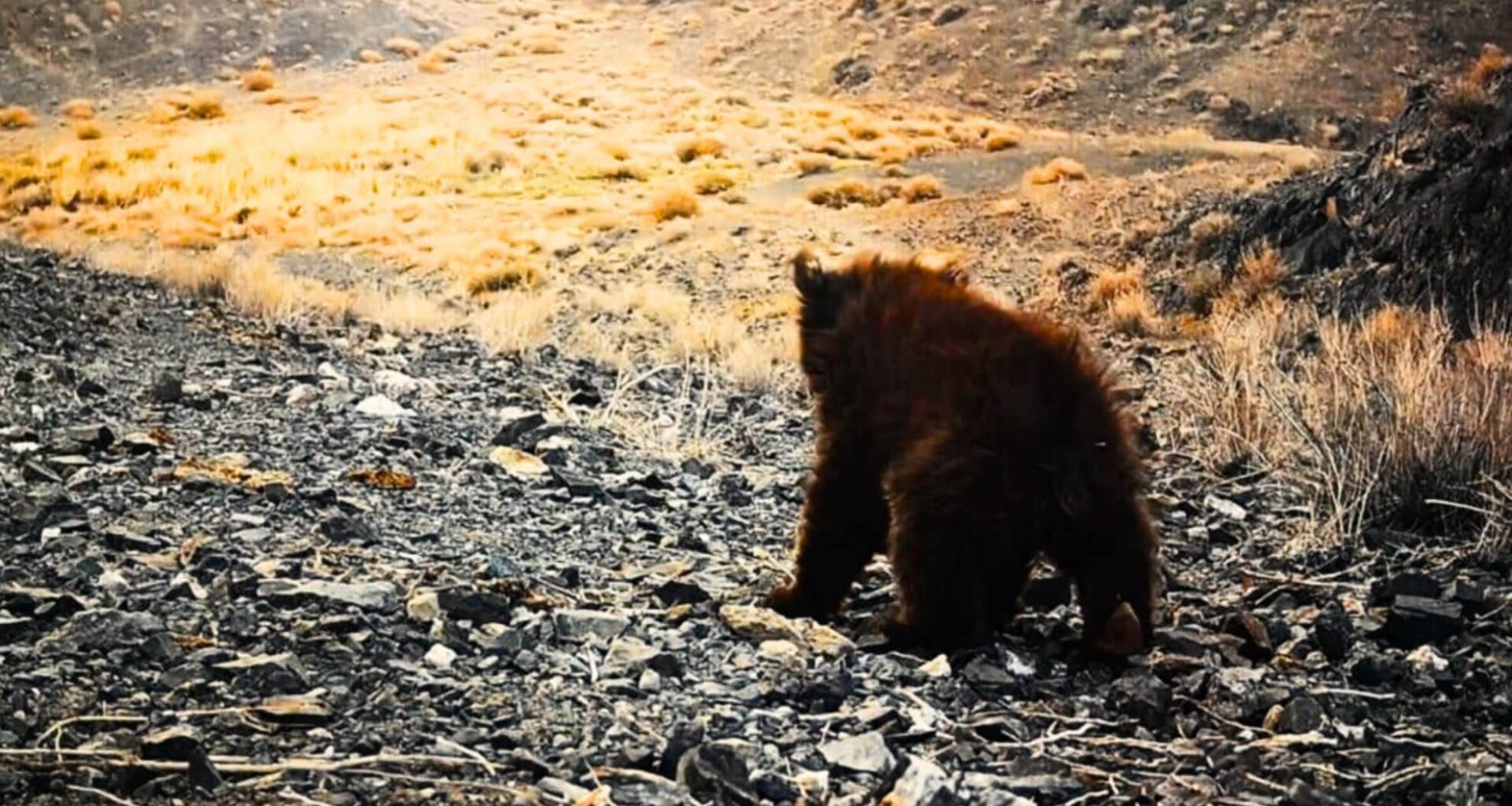
The Gobi bear, a desert-adapted subspecies of the brown bear, has long persisted in this extreme environment, largely unseen. With a total population estimated to be fewer than 40 individuals, sightings are rare, and breeding activity is rarely documented in the wild. A recent set of images captured by automated camera traps has changed that, at least momentarily.
Critically Low Population, Highly Restricted Range
The Gobi bear (Ursus arctos gobiensis) exists solely within a limited zone of the Gobi Desert, confined to the Great Gobi “A” reserve, located near Mongolia’s border with China. It is the only bear known to have adapted fully to desert conditions. Classified as critically endangered by Mongolian authorities, its status has remained unchanged for decades due to a combination of genetic isolation, habitat constraints and low reproductive rates.
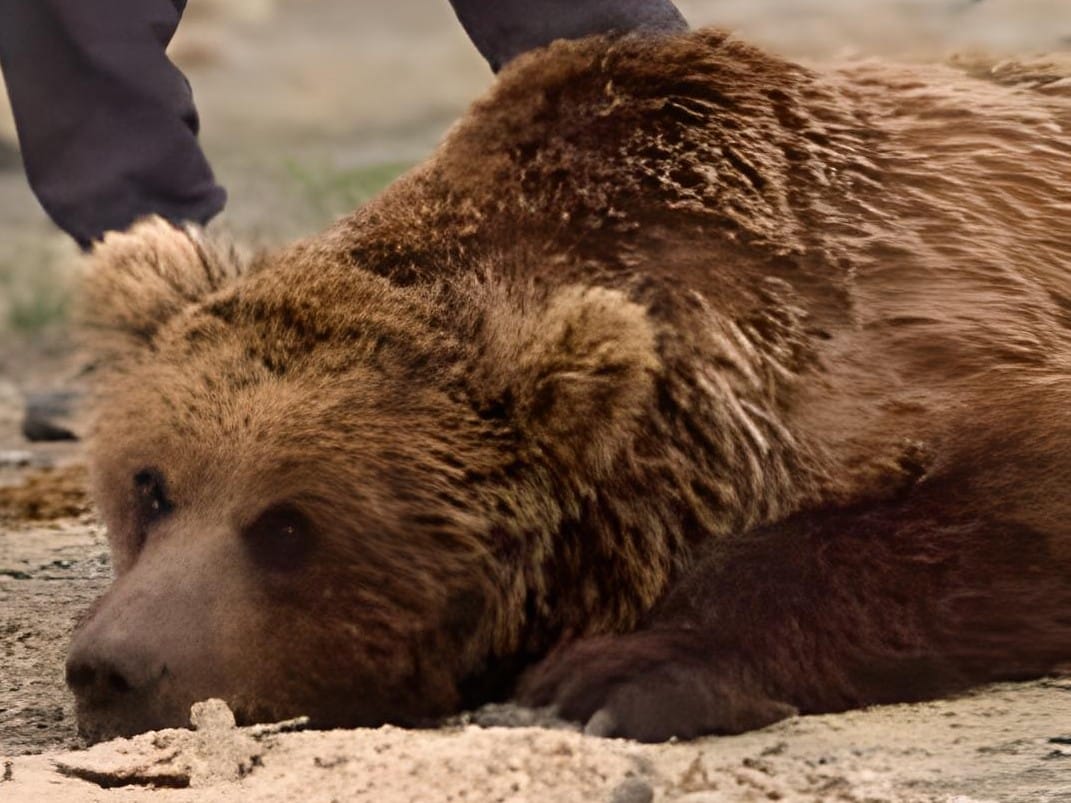 The Gobi bear (Ursus arctos gobiensis). Credit: Hunter J. Causey
Population estimates have remained consistent over the last twenty years. Fewer than 40 individuals are believed to survive, with no confirmed presence outside the reserve since the early 2000s. A 2015 field assessment conducted by conservation researchers warned of “serious risks associated with inbreeding, low fecundity, and increasingly unpredictable access to water.” The study highlighted the lack of reliable genetic data, noting that reproductive success is almost impossible to track without consistent field observation.
The bears occupy a desert ecosystem where annual precipitation rarely exceeds 100 millimetres. Daytime summer temperatures can surpass 40 degrees Celsius. In winter, they fall below minus 40. These conditions severely limit the availability of food and water, particularly for lactating females or young cubs.
Camera Trap Footage Reveals a Cub
The latest footage, released by the team behind The Wild Ones, a documentary series streaming on Apple TV+, was recorded using more than 350 remote cameras and thermal imaging systems placed across the southern Gobi. A female Gobi bear was observed walking with a cub at close range. The sequence is brief but clear.
This marks one of the first documented instances of a mother and cub together since at least 2019, according to researchers working in the region. No formal age assessment of the cub has been released, and no confirmation has been provided regarding whether the pair have been observed in subsequent recordings.
The footage was captured within the Great Gobi “A” reserve, a UNESCO biosphere reserve designated in 1991. The producers confirmed their intention to submit the images to the UNESCO World Heritage Committee to reinforce advocacy for strengthened conservation protections.
Officials with the International Association for Bear Research and Management (IBA) have noted that the sighting alone is not evidence of population recovery, but it does confirm reproductive activity, which is increasingly difficult to observe under current monitoring constraints.
Adaptation to One of the World’s Harshest Climates
Unlike temperate or forest-dwelling brown bears, the Gobi bear survives on an almost entirely vegetarian diet. Wild rhubarb, desert onions, and ephemeral grasses form the core of its foraging intake. Animal protein, according to the IBA, accounts for less than 1 percent of overall diet.
Physical characteristics differ significantly from those of other Ursus arctos subspecies. The Gobi bear is smaller, leaner and lighter in colour, traits likely shaped by extreme environmental selection. Long-distance travel between water sources is common, and some individuals have been tracked walking more than 160 kilometres in a single season to locate an active spring.
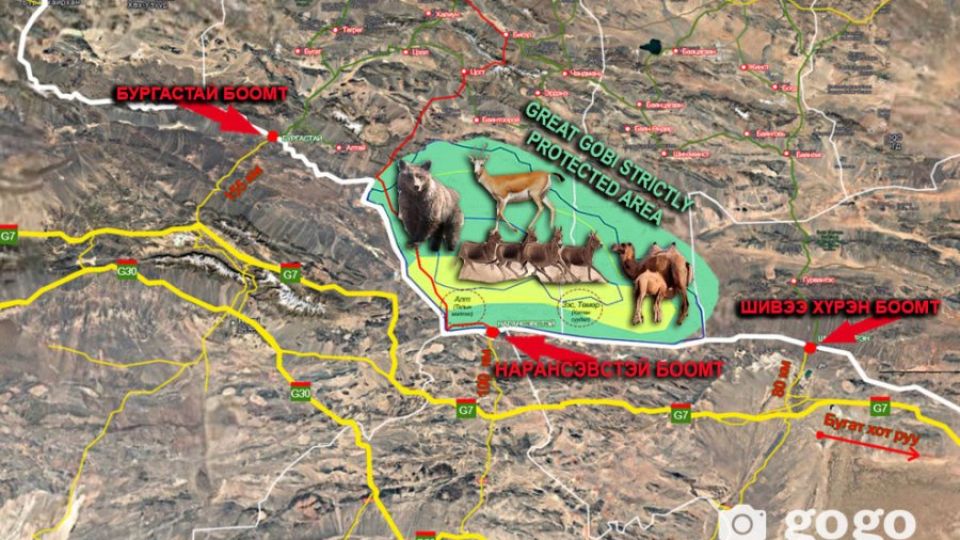 The red line drawn back from Naransevstein border point through the Thei Great Gobi Strictly Protected Area is the proposed road. Credit: GO GO MONGOLIA
Field data remain limited. No comprehensive genetic survey has been published since 2015. The Zakhyn Us wild camel breeding centre, located approximately 20 kilometres from the core Gobi bear habitat, has not observed crossover between monitored camels and bear activity. Most information on population behaviour continues to be drawn from camera traps and non-invasive sampling.
The bear’s confinement to just three oases within the Great Gobi “A” reserve has amplified concerns over habitat fragility. Satellite imagery reviewed by UNESCO-affiliated researchers in 2024 indicated that seasonal springs in the region are drying earlier each year, reducing access to water during critical periods.
Research Constraints and Future Data Needs
While the new footage has generated renewed global interest, it also highlights persistent data gaps in the region. The sheer remoteness of the habitat complicates annual monitoring efforts. Many areas remain unreachable for most of the year due to weather and infrastructure limitations.
To date, there is no centralised genetic database for the Gobi bear. Fragmented funding streams and logistical limitations have prevented the establishment of consistent, high-frequency population tracking. Monitoring efforts have relied heavily on intermittent international projects, such as the one conducted by The Wild Ones production team and previously featured on BBC Earth’s Asia documentary series, which included scenes of an adult Gobi bear travelling across desert dunes in search of water.
It remains unknown whether the observed cub has survived beyond the initial sighting window. No tracking collars or identification markers are currently reported to be in use on the Gobi bear population, making individual identification difficult over longer time periods.
Although the presence of a cub may indicate reproductive continuity, conservation scientists have warned against interpreting single sightings as signs of recovery. The variables influencing survival remain unquantified. Reproduction in isolation does not necessarily prevent long-term genetic decline.