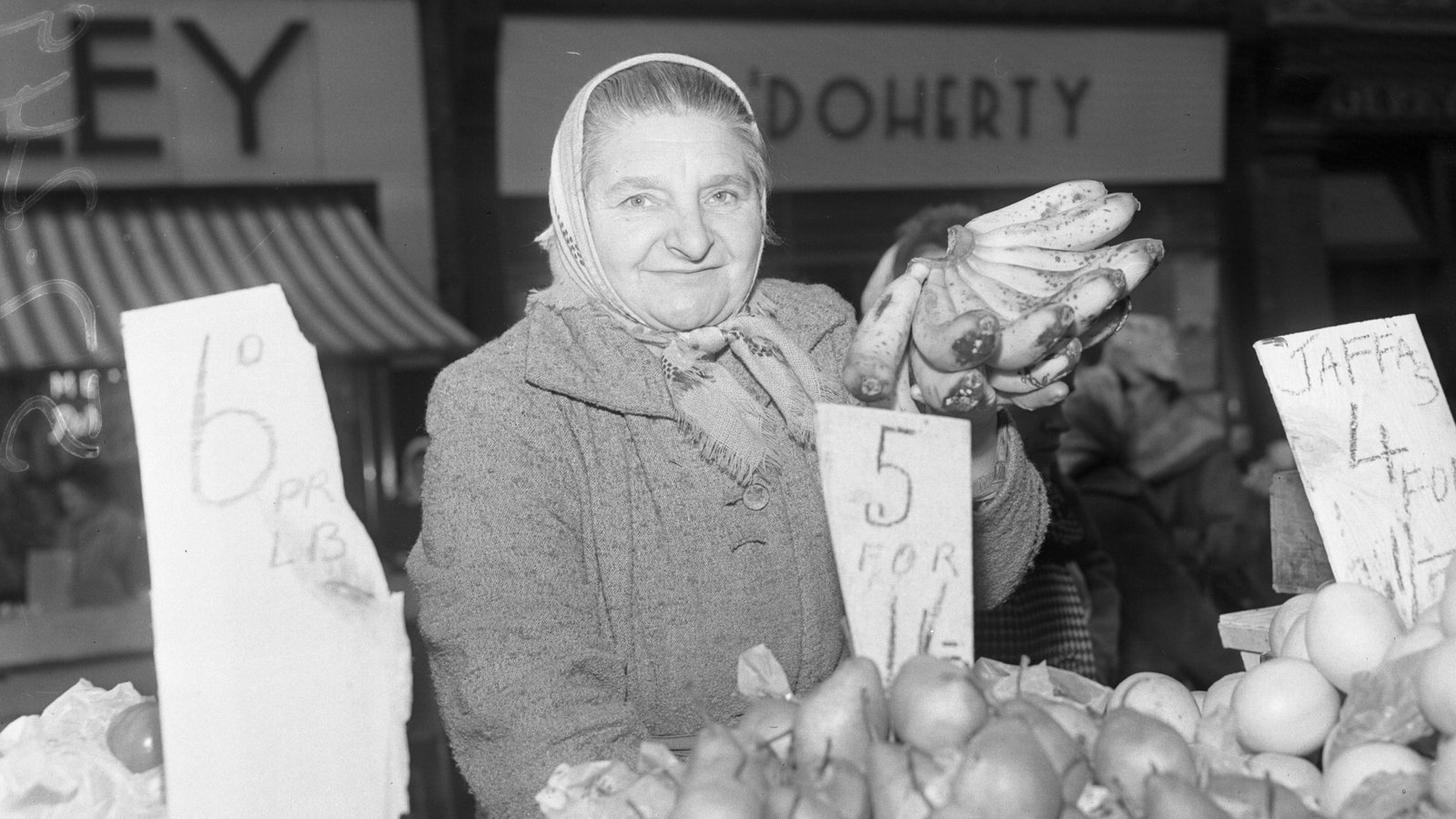
Analysis: One of the most notable things about Moore Street and other capital city markets is the extent to which they were operated by women
By Mary Muldowney, Dublin City Council Historian in Residence
Dublin has a long history of street trading, ranging from fruit and vegetable stalls to secondhand clothing to fish and meat, among many other products. One of the notable aspects of the markets that were situated in the central city areas was the extent to which they were run as family businesses, mainly by women.
In the course of the 19th century, Moore Street and the area around it evolved into a network of shops and businesses, including street stalls. In 2023 I interviewed a woman called Joyce Walsh whose family had been selling produce on Moore Street for four generations. Joyce said:
My Mam sold outside Croke Park. They could keep their stock in a box beside a lamp post. So they’d sell, whether it would be at Croke Park or it would be at the cinemas, and one of the kids would be sitting minding the stock and they’d come back and just reload. …
My granny was born in 1913 and she was in Moore Street from maybe eight years old, so it’s over a hundred years. … She was Mary Lawlor, her maiden name, then she married my grandad, so it was my grandma, my mam and her sister who worked the stall.
Joyce never wanted to do anything other than work in Moore Street. She loved working with her mother and her sisters but what also appealed to her was the sense of freedom she experienced, that more than compensated for the hardships associated with the job:
I left school and I went to Moore Street. I didn’t want to go to a job. I had my Leaving Cert behind me but I didn’t want an office job. I wanted to work in Moore Street. My second eldest sister, she left school at 14 and she went straight to Moore Street because my mam said you’re not coming out of school and doing nothing. She’s 60 now, so 40 something years ago. She’s been in Moore Street since she was 14.
Most of the stalls were run by women. Joyce recalled that there were a few men involved but generally it was in stocking the stores and was more in the nature of temporary help, whereas the women were on the street every day that the market was open, regardless of the weather conditions. However, there is no longer sufficient custom there to justify the involvement of more than one member of her family. Her sister now runs the family stall and Joyce is working elsewhere.
READ: Why did Dublin authorities try to ban street trading in the 1920s?
Historian Barry Kennerk drew on his own experience of growing up in the area of Moore Street in bis book Moore Street: The story of Dublin’s Market District. He interviewed community worker Seanie Lambe whose family had been street traders for generations. Seanie was not willing to put himself through the harsh conditions associated with street trading and he got other employment.
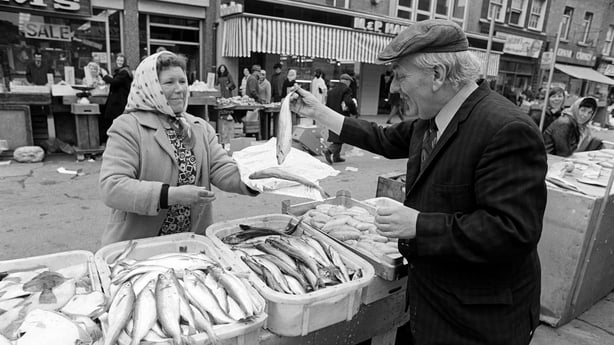
Irish actor Cecil Sheridan buys fish from trader May Gorman at her stall on Moore Street, Dublin city, on 26 February 1973. Photo: RTÉ Stills Library
In 1994, the Department of Enterprise and Employment drew up new legislation which would levy fines of £6,000 on street traders. Seanie brought a delegation of the women hawkers to Leinster House to explain the impossibility of their being able to pay such a huge fine. He believed the legislation was aimed at people bringing in electronic goods from Northern Ireland for sale in street markets.
Although the law was passed, there was a get-out clause which said it had to be triggered by the local authority. Dublin City Council has never initiated it but it is still on the books.
According to the Casual Trading Act of 1995, ‘casual trading’ means selling goods at a place to which the public have access as of right or at any other place that is a casual trading area. The power to designate a casual trading area lies with the local authority, as does the capacity to grant a licence.
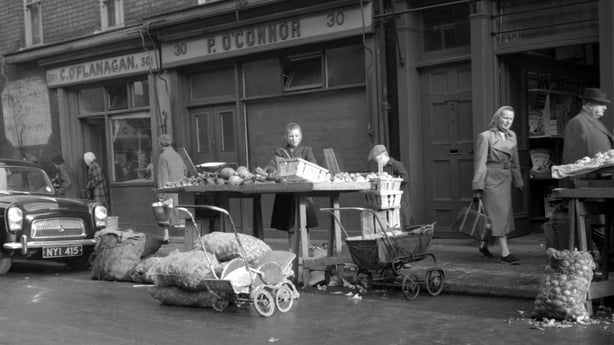
Moore Street in 1959. Photo: Dublin City Library and Archive collection
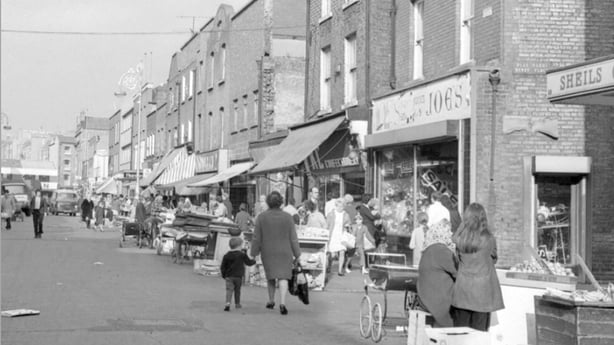
Moore Street in 1971. Photo: Dublin City Library and Archive collection
For a long time, the Moore Street traders were described as casual, despite the longevity of their businesses. Joyce’s older sister holds the licence to trade that was originally held by their mother, grandmother and great-grandmother. They pay rates, even though their stalls are not permanent fixtures and they are also subject to taxes and fees for their licences. During the Covid lockdown, only Joyce’s sister was able to claim the Government support payment because all of the insurance and taxes were in her name.
In the early 1970s, construction of the ILAC shopping centre was facilitated by the demolition in 1968 of almost one whole side of Moore Street. This demolition wiped out an entire area of markets in the vicinity of Moore Street.
We need your consent to load this rte-player contentWe use rte-player to manage extra content that can set cookies on your device and collect data about your activity. Please review their details and accept them to load the content.Manage Preferences
From RTÉ Archives, 1974 plans to develop Moore Street and make way for what will become the ILAC centre
Joyce has told her children many stories about working in Moore Street and how tough it could be. Her son is concerned about climate change and the environment and he was shocked when she told him about some of the methods they used in the past to protect themselves from the cold and rain, especially in the winters:
When the stalls were out years ago in the cold weather – do you know the big blue bins that you would see outside Croke Park for the rubbish, there was so many of them up Moore Street, we used to get them off the Corporation, so we burned them.
Follow RTÉ Brainstorm on WhatsApp and Instagram for more stories and updates
Dr Mary Muldowney is a Dublin City Council Historian in Residence for the Dublin North-West area of the city. Mary is a member of the organising committee of the Irish Labour History Society and co-editor of Saothar, the peer-reviewed journal of the Society.
The views expressed here are those of the author and do not represent or reflect the views of RTÉ