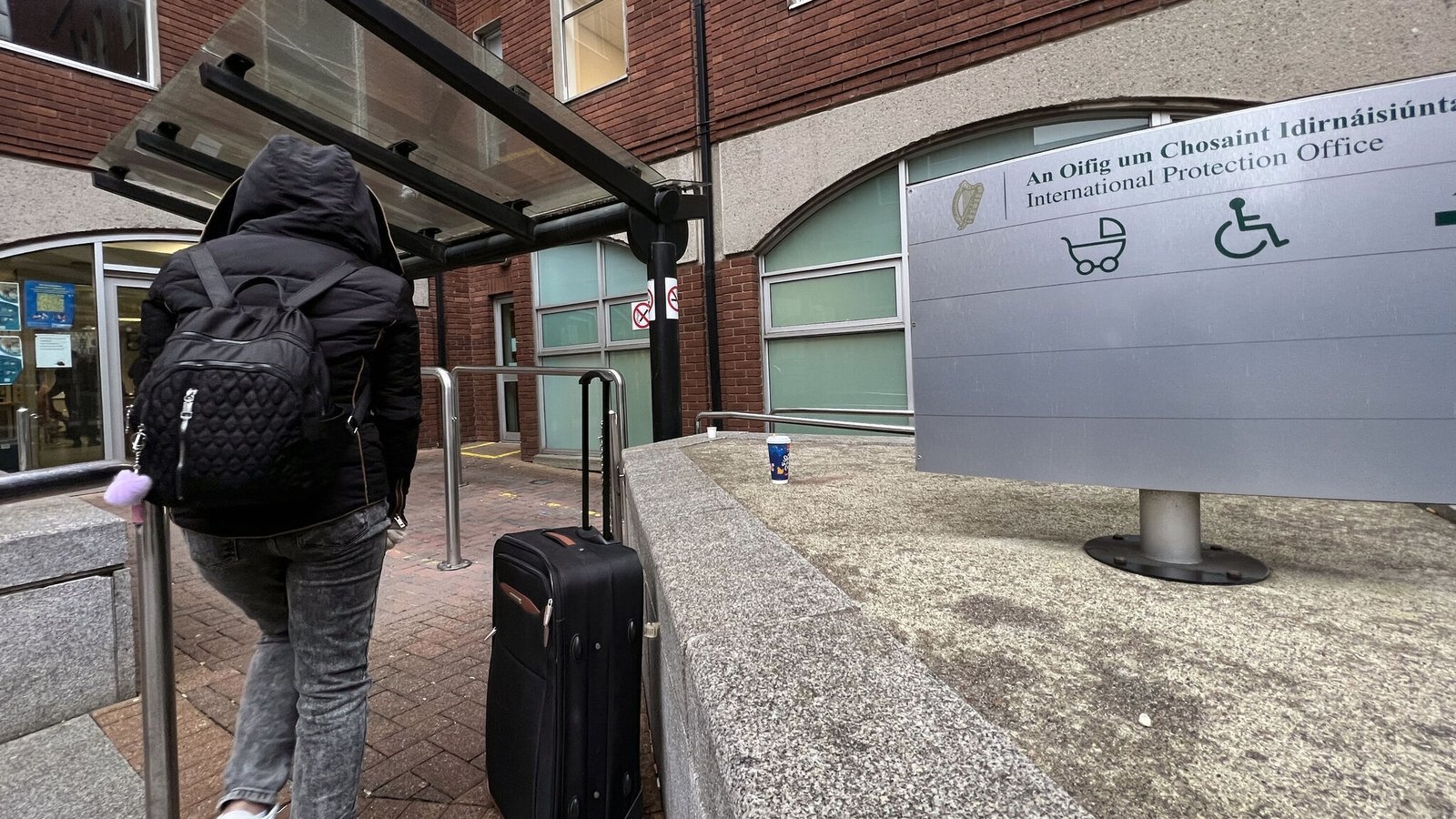
Many people believe immigration is happening here on a larger scale than it really is, according to the Economic and Social Research Institute (ESRI).
The ESRI has described the “misperception” as strongly associated with negative attitudes to immigration.
A study, funded by the Department of Justice, Home Affairs and Migration, involved an anonymous online survey of 1,200 adults, representative of the national population.
It asked participants to estimate key facts about immigration, including population size, reasons for migration and migrant characteristics such as employment and education levels, social housing uptake, and share of the prison population.
On average, people estimated that 28% of the population was born abroad, when the highest official figure is 22%.
They also estimated that 14% were born outside the EU, UK and North America, almost double the true figure of 8% of the population.
People also misjudged why migrants come to Ireland.
The average guess was that less than 20% of recent non-EU migrants have come for work or education, when the true figure is almost 50%.
People accurately estimated that close to 28% of recent non-EU migrants arrived from Ukraine, however, they also guessed that a further 20% arrived seeking international protection (asylum) from other countries, when the true figure is closer to 10%.
While they underestimated the education levels and employment rates of immigrants; they overestimated the likelihood that immigrants living in social housing and the proportion of immigrants in the prison population.
The study found that the people who held more inaccurate beliefs were also significantly more likely to feel negatively about immigration and to cite it as a major national issue.
Overestimating the share of migrants seeking asylum and underestimating migration for work and education had the strongest association with negative attitudes.
According to the ESRI, while most people in Ireland continue to hold “broadly positive attitudes toward immigration”, the findings have highlighted “the potential for misperceptions to distort public debate and increase vulnerability to misinformation”.
The report suggested that the focus on asylum seekers in public discourse and media coverage may contribute to these biases.
It said that the amount of media attention given to certain migrant groups, or even to immigration in general, may have led the public to perceive these groups as more representative of migrants overall than they are in reality, and to believe that immigration is happening on a larger scale than is the case.
“For example, although international protection applicants constitute a small share of the overall migrant population, the recent rise in applications, the failure to accommodate all applicants, and subsequent media coverage may underlie the large overestimation observed in this study,” it said.
Shared understanding of the facts
Senior Research Officer at the ESRI and lead author of the report, Dr Shane Timmons, said that an informed debate about issues like immigration required shared understanding of the facts.
“While most people do not hold negative attitudes toward immigration, those who do tend to strongly underestimate migrants’ economic contribution. In reality, there are fewer migrants living in Ireland than people think and far more come for work and education than people believe,” he said.
The study was conducted against a backdrop of “heightened salience” of immigration in public discourse, marked by violent protests at buildings earmarked for asylum seekers, increases in racially motivated hate crimes and the spread of online misinformation.
The report has stated that while most of the public do not hold antiimmigration sentiments, “it is difficult to conclude from these figures that strong negative sentiment is the preserve of only a fringe minority”.
It noted that the public’s concern about immigration is “dwarfed” by concerns about housing, cost-of-living, and the health system.
It recommended the development of communications that highlight under-recognised facts, such as the high proportion of migrants who are employed or hold third-level qualifications.
Concluding, it said the findings suggested that improving public comprehension of immigration facts may foster a more informed and cohesive society, though methods for achieving better understanding required further evidence.