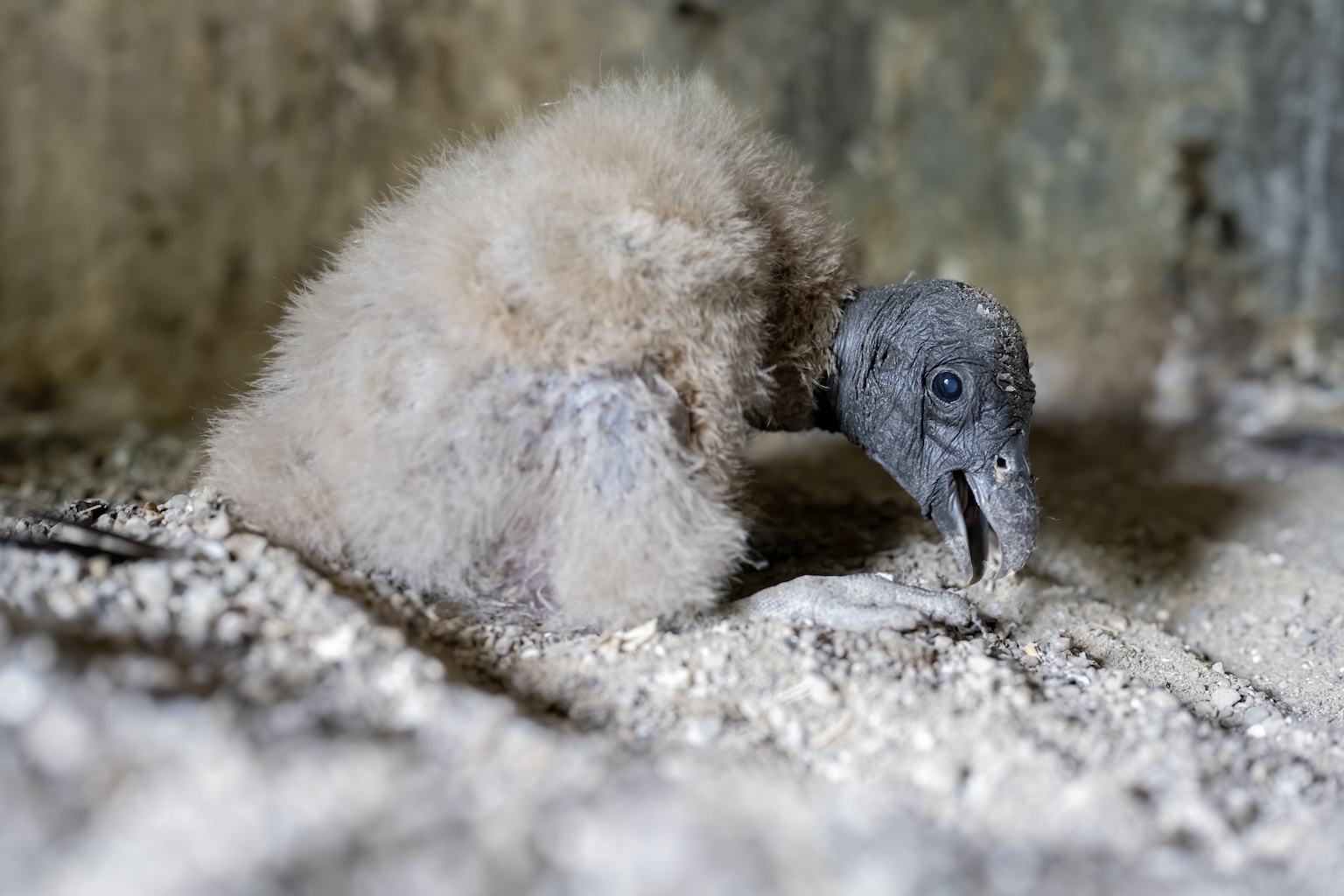
Since July 2024, three Andean condor chicks have hatched at an artificial incubation program located near Bogotá, Colombia’s capital city, contributor Christina Noriega reported for Mongabay.
The artificial incubation program is run by the Jaime Duque Park Foundation, a Colombian conservation nonprofit that has worked since 2015 to counter the birds’ population decline.
Globally, the Andean condor (Vultur gryphus) is classified as vulnerable to extinction by the IUCN Red List, with an estimated 6,700 mature individuals remaining across the species’ range, largely concentrated in Bolivia, Chile and Argentina. But in Colombia and Ecuador, the species is considered critically endangered, with fewer than 150 birds left in the wild. In Venezuela, the species is believed to have already gone locally extinct.
The chicks, named Rafiki, Wayra and Ámbar, hatched in July 2024, September 2025 and October 2025, respectively. “They are the salvation of the species,” Fernando Castro, director of biodiversity at the foundation, told Mongabay.
Rafiki and Wayra, the two older chicks, are expected to be released this year near Cerrito, a high-altitude town in northeastern Colombia where nearly half of the nation’s condor population survives today.
To boost condor survival, wildlife caretakers at Jaime Duque Park place each egg collected from captive condor nests in an oven-like incubator to provide warmth and safety. Andean condors typically raise one chick every 2-3 years, and first-time parents have been observed accidentally cracking their eggs, Castro told Noriega. But removing the egg from their nest often stimulates the birds to lay again, increasing the number of eggs they produce in a single year, Castro added.
Once a chick hatches, caretakers avoid all direct contact during early care to improve its chances of survival in the wild. Staff use condor-shaped puppets during feeding and are kept with other condors to ensure the birds remain wary of people, a trait considered critical for survival after their release.
Condors in Cerrito were previously treated as pests, as many ranchers believed the birds preyed on sheep. Some ranchers would leave poisoned carcasses to kill them, Doris Torres, a 47-year-old sheepherder, told Mongabay.
In 2018, the Jaime Duque Park Foundation began working with the community to reduce conflict and raise awareness about the condor’s ecological role. Camera traps also showed that livestock losses were largely caused by foxes, ocelots and, in some cases, their own sheepdogs, rather than condors.
Since the recovery efforts, Cerrito has become a destination for condor watching and receives nearly 1,000 yearly visitors. The shift created a new source of income for local families and helped sustain the conservation efforts.
“The condor used to be our enemy,” sheepherder Torres said. “Now it’s a great ally for development.”
Read the full story by Christina Noriega here.
Banner image: An Andean condor chick, called Marijo, in a North American zoo in 2022. Image courtesy of Mike Faix, on behalf of the National Aviary.
