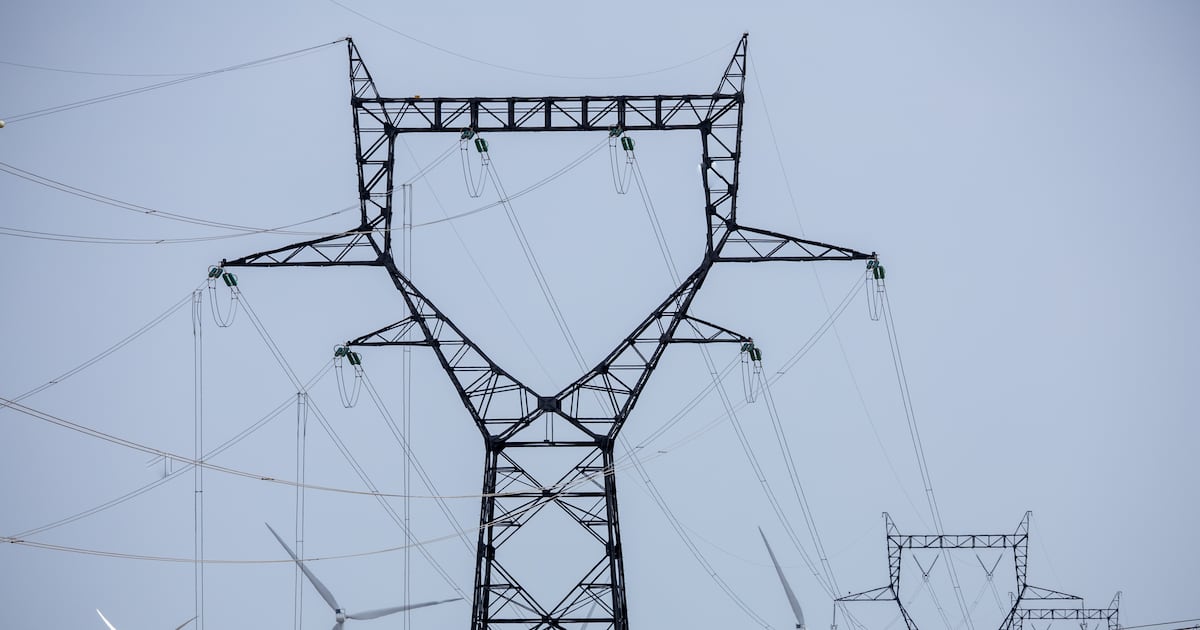
Ireland has lost of billions of euro in new jobs projects because global companies cannot access electricity and infrastructure, a top Government adviser has said.
Sean O’Driscoll, of the Accelerating Infrastructure Taskforce, said the Irish foreign direct investment (FDI) market was suffering serious fallout from the lack of new electricity generation and infrastructure to distribute power.
“We have been playing Russian roulette with our economy when it comes to energy and infrastructure in general. At least, we’re talking about it now,” said Mr O’Driscoll, who was chief executive of electrical goods firm Glen Dimplex and is chairman of the Economic & Social Research Institute.
Crisis was narrowly averted three years ago this winter when surging demand came close to outpacing supply, he said. “We were within a whisker of running out of generation capacity.”
He was speaking to The Irish Times after IDA Ireland released internal papers in which the agency’s board was told “electricity grid connections are not available for new energy-intensive FDI projects”.
The documents, partly released under the Freedom of Information Act, were submitted to Government last February.
At that time, IDA officials found the level and delivery of energy investment was “not providing certainty or confidence to FDI” and said large energy users such as data centres were “not considering Ireland as a viable location”.
Despite such challenges, IDA Ireland went on to deliver record FDI in last year, with 323 new projects linked to more than 15,000 jobs.
Asked about board papers, the agency acknowledged Ireland “must accelerate” infrastructure delivery, but said Government plans for a multibillion euro energy investment had improved the outlook. “As we enter 2026, Ireland benefits from a fundamentally improved policy landscape,” it said.
[ Promises were made before about clearing blocks to big projects – what’s different this time? ]
Mr O’Driscoll, expressing confidence himself in Government measures to boost power generation and transmission, said the lack of electricity was a problem that had worsened for 10 or 15 years.
“Nobody was encouraged to talk about this,” he said in an interview.
“In fact, people were discouraged to talk about it because you were seen to be negative about Ireland, talking down Ireland and talking down our FDI opportunities. The system was in complete denial.”
Minister for Public Expenditure Jack Chambers appointed the taskforce last May, seeking an action plan for removing barriers to water, transport and electricity infrastructure. The aim is to support housing and enterprise.
The plan, published last month, includes legal reforms and measures to streamline decision-making.
Mr O’Driscoll, who remains with the taskforce as it monitors the execution of the plan, said multinational investors approached him directly.
“During the consultation process on infrastructure, several of the most significant foreign direct investors in Ireland made contact with me to share their concerns with me,” he said.
“I can tell you what they said to me. We have [lost] – and are continuing to lose – billions of euro of investment to other sister companies of those multinationals in Europe.
“So something that naturally had come Ireland’s way previously, for the last – I would say – two to three years, some of that has been going to other European countries as a consequence of our infrastructure issues.
“That’s how serious it is.”
He welcomed new State money for national grid operator EirGrid and for ESB Networks, saying the reversal of “historical underinvestment” gave them strength to tap bond markets for big investments.
“Both organisations have told us, the taskforce, that they are now satisfied that they have got the investment that’s required and they have the plans to enable them to start to address these issues. That’s why I’m hopeful.”