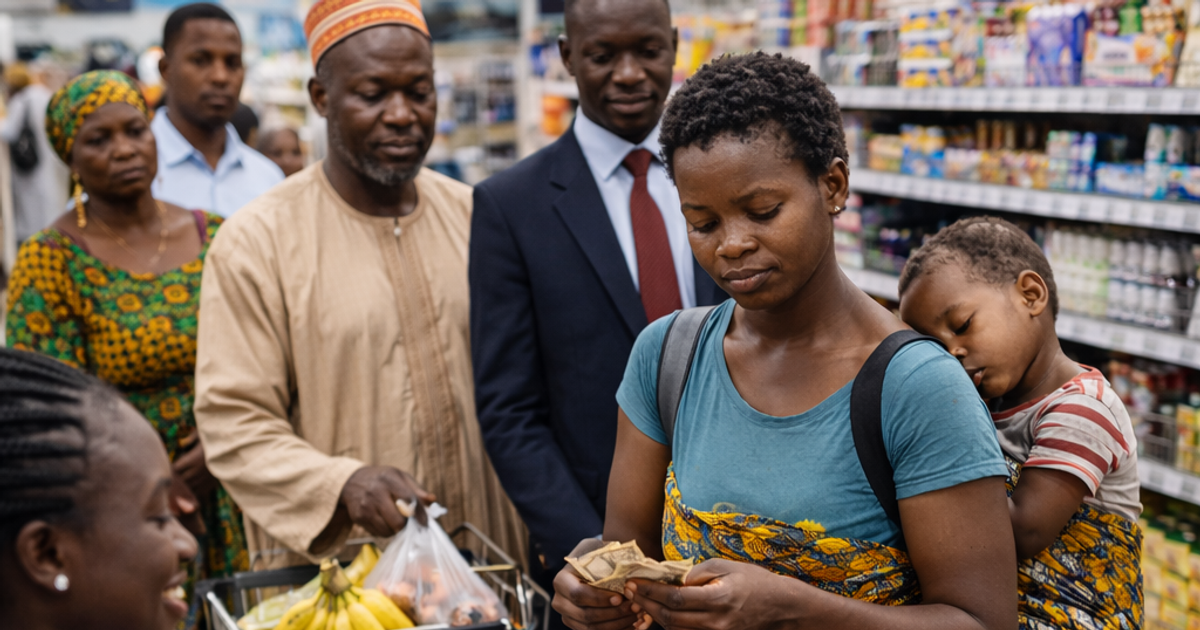
For commercial African cities, sustained constraints on purchasing power from the preceding year continue into the new fiscal period, thereby creating difficulties in effective financial planning.
The ability of people and households to purchase goods and services with their income is reflected in their purchasing power.
When it is low, it restricts overall economic growth, lowers the quality of life, and limits consumption.
In economies, when a major section of the population struggles to fulfill fundamental necessities, households prioritize critical things such as food, fuel, and shelter, leaving little for discretionary spending.
This harms small firms, restricts the expansion of domestic markets, and lowers total economic activity.
Poverty and inequality are also made worse by low purchasing power.
Households are compelled to make compromises on healthcare, education, and nutrition when earnings or incomes are insufficient to pay for essentials.
Lack of access to basic services hinders social mobility and restricts the development of human capital, which is required for sustained economic progress, creating a vicious circle of disadvantage.
Companies are less likely to grow or penetrate markets where customers cannot afford their goods.
This hinders attempts to diversify economies away from a large reliance on commodities, inhibits industrial expansion, and restricts the creation of jobs.
Vulnerability to external factors and inflation is another major drawback.
Even slight increases in the cost of food, fuel, or utilities can significantly lower household welfare when earnings are low.
Currency fluctuations or increases in global commodity prices disproportionately impact residents with little purchasing power in import-dependent nations, exacerbating economic instability.
Additionally, low purchasing power has a social component that affects social cohesiveness and political stability.
Governments attempting to maintain peace while enacting reforms have difficulties because people who are unable to meet their fundamental needs are more likely to express their discontent through protests or civil unrest, a trend that has been prevalent in countries like Nigeria and Kenya.
With that said, here are the African cities with the lowest purchasing power at the beginning of the year, according to data from Numbeo.