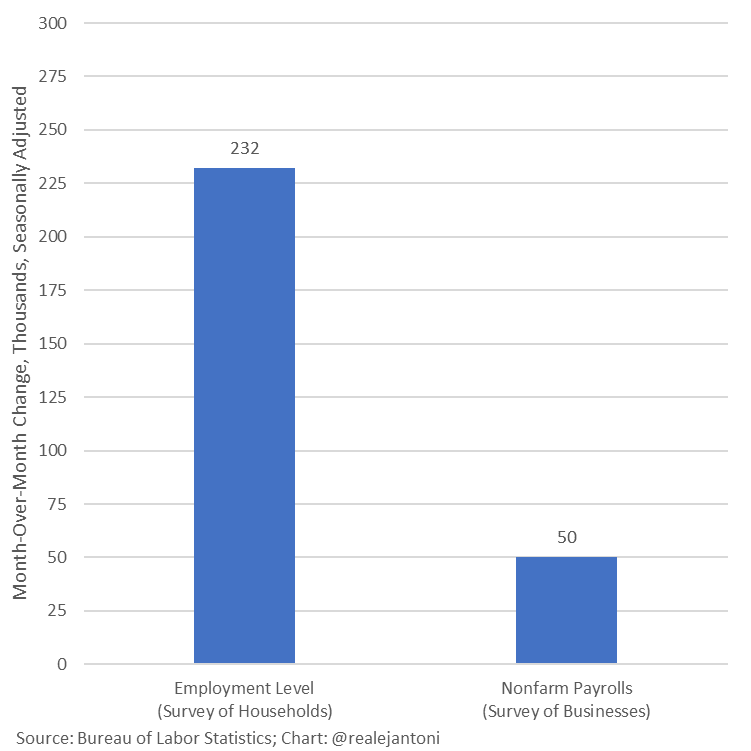
After the BLS reported last week just 50,000 non-farm jobs added in December, the Wall Street Journal front page headline fretted “America’s Job Market Has Entered the Slow Lane.” After drilling down on the numbers, we find much better news.
It is true that job growth has slowed in 2025, but as we’ve shouted many times, that’s mostly a supply of workers problem, not a demand problem. There are 7.2 million job openings.
The household survey showed the number of people employed jumped by 232,000–more than four times the increase in payrolls. The explanation for this difference is a very positive development in the labor market: full time employment was up as part time work declined.
In December, the number of part-time jobs declined by 740,000, while full-time employment shot up by 890,000:
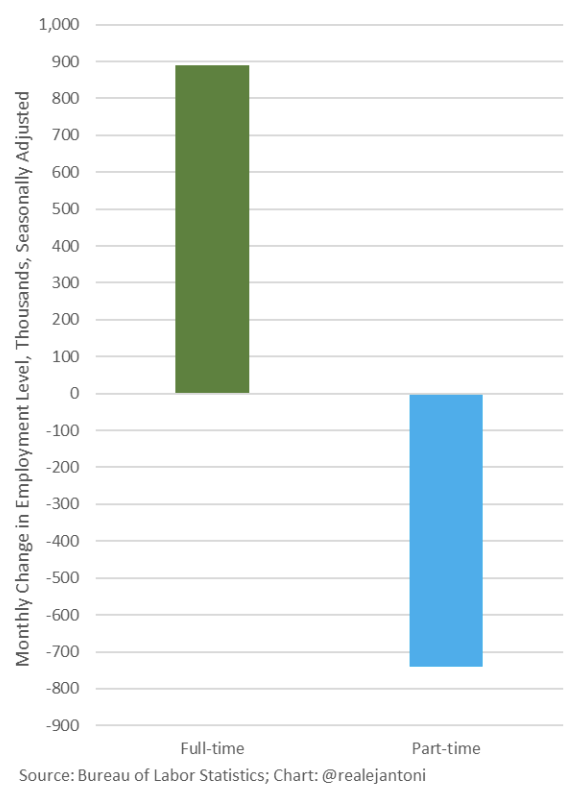
People exchanged multiple part-time gigs for single full-time jobs in December. That doesn’t show up in the aggregate figures, but it’s a real improvement.
Further evidence of that was the so-called U-6 unemployment rate, which includes discouraged and underemployed workers, fell in December a significant three-tenths of a percentage point. More people were able to get the kinds of jobs they wanted, like good-paying, full-time work with benefits.
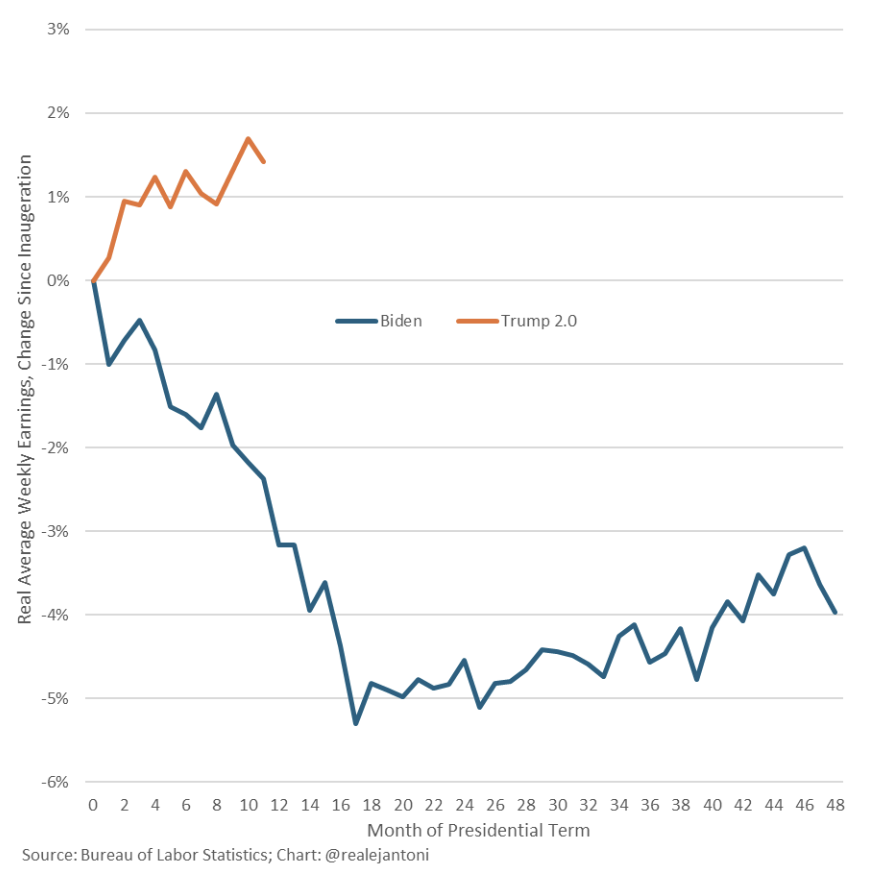
On the wage front, average weekly earnings nudged up from a 3.6% annual increase to 3.8%. That also beat inflation for 2025. Workers’ paychecks are getting bigger and they can buy more with them. Inflation-adjusted weekly paychecks, which fell 4% under Biden, are up almost 1.5% during Trump’s second term.
Don’t be at all surprised if we get a big upward revision in the December jobs numbers after January.