
Imagine an office that’s buzzing with activity, but the workers aren’t talking to each other. Instead, the incessant chatter is employees briefing their agents — commanding personal AI assistants to handle their grunt work and execute tasks. A workplace from hell.
As business leaders confront the AI-enabled work revolution, they’re realizing that the physical spaces we command are also going to have to adapt to new technology. The pandemic already decimated the old-school office plan, and the rise of AI agents could upend corporate headquarters just the same.
To absorb sound and reduce overall office volume, Gensler, the architecture firm that helped design JPMorgan’s splashy new Manhattan headquarters, is creating spaces with felt panels that swallow the noise. It’s also looking into updating meeting rooms with AI-enabled whiteboards, where agents automatically synthesize written ideas and offer visual diagrams on what employees discuss.
Gensler is also experimenting with tech-free zones in its own offices — secluded areas reserved for private conversations where no agent can “inadvertently hear you talking about something,” Gensler co-CEO Elizabeth Brink said. “Technology could always be listening.”
The tech-free zones also create a place for creative work. While AI agents can help workers tick through their to-do lists, big ideas often come from slowing down and brainstorming with colleagues. Gensler is looking into implementing writing rooms — replete with pens and paper.
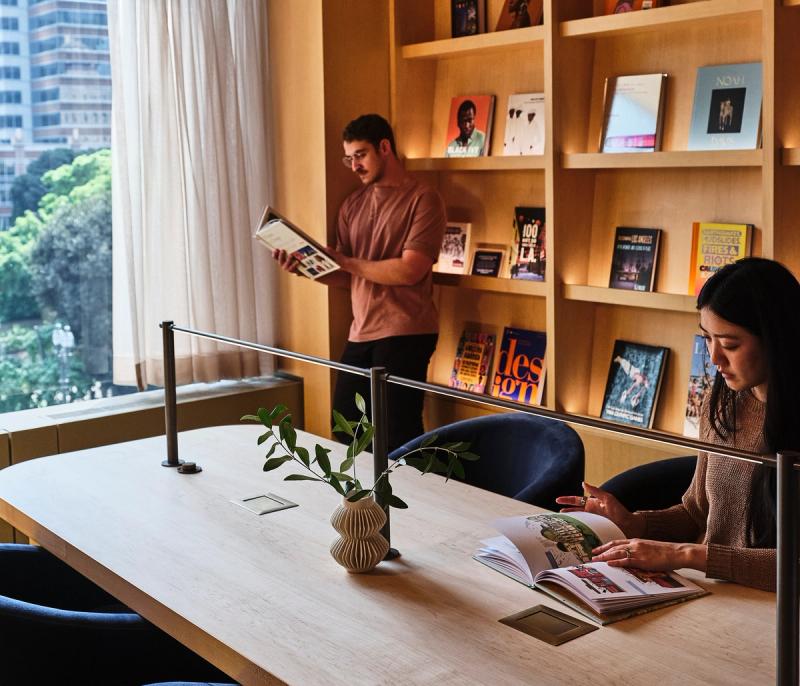 A tech-free room in Gensler’s LA office. The Ingalls, courtesy of Gensler.