Every household in the State is to receive a booklet in the next few weeks advising how to prepare for extreme weather emergencies and loss of essential services.
The “household resilience” booklet has been prepared by the Office of Emergency Planning in the Department of Defence.
It was a recommendation of the review group that examined the response to Storm Éowyn that hit Ireland a year ago today.
The review group said households should have a checklist of actions to take to keep safe, warm, fed and hydrated in the event of loss of power, water and communications for up to 72 hours.
It is understood the information to be supplied does not specify a time period for which people should be prepared to cope on their own. However, it is detailed about the practical steps they can take to care for themselves and their families.
Meanwhile, local authorities have been issued with guidelines for establishing Community Support Centres (CSC) to provide the public with essential services when major outages and disruption occurs.
The guidelines say many different kinds of premises can be considered for designation as CSCs including sports halls, community centres, town halls and leisure centres.
Requirements include that they have a large main room, tables, chairs, a kitchen or food-preparation area, ample toilets, good wifi and plenty of extension cables. They must also be accessible for people with mobility difficulties and have a separate room for nursing mothers or people who require medical assistance or to have private conversations with gardaí.
Ideally, they would also have adjacent car parking, a smoking or vaping area and electric car charging point. They are not intended to be used as overnight rest facilities.
[ Ireland is living through tomorrow’s weather with yesterday’s infrastructureOpens in new window ]
A key requirement is that they are either equipped already with a generator or can have a changeover switch installed to be generator ready. Local authorities will cover the cost of hiring electricians to do the work and will supply the generators.
However, the guidelines say only that funding “may be” available for other costs incurred by a CSC if it is called into action during an emergency.
Owners and operators of premises designated CSCs will also have to operate under their own public liability insurance.
Councils began seeking expressions of interest from the operators of premises who want to offer to be designated a CSC before Christmas. Lists are to be finalised shortly.
In the aftermath of Storm Éowyn, hundreds of community groups, schools and businesses opened their premises as impromptu support hubs for people left without power, water and communications for days.
The review group, which published its report last October, called for a more structured approach so premises and the volunteer committees that usually run them could be prepared in advance.
The guidelines say CSCs are not intended to replace household resilience and will not be automatically activated in the event of weather-related or other emergencies but only if deemed necessary.
Volunteer committees can, however, issue the activation order themselves on their own assessment of local needs.
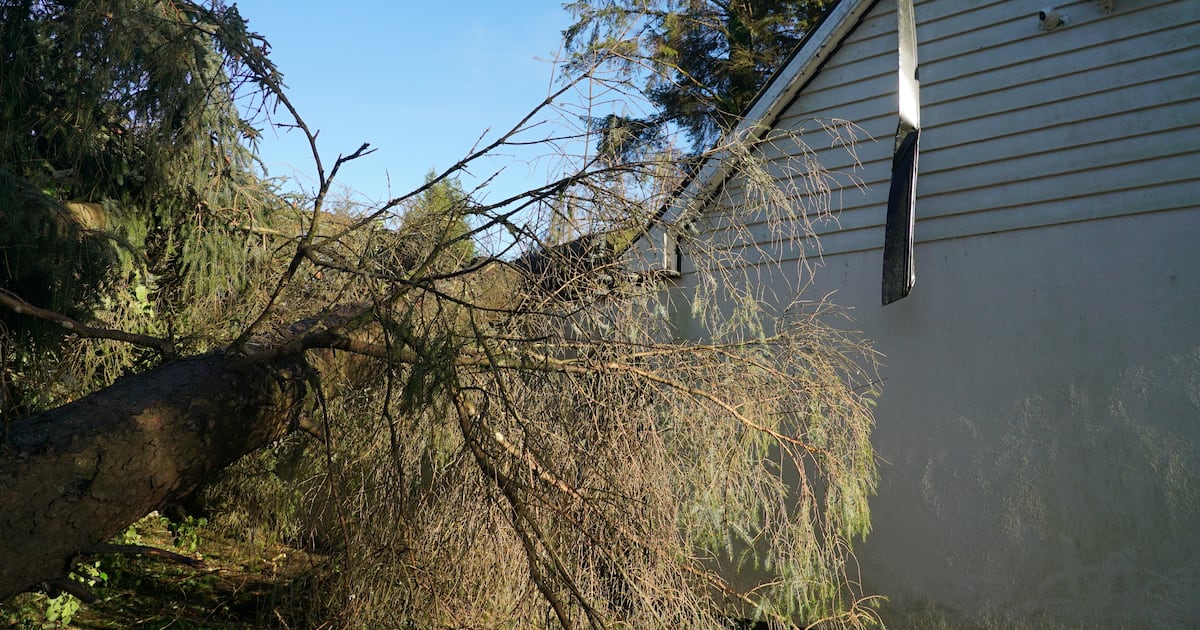
Storm Éowyn brought the strongest winds ever recorded in Ireland and at, its peak, 768,000 homes and businesses were without power with some not reconnected for weeks.
The knock-on effect on mobile phone signal towers, wifi and broadband, water supply, sewage systems and transport was immense.
But the CSC guidelines also refer to more localised events such as the flooding of Midleton, Co Cork, in 2023 where there were severe, long-term effects in a much more concentrated area.
There have been strong criticisms from communities, public representatives and the Climate Change Advisory Council about the State’s preparedness for such events, which are expected to become more frequent.
The Government says it is giving priority to drafting legislation to establish “forestry corridors” to ensure future planting leaves a wide margin around power lines, thousands of which were flattened by falling trees.
“The Bill will also provide for enhanced proactive vegetation management measures to protect the electricity network,” it said.
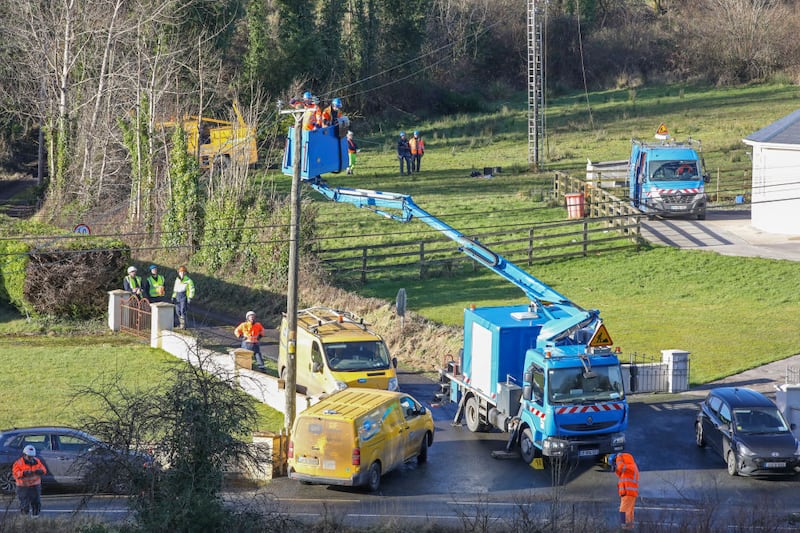 Engineers from French energy company Enedis work as part of an international response team to repair power lines damaged during Storm Éowyn near Carrick-On-Shannon on January 30th last year. Photograph: Paul Faith/AFP/Getty
This would include “powers to clear vegetation likely to interfere with the network and a statutory framework for compensation to landowners in respect of the establishment and maintenance of forestry corridors, including regulation making powers for compensation principles, methodologies and dispute resolution mechanisms”.
Uisce Éireann says it has taken steps to ensure less disruption and faster response times if a repeat of Storm Éowyn occurs.
Power outages meant 286 water-treatment plants and 293 wastewater treatment plants were out of action for some period during the storm and its aftermath, with uncontrolled releases of untreated wastewater occurring in places.
Uisce Éireann said it has increased its stock of standby and mobile generators since the storm and is working to make more plants generator ready.
It said it is reviewing its fleet of all-weather vehicles to ensure they are positioned where most needed and to inform future purchases.
“All of these actions will ultimately enhance our ability to manage storm events and provide more resilient water and wastewater services, supporting customers and protecting the environment,” a spokesperson said.