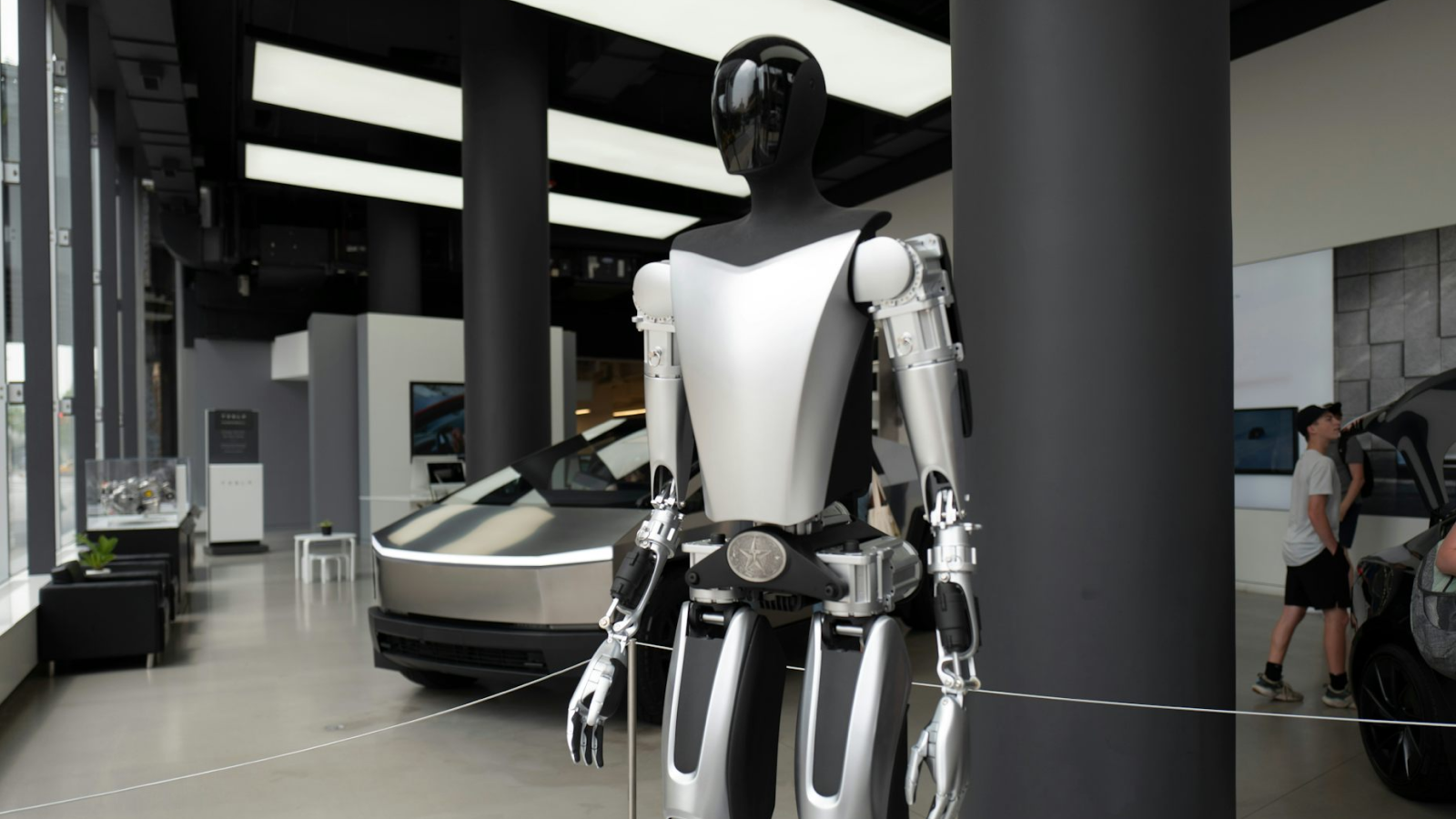
When Elon Musk talks about robotics, he rarely hides the ambition behind the dream.
Tesla’s Optimus is pitched as an all-purpose humanoid robot that can do the heavy lifting on factory floors and free us from drudgery at home. Tesla is targeting a million of these robots in the next decade.
You may like
Whether your first encounter was with ChatGPT, Gemini or Copilot, many of us felt the same jolt of surprise. Here was a bot that seemed to understand us in a way we didn’t expect. That has made Musk’s dream of a robot companion feel if not close then certainly closer.
Imagine leafing through a catalogue of robots the way we browse for home appliances. If a personal robot still feels too expensive, perhaps we might hire one part time. Maybe a dance instructor that doubles as a therapist. Families could club together to buy a robot for an elderly relative. Some people might even buy one for themselves.
The future Musk describes isn’t just mechanical, it’s emotional.
Why the humanoid shape matters
The idea of robots that look like us can seem creepy and threatening. But there’s also a practical explanation for the drive to make robots that look like us.
A dishwasher is essentially a robot but you have to load it yourself. A humanoid robot with hands and fingers could clear the table, load the dishwasher and then feed the pets too. In other words, engineers create humanoid robots because the world is designed for human bodies.
But the humanoid form also carries an emotional charge. A machine with a face and limbs hints at something more than functionality. It’s a promise of intelligence, empathy or companionship. Optimus taps into that deep cultural imagery. It is part practical engineering, part theatre and part invitation to believe we are close to creating machines that can live alongside us.
There are moments when a personal robot might be genuinely welcoming. Anyone who has been ill, or cared for someone who is, can imagine the appeal of a helper that preserves dignity and independence. Robots, unlike humans, are not born to judge. But there is also a risk in outsourcing too much of our social world to machines.
You may like
If a robot is always there to tidy up the mess, practical or emotional, we may lose some of the tolerance and empathy that come from living among other people.
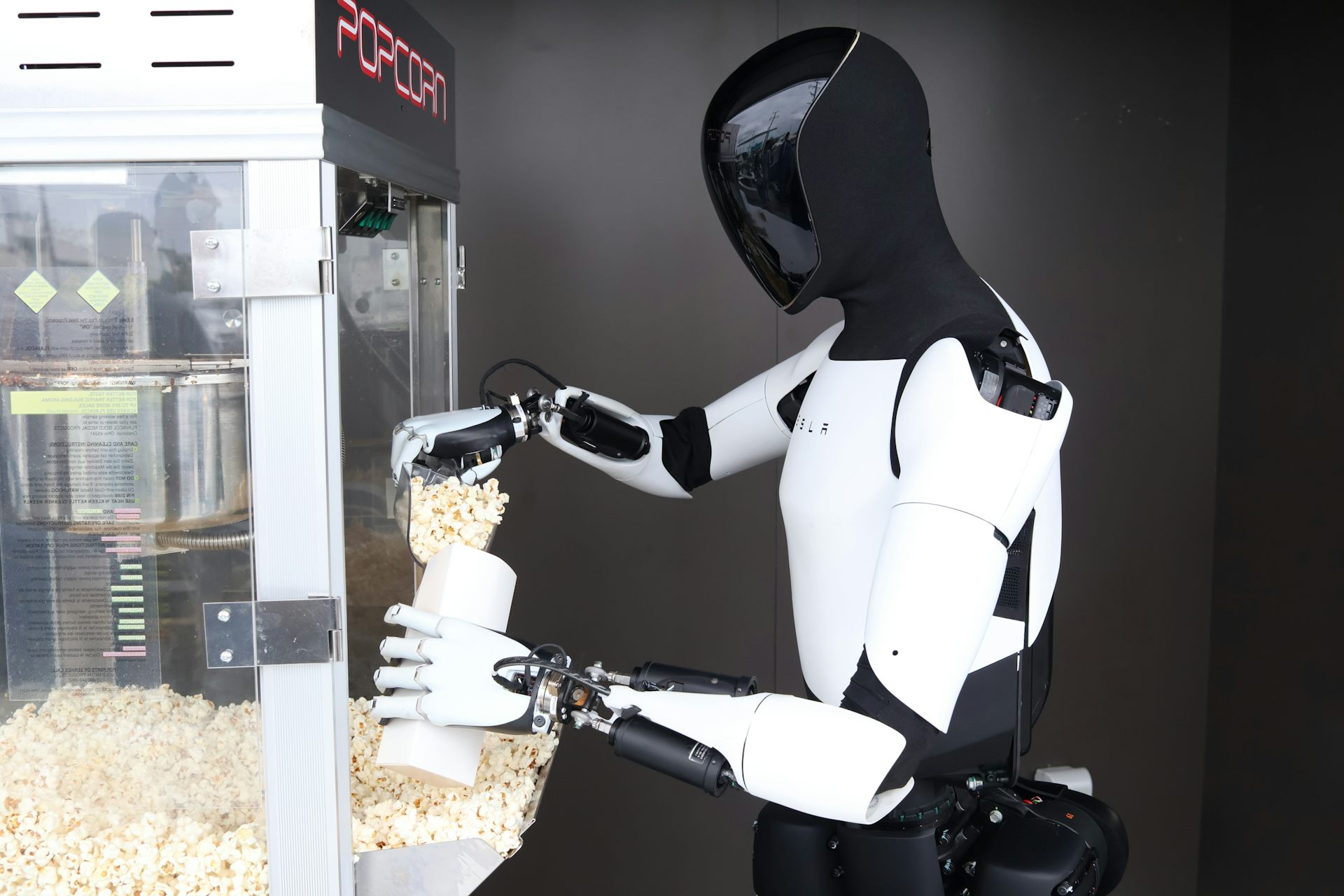
Would you like a robot who fetches you popcorn? (Image credit: Josiah True/Shutterstock)
That is where the question of design becomes crucial. In the most dystopian version of life with generative AI-powered, chatty, dexterous robots, we retreat indoors, sealed into our homes and attended to by machines that are endlessly “understanding” and quietly adoring. Convenience is maximised, but something else is lost.
If sociability really does matter — if it is worth a little extra inconvenience to practise being human with other humans rather than only with chatbots — then the challenge becomes a practical one. How do we engineer a future that nudges us towards one another, instead of gently pulling us apart?
One option is to rethink where conversation lies. Rather than building all-purpose, ever-chatty assistants into every corner of our lives, we could distribute AI across devices and limit what those devices talk about. For example, a washing machine might discuss laundry, while a navigation system might discuss routes. But open-ended chatter, the kind that shapes identity, values and relationships, remains something that people do with people.
At a collective level, this kind of design choice could reshape workplaces and shared spaces, turning them back into environments that cultivate human conversation. That is, of course, only possible if people are encouraged to show up in person, and to put their phones away.
The real design challenge is not how to make machines more attentive to us, but how to make them better at guiding us back towards one another
So, it is worth asking what kind of domestic future we are quietly building. Will the robots we invite inside help us connect, or simply keep us company?
Good bots, bad bots
A good bot could help a socially anxious child get to school. It may nudge a lonely teenager towards local activities. Or it may tell a cantankerous old person: “There’s a crime club starting in an hour at the library. We can pick up a paper on the way.”
A bad bot leaves us exactly where we are: increasingly comfortable with a machine and less comfortable with each other.
Musk’s humanoid dream may yet become real. The question is whether machines like Optimus will help us build stronger communities, or quietly erode the human connections we need most.
This edited article is republished from The Conversation under a Creative Commons license. Read the original article.