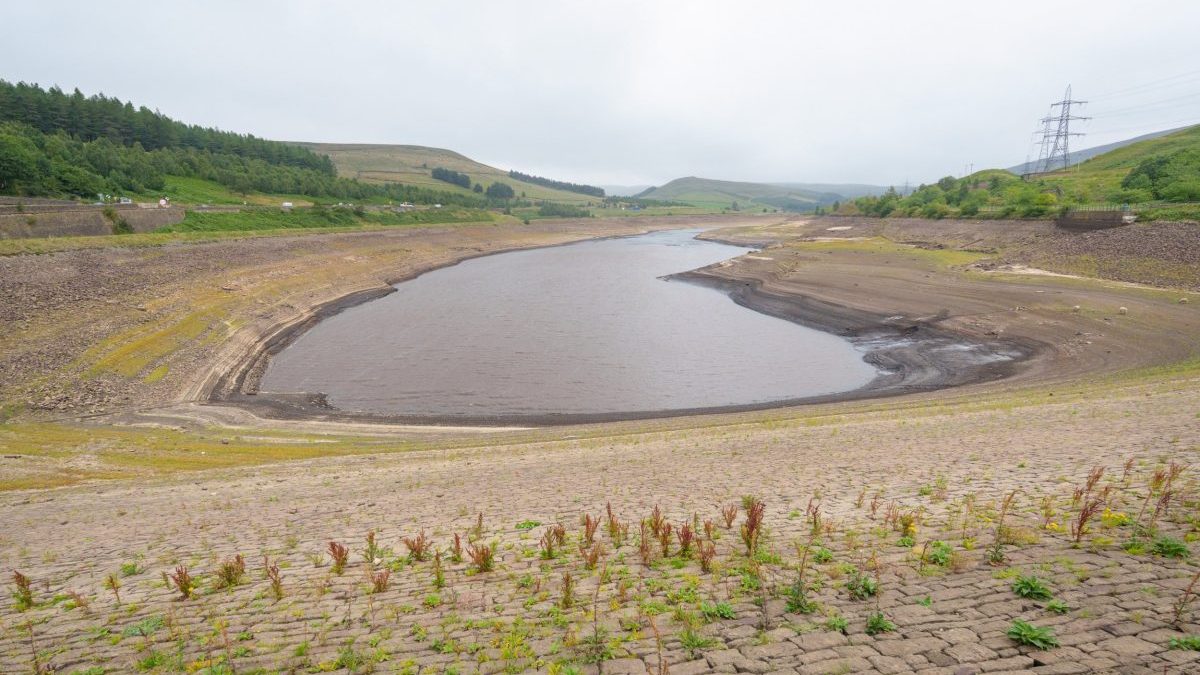
A new reservoir in Cambridgeshire is facing delays with the local water companies unsure how to actually fill it up
England is running out of water, as climate change and population growth mean demand is starting to outstrip our storage capacity.
Reservoirs could be a solution to water shortages and the Government has vowed that nine new water storage facilities will be online by 2050 – the first to be built in the UK for over 30 years.
There’s just one problem: a flagship project in Cambridgeshire has been delayed by regulators as the local water companies are yet to confirm how they actually plan to fill the reservoir with water.
Experts told The i Paper this is a widespread challenge facing water firms across the nation. Issues including geography, global warming and preserving the environment mean filling these reservoirs will not be easy.
Cambridgeshire is one of the most “water stressed” areas in England. The current supply for the region is not enough for the projected population growth and low river levels are already having a negative impact on the local environment.
Anglian Water and Cambridge Water have proposed a new reservoir just north of Cambridge, which will cover an area of five square kilometres and store enough water to supply 250,000 homes.
Known as the Fens Reservoir, it is currently projected to be complete by 2036.
However, earlier this month it faced a setback when regulators delayed a decision to progress to the next stage of the planning process due to uncertainties over the design of the scheme.
The long and complex planning process for reservoirs is overseen by the Regulators’ Alliance for Progressing Infrastructure Development (Rapid), a collaboration between the major water regulators in the UK: Ofwat, the Environment Agency and the Drinking Water Inspectorate.
In a letter to Anglian Water and Cambridge Water, dated 7 January, Rapid said the companies must solve a number of issues in the design of their reservoir, “including the possible sources of water to fill the reservoir and protection of the environment”.
A spokesperson for Anglian Water said “significant milestones have been achieved” and the “reservoirs programme continues at pace”.
“Nonetheless, the project remains in the early part of the development lifecycle and as expected for a project of this scale and complexity, we continue to progress with and develop the design,” they added.
Where are the nine new reservoirs?
Water companies have committed to building nine new reservoirs by 2050 at the following locations:
- The Broad Oak reservoir by South East Water near Canterbury in Kent
- Cheddar 2 by South West Water near the village of Cheddar in Somerset
- The Fens Reservoir by Anglian Water and Cambridge Water near Cambridge
- Mendips Quarry by South West Water in the Mendip Hills in Somerset
- River Adur Reservoir by Southern Water at an undetermined location in West Sussex
- Abingdon Reservoir by Thames Water, Affinity Water and Southern Water in Oxfordshire
- South Lincs Reservoir by Anglian Water near Sleaford in Lincolnshire
- North Suffolk Reservoir by Essex and Suffolk Water at an undetermined location
- West Midlands Reservoir by Severn Trent at an undetermined location
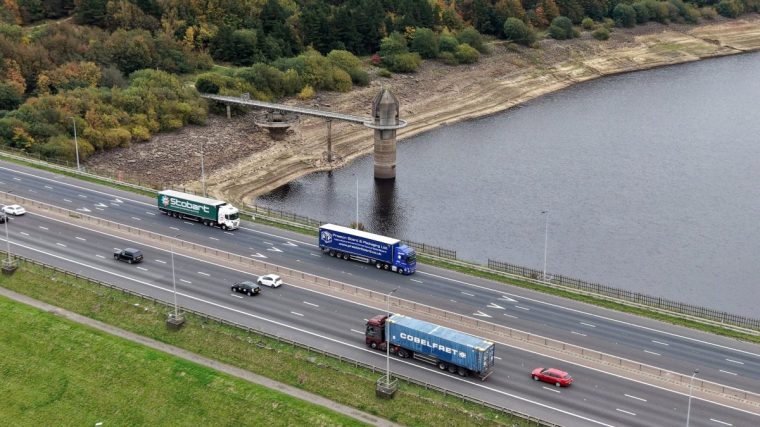 Rainfall from Storm Amy in October 2025 helped Yorkshire’s reservoirs recover from drought conditions, but water levels remained below average for that time of year (Photo: Christopher Furlong/Getty)
How to fill a reservoir
The easiest way to fill a reservoir is to divert a river using a dam. This is how many of the UK’s traditional reservoirs were built during the industrial era.
Most of these reservoirs were built in upland areas with high rainfall, including Wales, the Pennines and the Lake District.
But many of the upland valleys suitable for this type of development are now full, and demand for new reservoirs is greatest in the south of England, where the landscape is much flatter.
This means many of the new reservoirs are having to utilise a method that involves pumping water from rivers. This pumping is typically only allowed in winter when water levels are higher, thus putting less pressure on a river’s ecosystem.
Broadly, this is how the Fens Reservoir will be filled, but the design is complicated by the fact that there is no single large river in the area to provide the water.
The water companies have identified a variety of potential sources, including the River Nene, the River Great Ouse and the man-made Middle Level Drainage Network that runs through the Fens.
But the exact combination is yet to be determined and the water companies will need to prove to regulators that taking water from these sources will not have an unacceptable impact on the environment and species that live in the water.
Dr Megan Klaar, an associate professor in hydro-ecology and catchment management at the University of Leeds, said the design of the Fens project is “unusual”.
“In this area, around Cambridge, I think it’s their only choice because it’s so flat.”
A sign of problems to come?
Of the nine new reservoirs that have been promised by the Government, the Fens is among those that have progressed the furthest in the planning process. Some projects remain in the very early stages.
The planning process can take decades due to strict environmental rules and multiple stages of consultation. Through this process water companies will have to identify exactly how much water they plan to take from rivers and what impact this will have on water flows, flooding and ecosystems.
“You would have thought that they planned this, but maybe it’s an indicator of the challenges that we face with our water resources,” said Dr Kevin Grecksch, a professor of water and environment governance at the University of Oxford, of the Fens Reservoir.
Last summer offered a glimpse into how climate change is putting pressure on England’s water resources.
A drought was declared across large parts of England and Wales, with some reservoirs dropping below 30 per cent capacity, which is regarded as critically low.
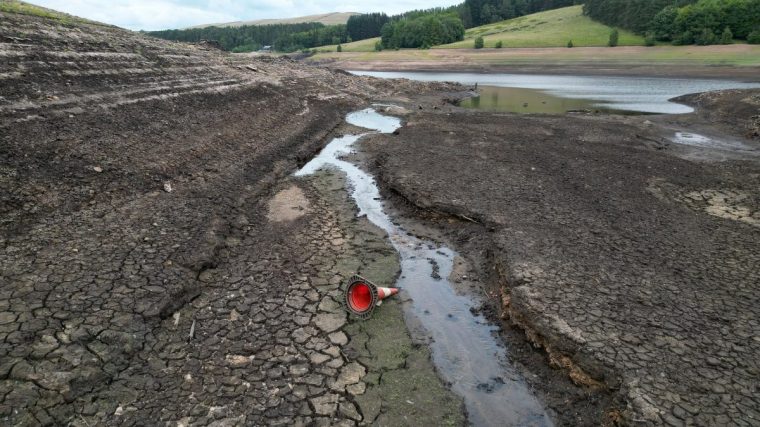 An aerial view of Errwood reservoir, which provides drinking water for the Stockport area of Manchester, following a heatwave (Photo: Christopher Furlong/Getty)
Klaar said climate change presents a major challenge in filling England’s new reservoirs. “It’s relying on getting enough water at the right time. It can take one, maybe even two years to fully fill a reservoir.”
Proving to regulators that filling these reservoirs will not cause unacceptable damage to rivers will be difficult, with many of England’s waterways already in critical condition due to a combination of issues including pollution and over-abstraction.
Grecksch explained taking large amounts of water from a river can impact flow speeds and temperatures, which disrupts the ecosystem that aquatic species, including migrating fish, depend on.
Are reservoirs really the solution?
Another hurdle to building new reservoirs in England is that they need to be built in lowland areas, where the majority of the population is based and where water shortages are most acute.
“This is not like Wales, the Peak District or the Lake District where you can just build a dam and that’s it. You have to build a reservoir from scratch because it’s a flat geography. So that just costs a lot of money because you need to build a perimeter wall,” Grecksch said.
This is one of the main challenges facing Thames Water’s Abingdon Reservoir in Oxfordshire.
The project is the furthest ahead of all the new reservoirs, having recently passed into a new stage of the planning process. However, estimates for the cost of construction have more than tripled – it could cost billpayers up to £7.5bn.
This is partly due to the cost of building huge embankments, which will have a maximum height of 25 metres, about the same height as an eight-storey building.
Your next read

Most experts agree that England needs more reservoirs to meet its future water needs, but Klaar cautions policymakers against becoming over-reliant on the solution.
Yorkshire, she points out, already has a large reservoir capacity was unable to avoid drought orders last summer.
“Every different location is thinking that it’s the silver bullet. We can build these reservoirs and our problems will be solved, but it really has to go hand in hand with demand management. People need to stop using as much water,” she said.