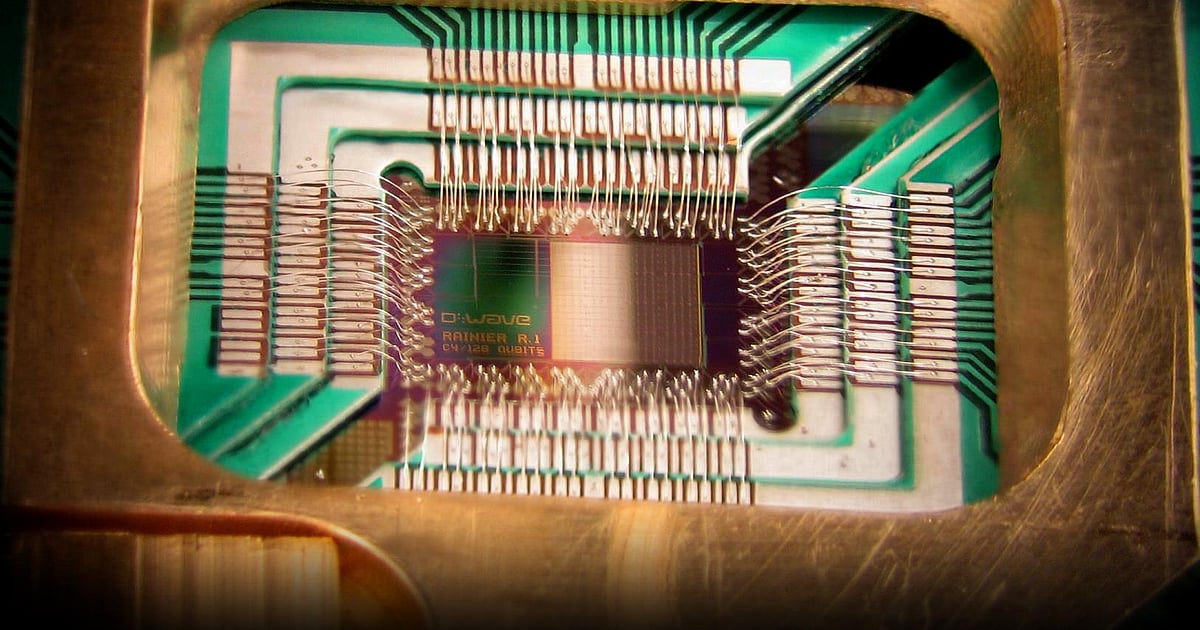
Unlike their classical counterparts, quantum computers process data that goes beyond the binary ones and zeroes format. They represent information in the format of the quantum mechanical laws of natures.
Computers uses ‘bits’ which act like ‘on’ and ‘off’ switches, representing the data—be it an image, a sound or text. This data is used to make calculations by a central processing unit that give the user their desired output.
While classical computers uses a string of bits, represented by rows of ‘1’s and ‘0’s to execute functions, quantum computing follows the law of superposition, where data is represented by ‘qbits’ instead of ‘bits’.
A ‘qbit’ can be a ‘0’ or a ‘1’ or both at the same, this means that a quantum computer has a larger number of possibilities when it comes to executing functions as compared to a classical computer.
Another law that governs qbits is the law of entanglement where they get linked in a way where they influence one another or get ‘entangled’. It takes place irrespective of their distance to each other. This means that quantum computers can use qbits to perform complex calculations in tandem, or all at once, leading to an exponential speed in calculations.