A sharp plunge in ocean calcium levels may be the missing link in Earth’s long transition from a hot, dinosaur-era greenhouse to the cooler, polar-capped world of today. A new study reveals that this 66-million-year cooling trend may not have been driven solely by surface events, but by deep changes in the planet’s ocean chemistry. The findings suggest that a massive drop in dissolved calcium reshaped how it absorbed and stored carbon, ultimately cooling the atmosphere.
Led by researchers at the University of Southampton and published in theProceedings of the National Academy of Sciences, the international study tracked changes in ocean calcium levels since the extinction of the dinosaurs. The team noted that calcium concentrations have fallen by more than half over the Cenozoic Era.
Oceans Used To Leak More Carbon
At the start of the Cenozoic, just after the dinosaurs disappeared, Earth was far warmer than today. According to Dr. David Evans, the study’s lead author and an ocean scientist at Southampton, calcium levels in the sea were about twice as high as they are now. At that time, the marine environment stored carbon differently:
“When these levels were high, the oceans worked differently, acting to store less carbon in seawater and releasing carbon dioxide into the air,” Evans explained.
As calcium dropped over millions of years, so did the amount of carbon dioxide in the atmosphere. The study’s data suggest a possible temperature decline of up to 15–20°C over that span. The mechanism is tied directly to how marine organisms build their shells and skeletons, less calcium in the water changed how they produced and buried carbon-rich material on the seafloor.
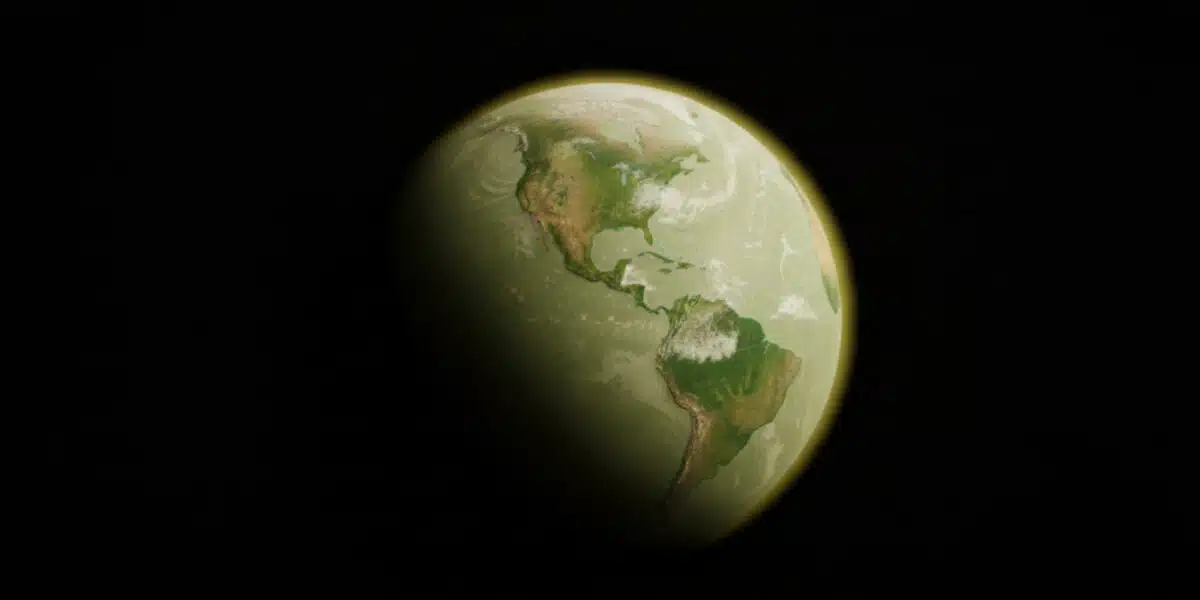 Earth’s western hemisphere under a green filter. Credit: University of Southampton
Fossils Show Carbon’s “Missing” Link
To understand the long-term changes in seawater chemistry, the team examined tiny fossilized shells of foraminifera; single-celled marine organisms that record the chemical makeup of the oceans in their calcium carbonate shells. These fossils were collected from sediment cores taken from the ocean floor.
Dr. Xiaoli Zhou of Tongji University, a co-author of the study, explained that shifts in dissolved calcium affected how organisms like plankton and corals fixed carbon.
“The process effectively pulls carbon dioxide out of the atmosphere and locks it away,” she said.
This change in biological behavior reshaped the ocean’s ability to remove carbon from the air, suggesting a climate feedback loop driven by marine life and ocean chemistry.
The team used computer models to show how these calcium-driven changes altered global carbon storage, particularly in ocean sediments. These results connect tiny marine organisms to massive shifts in planetary temperature over geological timescales.
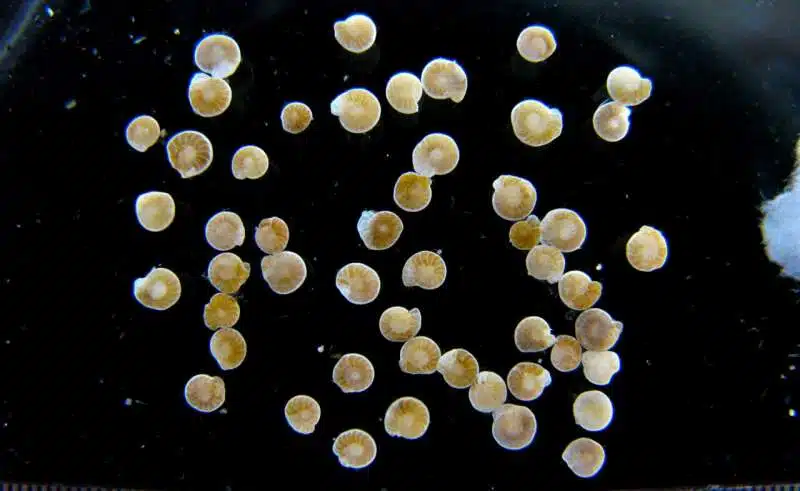 Tiny marine fossils extracted from the ocean floor. Credit: University of Southampton
Seafloor Spreading Slows, Why?
The calcium decline was tied to changes deep within the Earth. As explained by Professor Yair Rosenthal of Rutgers University, one major factor was the gradual slowdown in seafloor spreading, the tectonic process that forms new ocean crust. As this slowed, it reduced the amount of calcium-rich material entering the ocean through chemical exchange with rocks.
“Seawater chemistry is typically viewed as something that responds to other factors that lead to changes in our climate,” Rosenthal noted. “But our new evidence suggests that we must look to changing seawater chemistry to understand our planet’s climate history.”
The implication is significant: long-term shifts in Earth’s inner workings may have steered the course of global climate.