
Listen to this article
Estimated 5 minutes
The audio version of this article is generated by AI-based technology. Mispronunciations can occur. We are working with our partners to continually review and improve the results.
A wildlife protection group is calling for changes to the Canso Causeway after the death of a leatherback turtle, a spot the federal Fisheries Department has acknowledged is problematic for the endangered species.
Kathleen Martin, executive director of the Canadian Sea Turtle Network, said the Canso Strait lies along some leatherback turtles’ natural migratory routes.
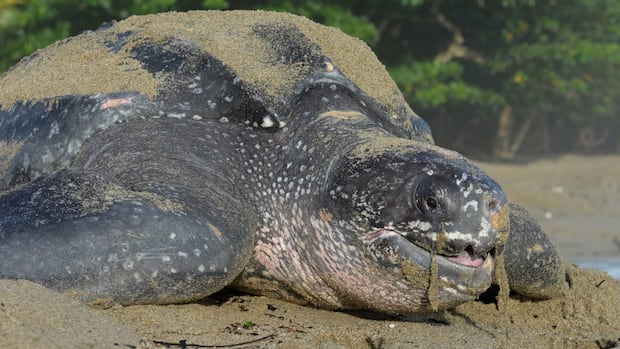
Leatherbacks, which are the world’s largest reptile and are considered endangered under the Species at Risk Act, travel north each spring and summer to feed on jellyfish, then instinctively head south as water temperatures drop.
But Martin said the Canso Causeway and the canal’s tidal lock are disrupting that instinct, leaving some leatherbacks unsure where to go once they hit the barrier. The only alternative is a long detour around Cape Breton Island.
“What you’re asking them to do is go north in order to go south,” she said, adding that colder waters can shock turtles that attempt the route, increasing the risk of hypothermia.
That is what happened to Dina, a GPS-tracked leatherback that died of exhaustion and hypothermia in late 2024 after trying to cross the Strait nine times, according to internal emails from the Department of Fisheries and Oceans and released through access-to-information laws.
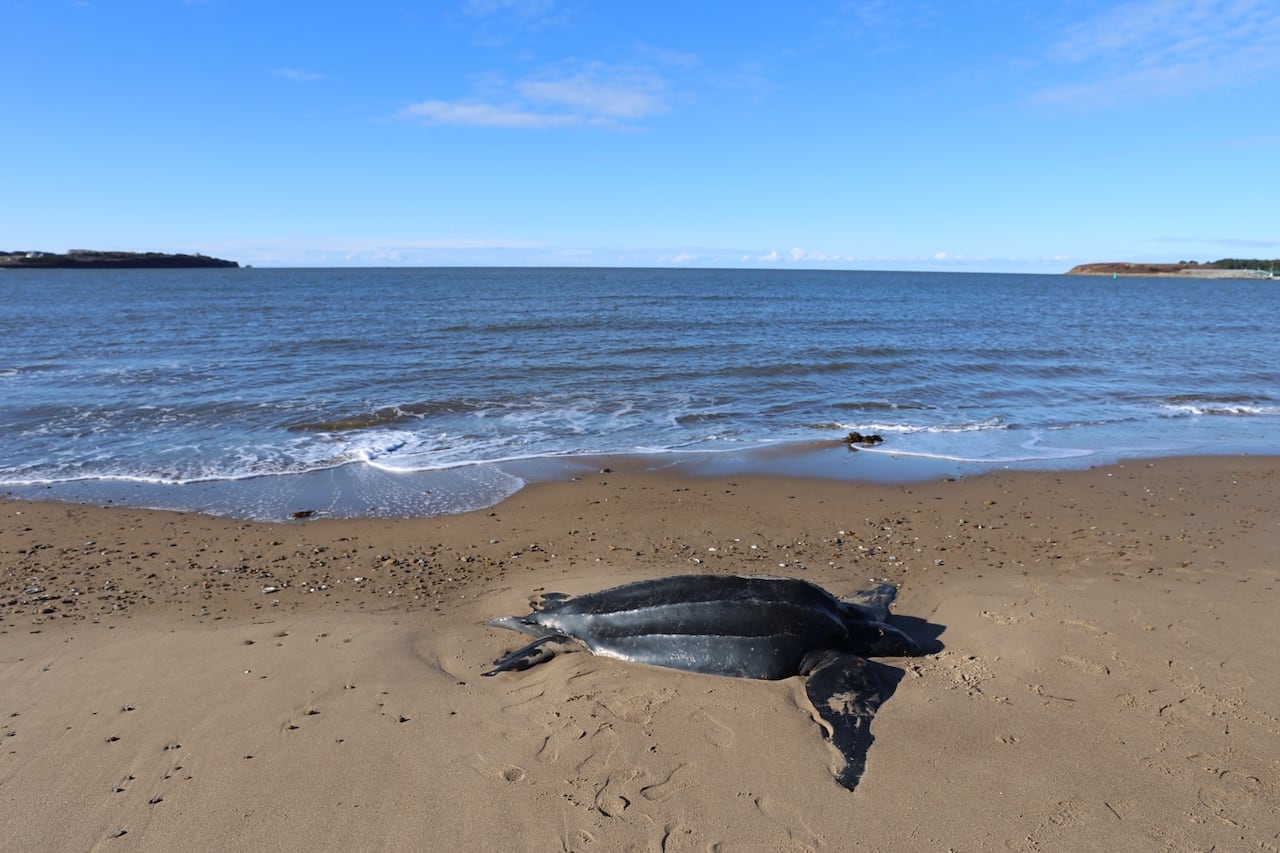 This leatherback turtle, named Hoody, was found dead on Nov. 30, 2024, on Port Hood Beach in Cape Breton. The Committee on the Status of Endangered Wildlife in Canada noted in 2022 that the Atlantic population of leatherbacks ‘has declined precipitously.’ (Kathleen Martin)
The emails were requested by Darren Porter, a Nova Scotia fisherman who shared the documents with media outlets, including CBC News.
“The Canso Causeway/Canal does not meet the current requirements of the Fisheries Act,” wrote Wendy Williams, DFO’s regional director of aquatic ecosystems, in one of the emails.
Martin said Dina was not the first leatherback death. She knows of at least 10 similar incidents, but acknowledged that’s a very conservative estimate. Since not all leatherbacks are tagged, and not all wash ashore, it’s impossible to know how many have been killed in the area.
“We have to do the things that are inconvenient and hard,” she said. “We know it’s a problem. It’s scientifically an issue. Let’s fix it.”
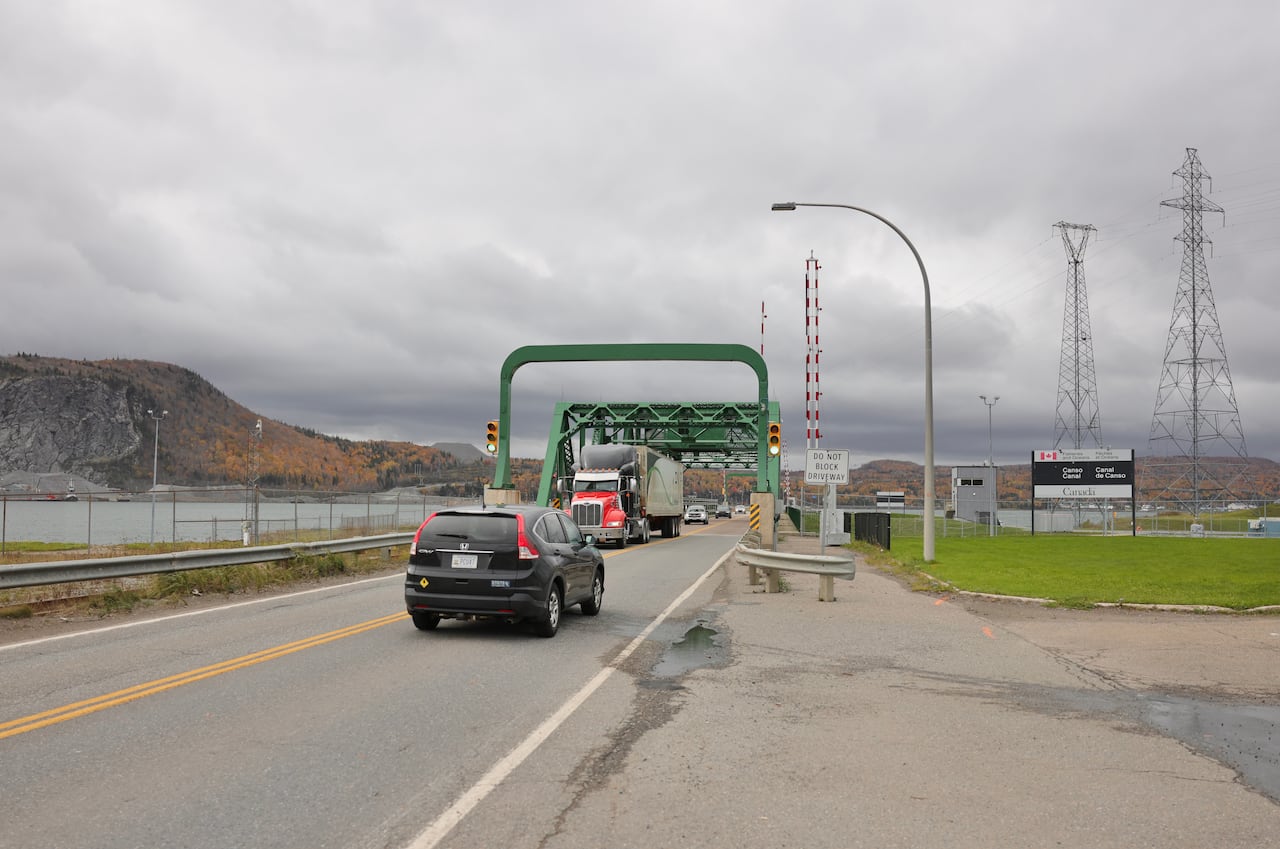 The Canso Causeway connects Cape Breton Island to mainland Nova Scotia. (Robert Short/CBC)
DFO declined an interview request from CBC News.
In an emailed statement, a DFO spokesperson said a rescue for Dina was attempted but cancelled due to the turtle’s unknown condition and the department’s lack of experience capturing leatherbacks at sea.
As for the future of the causeway and canal, the statement said the canal locks will transfer to the Department of National Defence from DFO this April. The causeway has been under provincial ownership since 2014.
The provincial government told CBC News in an email that if the causeway needs expansion or reconstruction in the future, “enhancements for fish and aquatic life and compliance with the federal fisheries and species at risk acts will be part of our design considerations.”
CBC News spoke with two environmental law experts who agreed that while enforcement though penalties is unlikely, the next step could come from the federal fisheries minister.
“The first step would be to determine what the risk to fish habitat. And then depending on that, they would, according to the policy, they’re taking a gradual approach,” said Olga Koubrak, director of SeaLife Law and a post-doctoral fellow at Dalhousie University’s Marine Environmental Law Institute, noting the minister has the power to order an assessment.
DFO staff discussed possible responses to media questions in the event Dina’s death became public, according to the documents obtained through privacy legislation. Under a subtitle reading “if pressed on the presence of the causeway,” the draft note said “operating procedures at the lock will be reviewed to assess potential mitigation measures that could facilitate turtle passage during the late fall [2025].”
When CBC News asked about that review, DFO did not say whether it took place or what its findings were.
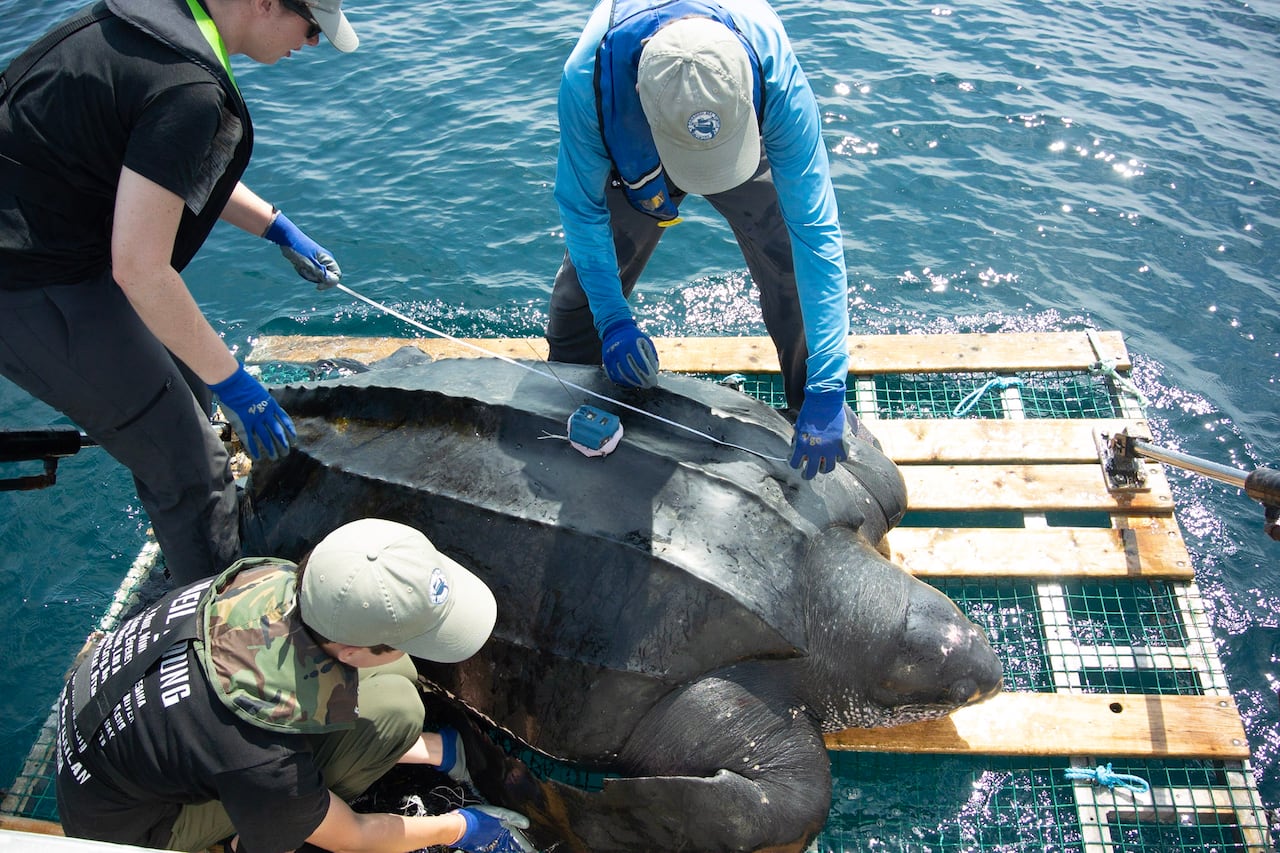 Scientists have tagged more than 400 endangered leatherback sea turtles in Atlantic Canada since 1999. Females like Isabel — seen here being tagged off Nova Scotia in July 2019 — have archival tags attached that can be recovered when they come ashore to nest. It’s rare to get one back, and recovering two in one week has never happened. (Fisheries and Oceans Canada/Canadian Sea Turtle Network)
Michael Kofahl, a staff lawyer at East Coast Environmental Law, added that Canadian law generally does not apply retroactively, and because the causeway and canal were built in the 1950s, that means they precede the fish habitat and fish passage provisions of the Fisheries Act.
“However, any ongoing impacts or future impacts or new activities as a result of repair or modifications would indeed be captured under the Fisheries Act,” he said.
Kofahl said DFO has a policy of bringing existing structures up to date with the act, though noted “policy isn’t law.”
Porter, the fisherman who requested the internal DFO emails, said the lack of visible, timely action reflects a broader enforcement gap and an absence of care from DFO to protect the leatherbacks.
“DFO simply doesn’t enforce the legislation on anything besides fishers,” he said. “But if we don’t have good fish and fish habitat, we don’t have fisheries.”
MORE TOP STORIES