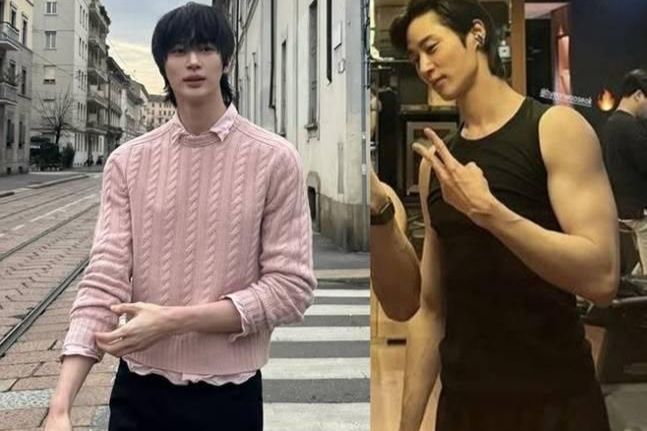
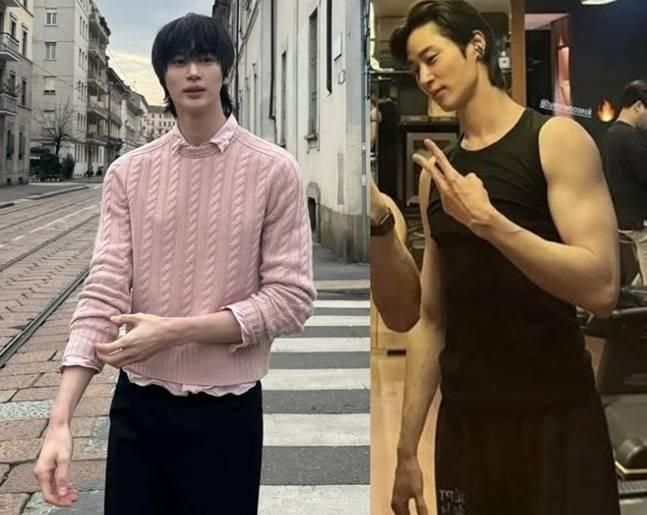
Byeon Woo-seok / Captured from Byeon’s social media
Click here for more articles by Kormedi.com.
For Byeon Woo-seok, a Korean actor and former model currently in Milan for a fashion show hosted by Prada, skipping the gym is not an option — even while traveling abroad.
A recent photo shared by Thai actor Metawin Opas-iamkajorn shows Byeon working out at a local gym, dressed in a sleeveless top. The image highlights a contrast that has become closely associated with him: a slim overall frame paired with notably broad shoulders and well-developed arms.
Byeon is widely recognized for a physique that stands out even by industry standards. In Korea, he is often described as a “doorframe man,” a colloquial expression for men whose height and shoulder width dominate their silhouette.
That balance between leanness and muscle has prompted questions about how it is maintained. In past interviews, Byeon has attributed it to consistency rather than short-term routines, emphasizing regular exercise as the foundation of his approach.
“I try to keep my body fat at around 10 percent, because this is a job where I am constantly visible,” he said. “I focus on eating protein, though I do not give up sauces. There is a lot of good food in the world, and food is how I relieve stress.”
The explanation may sound vague, but it touches on the key points. A slim frame with broad shoulders and muscular arms like Byeon’s cannot be achieved through exercise or diet control alone.
The key is keeping body fat low — thus staying slim — while simultaneously building muscle in the shoulders, back and arms to achieve the overall silhouette. This requires a careful balance between cardio and weight training.
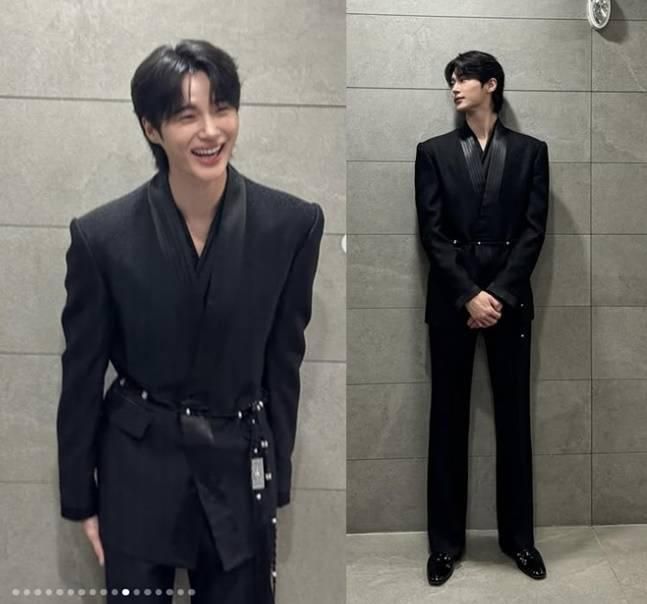
Byeon Woo-seok / Captured from Byeon’s social media
Staying slim: the role of cardio
A lean appearance is largely determined by body fat management. Health guidelines generally recommend at least 150 minutes of moderately intense aerobic exercise per week, or 75 minutes of vigorous activity, alongside strength training twice a week.
For those aiming to stay slim, three to five cardio sessions a week — such as brisk walking, running, cycling or swimming for 30 to 45 minutes — are commonly effective.
Those seeking further fat reduction may increase total weekly cardio time to 200 to 300 minutes or incorporate higher-intensity interval training.
However, excessive daily cardio can interfere with strength gains, making it harder to add volume to the shoulders and arms. Balance, rather than extremes, is key.
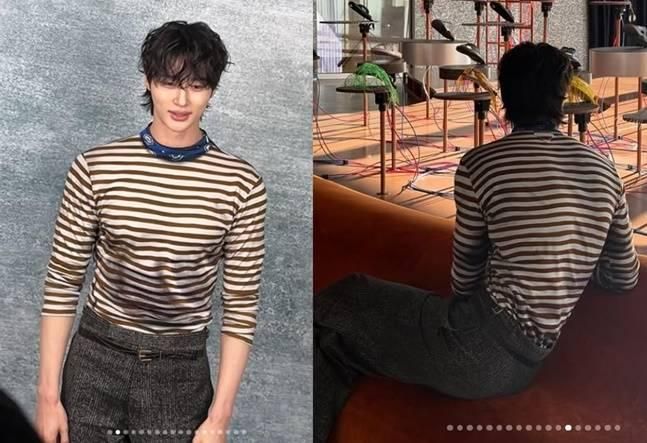
Byeon Woo-seok / Captured from Byeon’s social media
Building broad shoulders and arms: strength training fundamentals
Achieving broad shoulders and well-developed arms depends not only on exercise selection but also on maintaining consistent weekly training volume.
A wide-shouldered appearance is rarely the result of bone structure alone; it is typically created by increased muscle development across the deltoids, lats and upper back, as well as the arms — together forming a larger upper-body frame.
To build this frame, strength training at least twice a week is generally recommended.
Muscle growth typically responds well to moderate repetitions — about six to 12 per set — performed across three to six sets using weights at roughly 60 to 80 percent of one’s maximum capacity. For a physique that looks slim yet powerful, both arm size and shoulder and back width need to increase together.
A common structure involves strength training three to four times a week, typically combining two upper-body sessions with one or two lower-body workouts. Weekly volume often starts at eight to 12 challenging sets per muscle group and can increase as the body adapts.
For each set, six to 12 repetitions are generally recommended, with the final one to three reps performed near muscular failure — often requiring heavier weight — to effectively promote growth in the shoulders and arms.
Effective exercises include overhead presses — using both dumbbells and barbells — and lateral raises to build shoulder width, as well as face pulls and rear-delt flies to target the rear deltoids.
To enhance the appearance of broader shoulders, strengthening the back — particularly the lats and upper back — is essential. Exercises such as pull-ups and lat pulldowns target the lats, while rows — performed with barbells, dumbbells or cables — build back thickness and support proper posture.
For arm development — particularly overall thickness, which is largely determined by the triceps — exercises such as dips, cable pushdowns and overhead extensions are effective, along with barbell curls, dumbbell curls and hammer curls to target the biceps.
When combining cardio and weight training, trainers generally recommend lifting first on days focused on muscle growth, separating the two sessions when possible, and keeping cardio consistent rather than excessive. Two to four cardio sessions per week are typically sufficient.
High-intensity interval training or running while ill, experiencing joint pain or carrying excess body weight can increase the risk of injury. If sharp pain occurs during exercise or persists, the workout should be stopped and a professional consulted.
Protein and recovery: the final pieces
Without adequate protein intake and recovery, achieving both leanness and muscle is difficult. Nutrition and rest are just as important as training itself.
The International Society of Sports Nutrition recommends that physically active adults consume roughly 1.4 to 2.0 grams of protein per kilogram of body weight per day to support muscle adaptation.
For an adult weighing 70 kilograms, that translates to roughly 98 to 140 grams of protein per day, ideally spread across meals every three to four hours — which helps explain why Byeon, who maintains about 10 percent body fat, prioritizes protein intake.
Adequate sleep and rest are just as critical. Without sufficient recovery, increasing cardio can lead to fatigue rather than a lean, healthy appearance.
Byeon Woo-seok’s popularity followed his role as Ryu Sun-jae in the tvN drama “Lovely Runner.” He is also set to star alongside singer-actress IU in MBC’s upcoming series “Perfect Crown,” scheduled to air in the first half of the year.
This article from Kormedi.com, Korea’s top health care and medical portal, is translated by a generative AI system and edited by The Korea Times.