TIMM Architecture builds INVERTED HOUSE in Okrokana
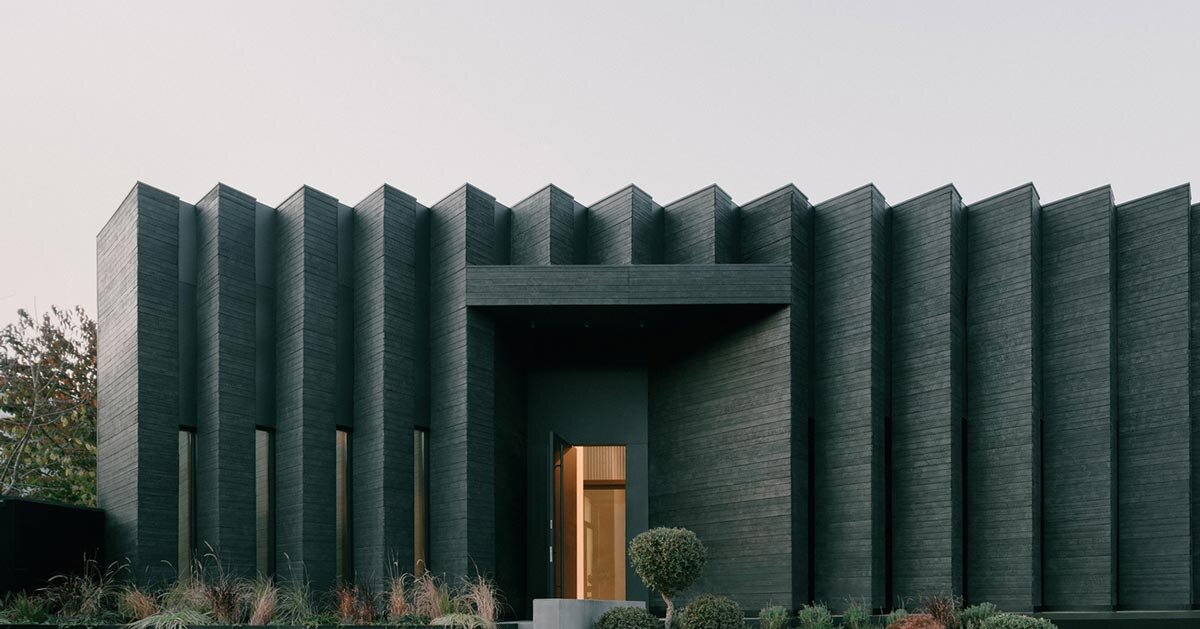
Inverted House by TIMM Architecture is a single-family residence located in Okrokana, a hillside district of Tbilisi, Georgia. The project responds to the fence-dominated suburban fabric characteristic of the area, where narrow streets, compact plots, and tall perimeter walls limit visual connection, daylight access, and spatial continuity. Rather than positioning the house behind a boundary wall, the design integrates enclosure into the architecture itself, using the building as a continuous perimeter that defines and protects the site.
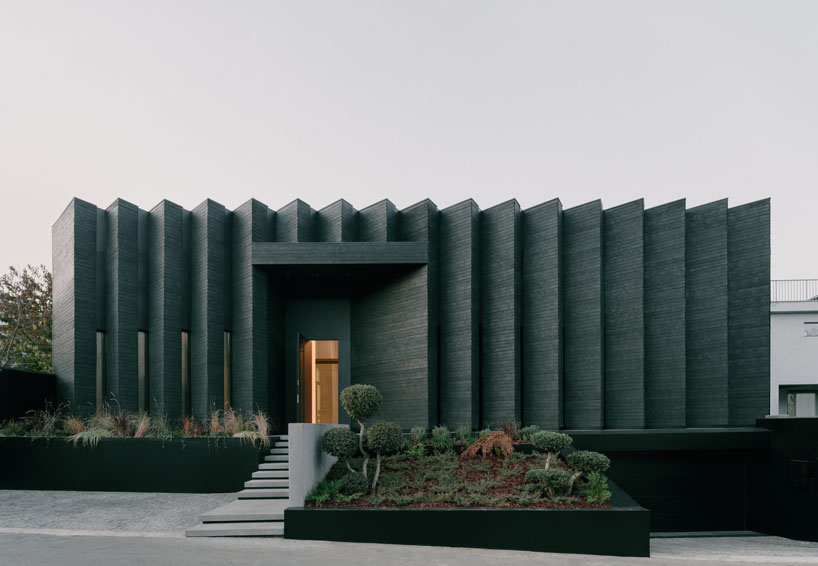
The plot is enclosed on three sides by neighboring walls and bordered by the street on the fourth, offering no outward views and limited exposure to light. Instead of attempting to open the dwelling toward these constraints, the project adopts an inward-facing spatial strategy. The house wraps around the site, forming a built enclosure that directs primary living spaces toward internal open areas rather than the surrounding context. Along the street edge, the building is recessed, removing the need for a separate fence and establishing a gradual transition between public and private space.
all images by Grigory Sokolinsky
Two landscaped zones structure Inverted House’s plan
The design team structures the internal organization around two landscaped areas: an outer garden that mediates the relationship with the street, and an inner courtyard that serves as the spatial center of the house. The main living areas, including the entrance hall, living room, and kitchen, are oriented toward the inner courtyard, allowing daylight and ventilation to be introduced deep into the plan. The courtyard functions as an open-air central space, organizing circulation and visual connections across multiple levels.
A suspended swimming pool spans across the courtyard void, creating a shaded outdoor area below while linking the upper floors visually and spatially. This sectional strategy reinforces the inward orientation of the house, stacking domestic spaces vertically around the shared interior landscape. In section, the building rises to three stories at the rear of the site while presenting a single-story volume toward the street. This variation enables a double-height living area and the introduction of intermediate half-levels, producing a continuous spatial sequence rather than a series of discrete floors.
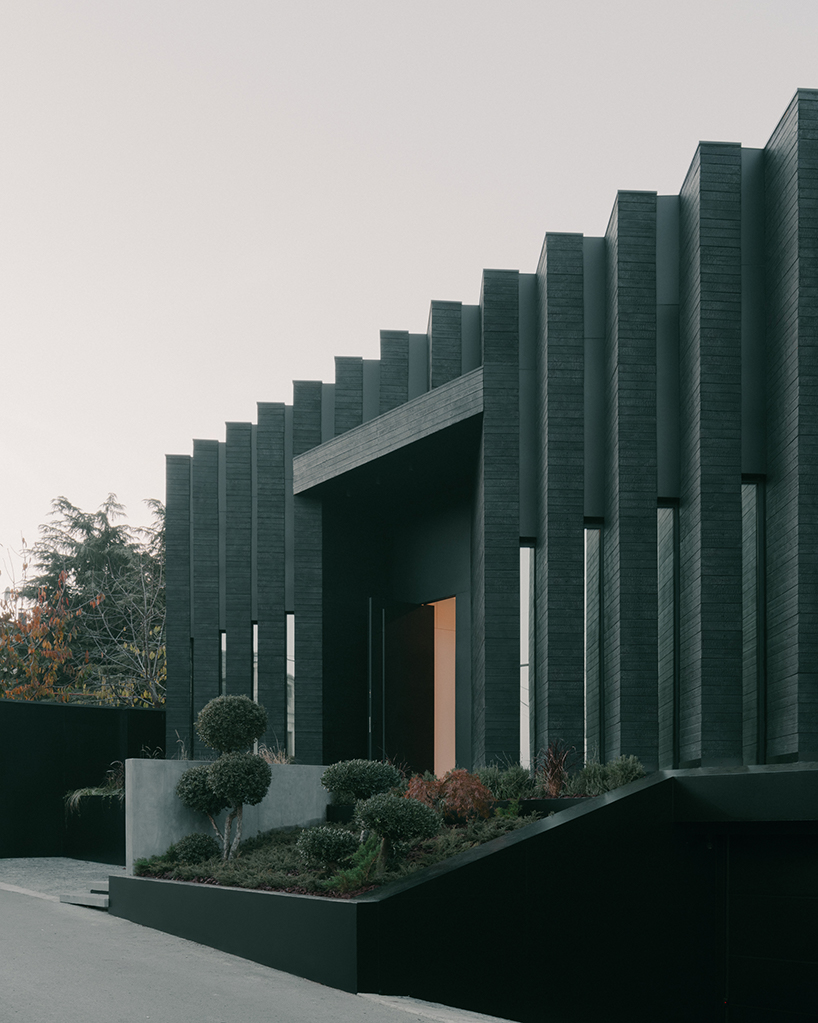
Inverted House is a single-family residence in Okrokana, a hillside district of Tbilisi, Georgia
Natural wood textures define the Material palette
Material choices reinforce the project’s spatial logic. The street-facing facade is clad in charred wood, a durable treatment that forms a dense external shell. Moving inward, the material palette shifts to natural, untreated wood within the courtyard, establishing a contrast between enclosure and openness. Interior spaces are finished in white, emphasizing light, proportion, and spatial relationships. This progression, from charred exterior surfaces to natural timber and finally to neutral interiors, supports a gradual transition from boundary to inhabitable space.
By redefining the role of enclosure as an architectural element rather than an external addition, Inverted House proposes an alternative residential model for dense suburban conditions in Tbilisi. The project by TIMM Architecture demonstrates how inward orientation, sectional variation, and material transitions can transform limited sites into spatially open domestic environments structured around internal light, landscape, and movement.
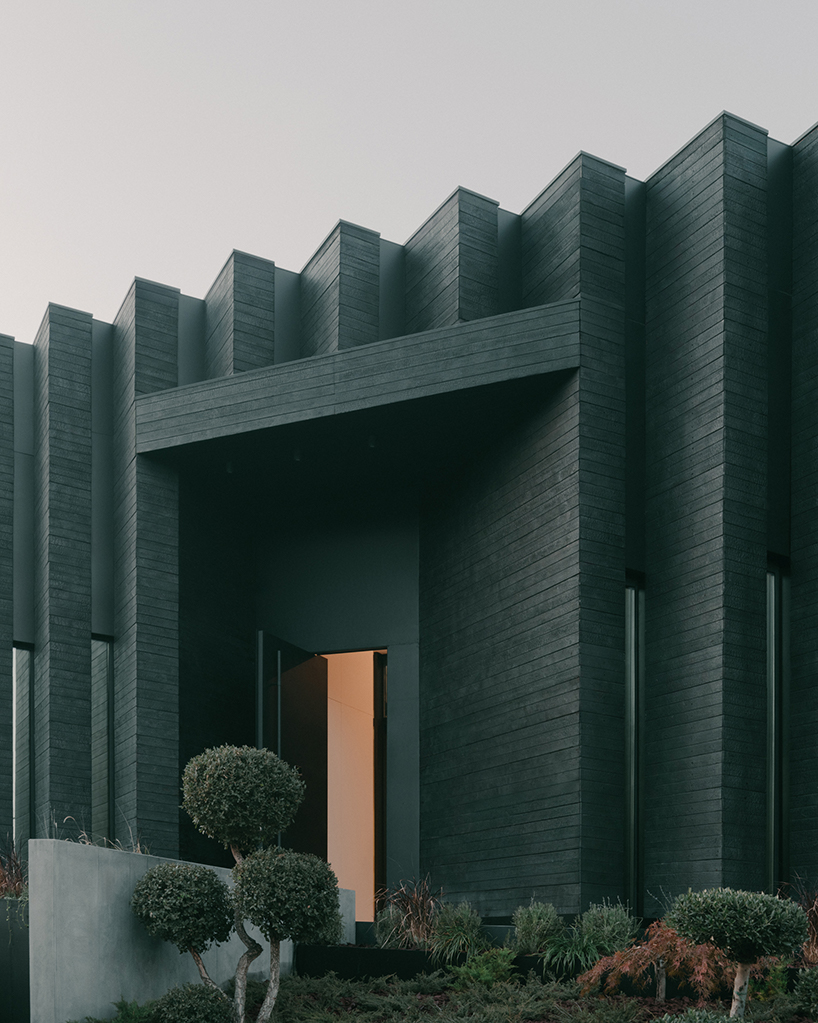
the project responds to a suburban context defined by narrow streets and perimeter walls
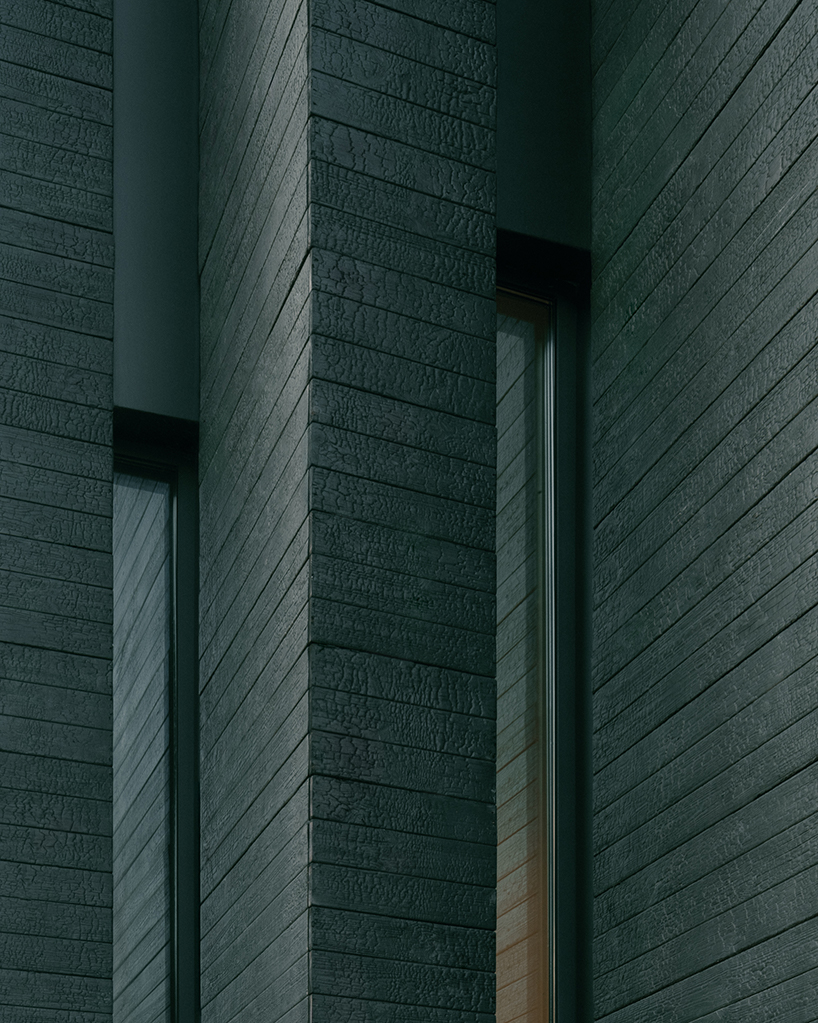
the street facade is clad in charred wood, forming a dense outer shell