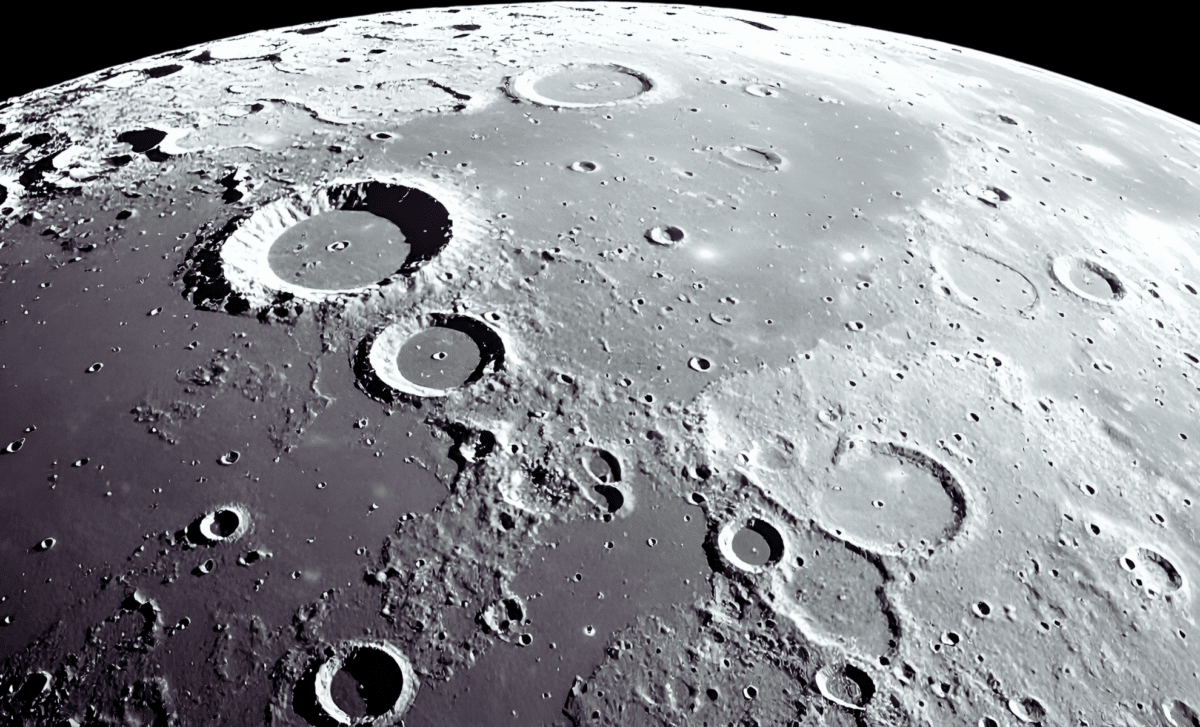
scientists have unveiled a revolutionary way to observe Earth’s radiation budget through lunar observations. This method promises to overcome many of the limitations faced by current satellite systems, offering a comprehensive, consistent, and noise-reduced view of Earth’s radiation patterns. The research, conducted by a team of experts from the Institute of Atmospheric Physics (IAP) at the Chinese Academy of Sciences (CAS) and other leading institutions, reveals that using the Moon as a platform for Earth observation offers a long-lasting and holistic perspective, vital for understanding climate change.
Overcoming Satellite Limitations with Lunar Observations
The primary challenge of current Earth observation satellites, especially those in low-Earth orbit (LEO) and geostationary orbit, lies in their inability to provide both consistent spatial data and temporal continuity. These satellites, though invaluable, often struggle with weather interference, localized changes, and limited coverage over time. Dr. Ye Hanlin, first author of the study, highlighted this issue, stating, “Traditional observations mostly focus on regional or local radiation characteristics. From the moon, Earth appears as a complete disk, allowing us to extract planet-scale dominant signals while suppressing small-scale weather noise.”
Lunar observations offer a unique advantage because from the Moon, Earth is viewed as a whole entity rather than in parts. This comprehensive view allows scientists to better capture large-scale radiation patterns that are not obscured by localized weather events or temporary fluctuations. By utilizing this new perspective, the research team has been able to analyze Earth’s emitted radiation more accurately, revealing previously hidden global patterns.
The Importance of Earth’s Radiation Budget
Earth’s radiation budget refers to the balance between the energy Earth receives from the Sun and the energy it radiates back into space. This balance is crucial for understanding global climate processes, including temperature regulation, weather patterns, and long-term climate change. Accurately measuring and monitoring Earth’s outgoing radiation is essential for predicting climate shifts, natural disasters, and environmental changes. The study from the Journal of Geophysical Research: Atmospheres brings fresh insights into this complex system by offering a method for capturing Earth’s radiation without the interference of weather systems and local anomalies.
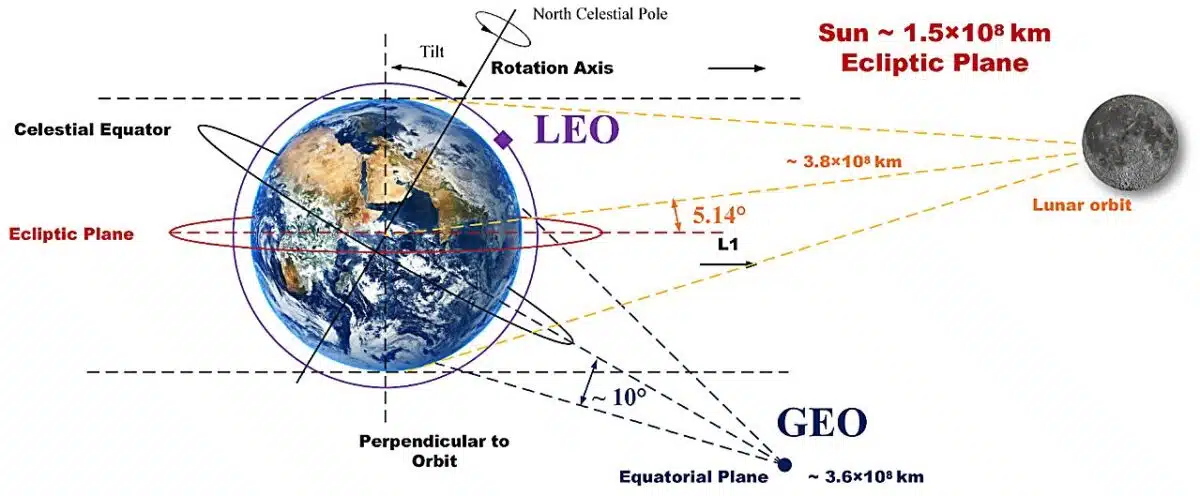 Diagram comparing ultra-long-range, low-Earth orbit, and geostationary satellite observation systems. Credit: Ye Hanlin
By studying the fluctuations in Earth’s emitted radiation from a lunar perspective, scientists are able to identify key periodic patterns that influence the planet’s climate. These include daily variations caused by Earth’s rotation, monthly changes tied to the Moon’s orbit, and larger, cyclical shifts linked to the Earth-Sun relationship. Understanding these patterns is vital for improving climate models and preparing for future environmental changes.
Lunar Observations: A Long-Term Solution for Climate Research
Professor Guo Huadong, the corresponding author of the study from the Aerospace Information Research Institute, CAS, emphasized the long-term potential of lunar-based observations. “A moon-based platform provides a new, long-lasting holistic view of Earth, which is highly unique.” Unlike Earth-based or satellite observations that face limitations in terms of duration and coverage, lunar observations offer a continuous, stable platform to study Earth’s radiation without interruption.
The Moon’s position in space allows for consistent monitoring of Earth’s radiation patterns over extended periods, offering a rare and valuable tool for climate researchers. This long-term, unobstructed view could be instrumental in providing more accurate data for climate prediction models and helping scientists track the gradual changes in Earth’s climate system over time.
The Role of Spherical Harmonic Functions in Radiation Patterns
One of the significant findings of the study is the role of spherical harmonic functions in Earth’s radiation patterns. These mathematical functions describe the shape and structure of the radiation emitted by Earth. According to the study, about 90% of the variation in Earth’s emitted radiation is dominated by first-order and second-order spherical harmonic functions. These functions act as the “fingerprints” of Earth’s radiation, allowing scientists to identify larger, global patterns while filtering out smaller, less significant fluctuations caused by local weather events.
The use of these harmonic functions provides a more accurate and noise-free way of observing Earth’s radiation budget. As a result, scientists can better understand the underlying drivers of climate change and identify key factors that influence global temperature shifts. The use of the Moon to capture these harmonic components marks a significant advancement in climate science.