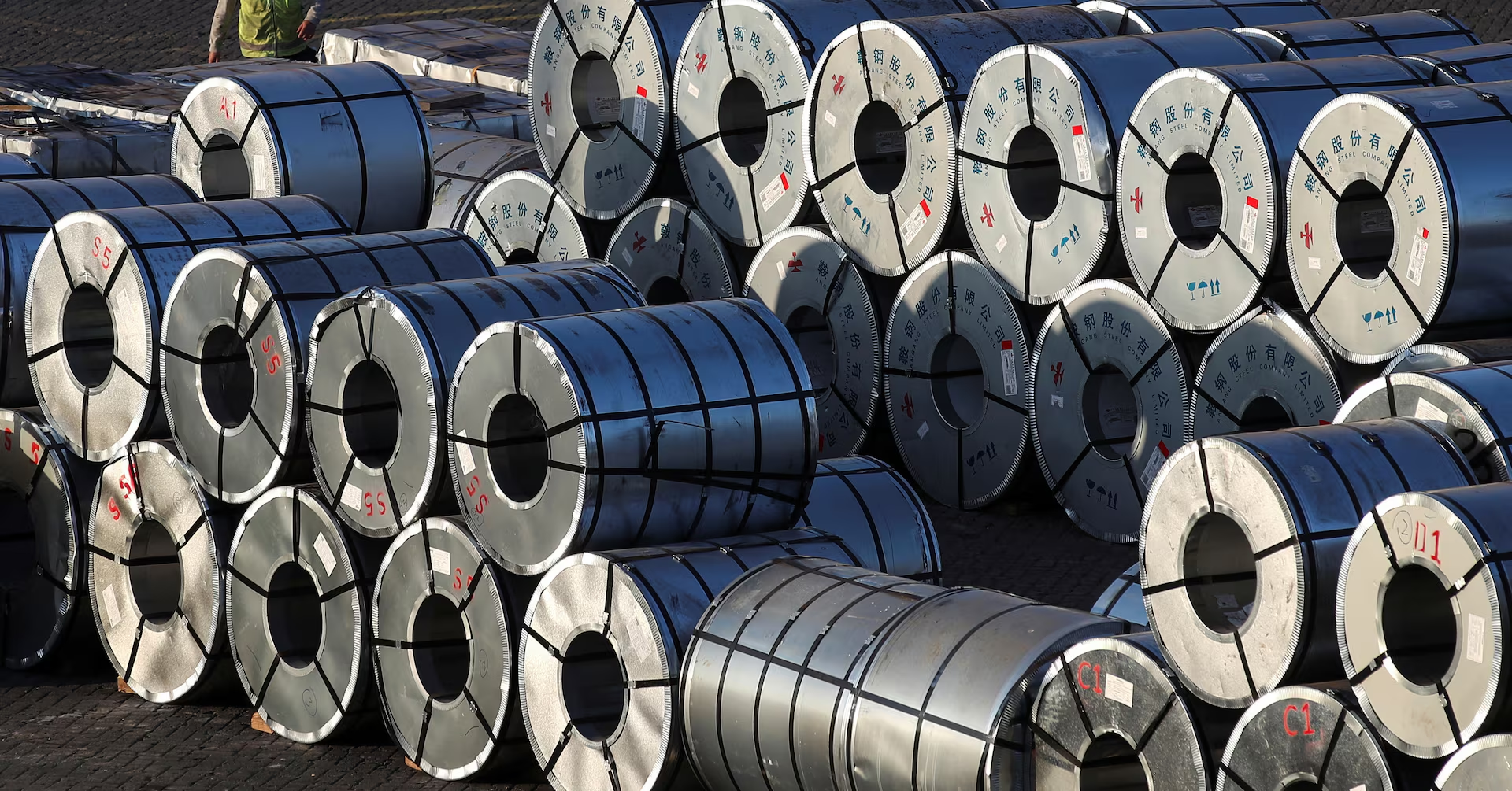
LAUNCESTON, Australia, Jan 28 (Reuters) – It’s a fairly safe bet to say that China’s steel production has passed its peak, after 2025 output dropped to a seven-year low.
What is less certain is whether the decline will be gentle or accelerate, and what this means for producers and exporters of iron ore, the key raw material.
Sign up here.
China produced 960.1 million metric tons of crude steel last year, according to official data, down 4.4% from the 1.005 billion tons in 2024.
It was the first time since 2019, when output reached 996 million tons, that production dropped below the 1 billion ton mark.
This may seem like a soft outcome, but context is important in assessing the steel market in China, which accounts for more than half of global production.
The first is that the decline is largely a managed process, with the authorities in Beijing working to ensure that the steel industry addresses over-capacity.
It could be argued that this process is working as data from consultancy Mysteel showed an average of 54% of steelmakers were profitable last year, versus 36% in 2024.
The authorities have also encouraged steel exports, which rose to a record high of 119.02 million tons in 2025, up 7.5% from the prior year.
China steel output vs exports
While China’s steel exports have faced import tariffs and restrictions in some countries, such as India, it’s also the case that many countries without domestic steel sectors welcome the ability to buy cost-competitive Chinese steel.
Another factor is that while China’s steel production is expected to continue to ease modestly over 2026, output in other Asian countries is ramping up.
India’s steel demand jumped to 150 million tons in the 2025 fiscal year from 136.3 million in the prior year, and the industry’s capacity is expected to expand to 300 million tons a year by 2030.
Other smaller producers such as Vietnam are also lifting demand, with steel consumption expected to rise to around 32 million tons by 2030, up from around 25 million in 2025.
IRON ORE OUTLOOK
The shifting of steel production from China to other developing Asian nations could end up being positive for iron ore exporters.
It’s also likely that China will remain the dominant buyer for several years to come, even if volumes do start to ease in line with lower steel production.
China imported a record high 1.26 billion tons of iron ore in 2025, up 1.8% from the prior year.
Higher imports were recorded in the second half of the year as inventories were rebuilt after port stockpiles dropped to an 18-month low.
Inventories monitored by consultants SteelHome increased from 130.1 million tons at the start of August to end the year at 148.8 million tons, and they have continued to climb in the new year, reaching 157.3 million tons in the week to January 23.
The rise in iron ore stockpiles is keeping imports robust, with consultants DBX Commodities estimating seaborne arrivals of 119.7 million tons in January, steady on the all-time high of 119.8 million from December.
Imports are also being supported by softer domestic output in China, with official data showing 2025 production of 983.7 million tons, down 2.8% from a year earlier.
Iron ore prices have been stable in recent months, with the Singapore Exchange futures contract ending at $105.70 a ton on Tuesday, having traded in a range between $100 and $109 since August last year.
Prices may come under pressure later in 2026 as output from the 120-million-tons-a-year Simandou complex in Guinea ramps up, but for now robust China demand and increasing steel output in developing Asia are keeping iron ore above $100 a ton.
Enjoying this column? Check out Reuters Open Interest (ROI), your essential new source for global financial commentary. ROI delivers thought-provoking, data-driven analysis of everything from swap rates to soybeans. Markets are moving faster than ever. ROI can help you keep up. Follow ROI on LinkedIn, opens new tab and X, opens new tab.
The views expressed here are those of the author, a columnist for Reuters.
Our Standards: The Thomson Reuters Trust Principles., opens new tab
Opinions expressed are those of the author. They do not reflect the views of Reuters News, which, under the Trust Principles, is committed to integrity, independence, and freedom from bias.