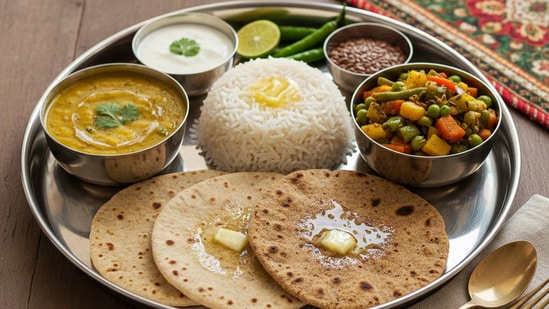
With gluten sensitivity becoming increasingly common, many people are quick to blame wheat and turn to packaged gluten-free alternatives. However, modern wheat is often highly processed, making its gluten more irritating for the gut – while many store-bought gluten-free foods are even more processed and nutritionally poor. The good news is that going gluten-free does not require abandoning familiar foods or relying on expensive substitutes. With the right choices, it can be done easily within a traditional Indian diet.
 Try out Dr Chopra’s recommendations for a gluten-free Indian diet! (Image generated via Google Gemini)
Dr Alok Chopra, founder-director and consultant cardiologist at Aashlok Hospital with over 40 years of experience, has shared a practical guide to going gluten-free while following an Indian diet, emphasising that making smart, whole-food choices is the key. In an Instagram post shared on January 28, the cardiologist highlights “Gluten-free should be about health, clarity and balance, not just restriction.”
Indian diet is 80% gluten-free…
According to Dr Chopra, opting for a gluten-free diet does not require switching to expensive or fancy gluten-free breads, as traditional Indian diets are already largely gluten-free when you choose the right foods.
He explains, “If you’re going gluten-free, eat Indian – not imported. You don’t need fancy gluten-free bread. Indian food is already 80 percent gluten-free, if you choose right.”
Gluten-free is more than just removing roti
The cardiologist highlights that going gluten-free is not simply about eliminating wheat, but about making smarter substitutions. Many foods labelled “gluten-free” are heavily processed to remove gluten, which often strips away natural nutrients and can end up being more burdensome on the body than traditional staples.
Dr Chopra explains, “Going gluten-free isn’t just about avoiding wheat, it’s about choosing the right replacements. When gluten is removed through heavy processing, leaving behind food that is often poor in nutrition, even harder on the body than natural wheat.”
Recommended Indian swaps
Dr Chopra recommends making the following healthier, Indian diet-friendly swaps that are more natural, balanced, and practical when choosing to go gluten-free.
- Wheat roti: Replace with jowar or bajra roti, or rice.
- Bread: Swap with idli, dosa or poha.
- Biscuits: Opt for roasted chana, fruits and peanuts instead.
Apart from wheat, the cardiologist recommends several other wholesome options that can be safely included when following a gluten-free diet.
- Grains: Rice, jowar, bajra, ragi and makka.
- Proteins: Dal, chana, rajma, dahi, paneer and eggs.
- Vegetables: All veggies.
- Fats: Ghee, coconut oil and mustard oil.
Dr Chopra concludes, “Indian food was gluten smart long before the world went gluten free.”
Note to readers: This article is for informational purposes only and not a substitute for professional medical advice. It is based on user-generated content from social media. HT.com has not independently verified the claims and does not endorse them.