Can measuring and valuing the wrong things lead to catastrophic outcomes for business and the world? Robert Sternberg, one of the most influential psychologists of the 20th century, thinks our limited understanding and measurement of human intelligence has led to business models that profit from amplifying social division and the global rise in authoritarianism.
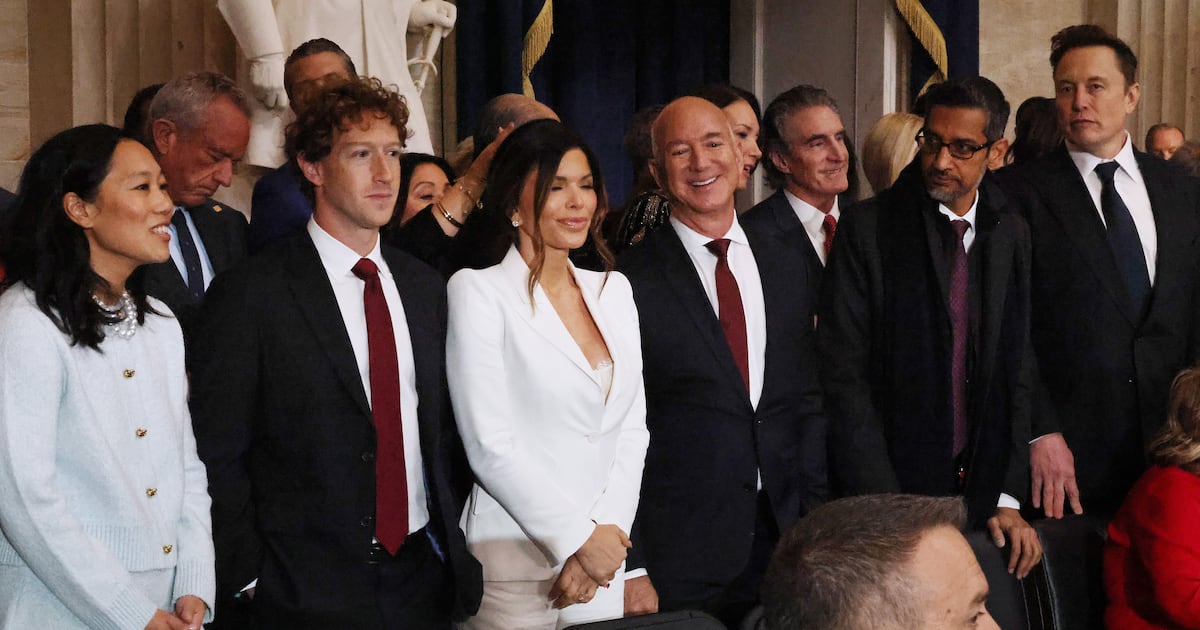
Over the last several decades, some of the world’s highest IQ (intelligence quotient) men – and it has been men – have used their considerable intellectual skills and money to develop technology businesses that often divide people instead of uniting them to solve common urgent problems.
There’s a bankruptcy in our current notion of intelligence, says Sternberg. “It’s a red herring that has led us to focus on the wrong skills at the wrong time and in the wrong place,” he told the Psychology Podcast with Scott Barry Kaufman way back in 2021.
“We have devised a system of psychometric self-fulfilling prophecies to make those who are privileged believe they somehow deserve that privilege. Meanwhile, much of the world goes to hell in a hand basket.
“We need to focus on adaptive intelligence for solving real-world problems, not general intelligence for solving problems of no consequence.”
This is reflected in current geopolitical ruptures to democracies, the push to blindly adopt AI (artificial intelligence) with crypto as a currency, and the promotion of technology tools to humiliate and control others (Grok) in the last three weeks alone.
“People are using their IQs to foment dissension and hatred” says Sternberg, who is a professor of human development at Cornell University and a distinguished associate of the Psychometrics Centre at the University of Cambridge.
Social media companies and strongmen leaders profit when negative posts spread more. “So our intelligence is actually working against us. Maximising profits isn’t helping civilisation as we know it. We need to get wise, be more creative and realise the importance of love instead of hate.”
Sternberg has developed several influential theories related to creativity, wisdom, thinking styles, love, hate and leadership. His ideas might feel a bit airy fairy for business, where leaders have been taught to focus mainly on shareholder profit as a measure of success, but he thinks that, if we can transform our intelligence, we can transform the world for the better.
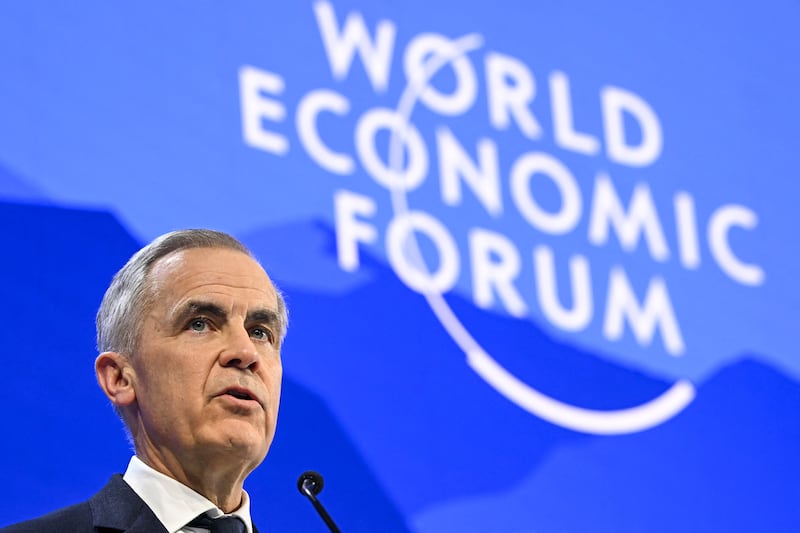 Mark Carney’s Davos speech embraced Robert Sternberg’s theories of adaptive intelligence with both arms. Photograph: Fabrice Coffrini/ AFP via Getty Images
Canadian prime minister Mark Carney, who also served as governor of the Bank of England so he’s no radical anti-business campaigner, also believes the time has come to embrace adaptive intelligence (AQ).
In his powerful speech at the World Economic Forum in Davos, he said there has been a rupture in the status quo but that countries are not powerless to act. “They have the capacity to build a new order that encompasses our values, such as respect for human rights, sustainable development, solidarity, sovereignty and territorial integrity of the various states.”
He’s no fool. Record levels of economic inequality mean politicians and businesses must adapt by reassessing the risks to their operating models, employees and customers. Many business and leadership opportunities in the future are likely to centre on solving socioeconomic imbalances, human disconnection and the climate emergency.
Intelligence at work
How can new ways of ranking intelligence help us build something better? According to standard IQ tests we’re getting better at academic book smarts but worse when it comes to creativity.
When choosing employees, most organisations traditionally focus on general or academic intelligence and IQ. Stacks of paper CVs were assessed and sorted based on the subjects studied, grades achieved and relevance of any jobs or volunteer activities to the job.
In recent years, online psychometric tests have been used in the initial screening process to provide a fuller picture of the potential candidate before interview phase. These tests – some more blunt than others – measure an individual’s cognitive abilities, personality traits, skills and behavioural tendencies to assess their suitability for a specific role or career.
[ The power of play in the workplaceOpens in new window ]
Like IQ tests of old, they’re meant to provide an objective, standardised evaluation of intelligence, aptitude (numerical, verbal, logical) and work style to help employers predict job performance and cultural fit.
When it comes to existing employees today, emotional intelligence tests are used to help individuals better understand themselves and others when working in teams and leading others.
But, as the use of AI grows, have we forgotten an important and essential part of human intelligence?
Sternberg identifies three distinct types of intelligence: analytical (componential), creative (experiential) and practical (contextual) in his Triarchic Theory of Intelligence. He thinks traditional IQ tests too narrowly measure only the first type and that practical intelligence and creativity are equally important when measuring an individual’s overall intelligence.
He defines intelligence as mental activity directed toward purposeful adaptation, selection and shaping of real-world environments, a bit like the new approach proposed by Carney at Davos.
Creativity
Creativity is the most crucial factor for future success, according to IBM’s Global CEO Study in 2010, which surveyed 1,500 chief executive from 60 countries and 33 industries worldwide. It found that “more than rigour, management discipline, integrity or even vision, successfully navigating an increasing complex world will require creativity”.
Creative leaders invite disruptive innovation, encourage others to drop outdated approaches and take balanced risks.
High-performing chief executives are adaptable; they practice and encourage change and experimentation throughout their organisations. To succeed, they take more calculated risks, find new ideas and keep innovating in how they lead and communicate.
“Adaptation means changing yourself for the better so you can reshape the world,” said Sternberg as he predicted what is happening today. We’re running out of time – with income disparity, violence, the potential for civil war – so there needs to be a willingness to use your intelligence wisely, he said.
Mark Carney’s Davos speech embraced Sternberg’s theories of adaptive intelligence with both arms. AQ is the capacity to adapt when reality fails to align with our expectations. In a nutshell, the AQ leader makes the invisible visible, they practice intellectual humility, run “what if” scenarios together with their teams and design for diversity.
Carney called for a recognition of what’s happening and a determination to act accordingly. “We understand that this rupture calls for more than adaptation. It calls for honesty about the world as it is.”
[ How to be more creative: Start by making small changes to everyday lifeOpens in new window ]
“We know the old order is not coming back. We shouldn’t mourn it. Nostalgia is not a strategy, but we believe that from the fracture, we can build something bigger, better, stronger, more just. This is the task of the middle powers, the countries that have the most to lose from a world of fortresses and most to gain from genuine co-operation.
“But we have something too – the capacity to stop pretending, to name reality, to build our strength at home and to act together.”
AQ can be developed. That’s the good news. It’s a set of skills that any business leader can cultivate, including you. Now might just be the time.
Margaret E Ward is chief executive of Clear Eye, a leadership consultancy. margaret@cleareye.ie